


 Claim Ownership
1A
Subscribed: 34,096Played: 2,174,633
Subscribe


© Copyright 2015-2021 WAMU American University Radio - For Personal Use Only
Description
Listening to the news can feel like a journey. But 1A guides you beyond the headlines – and cuts through the noise. Let's get to the heart of the story, together – on 1A.
Support NPR and get your news sponsor-free with 1A+. Learn more at plus.npr.org/the1a
Support NPR and get your news sponsor-free with 1A+. Learn more at plus.npr.org/the1a
1957 Episodes
Reverse

Last year, Americans spent more than 300 billion minutes on navigation apps, like Waze or Google Maps.The GPS systems in our pockets have come a long way from the first known map, carved into a mammoth tusk 30,000 years ago.But even with satellites tracking us and the ever-changing Earth from the skies – digital maps aren’t fact. Errors can show up and are sometimes as old as maps themselves. The phantom island of Sandy Island appeared on Google Maps until 2012, when Australian scientists sailed to its supposed location and found only open ocean.Mistakes on maps were sometimes intentional, sometimes not – but every single one tells a bigger story.How and why did it get there? What does it reveal about the creator of the map and the world around them?We sit down with Jay Foreman and Mark Cooper-Jones, better known as the Map Men on YouTube, to talk through these questions and more.Find more of our programs online. Listen to 1A sponsor-free by signing up for 1A+ at plus.npr.org/the1a. Learn more about sponsor message choices: podcastchoices.com/adchoicesNPR Privacy Policy

In-home elder care costs are rising more than three times faster than inflation.AARP estimates that caregivers in the U.S. spend an average of $7,242 out of pocket each year.Cuts to federal spending have gutted programs that support them. And amidst the longest government shutdown in history, what little help was left is quickly drying up.Why is the cost of care going up? What can be done to combat those costs?Find more of our programs online. Listen to 1A sponsor-free by signing up for 1A+ at plus.npr.org/the1a.Learn more about sponsor message choices: podcastchoices.com/adchoicesNPR Privacy Policy
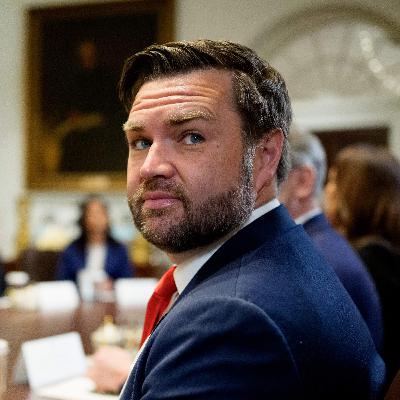
Abraham Lincoln was the first U.S. president to sport a beard. For the next 50 years, whiskers were commonplace in the White House. But then, they went out of style.Now, Vice President JD Vance is the first executive branch leader in more than a century with a furry face.And others are following suit. From the Senate to the campaign trail, more and more men in politics are letting their facial hair grow free. But what does that tell us about masculinity, power, and how we see each other?Why did our politicians remain bare faced for so long? And what does the reemergence of whiskers in the White House represent?Find more of our programs online. Listen to 1A sponsor-free by signing up for 1A+ at plus.npr.org/the1a.Learn more about sponsor message choices: podcastchoices.com/adchoicesNPR Privacy Policy

President Donald Trump delivered a national address on Wednesday in an attempt to set the record straight on his economic record.Gun violence dominated the news this week. Two people were killed in a shooting at Brown University. Six teenagers were injured in a shooting outside of a birthday party in Brooklyn. And an MIT professor was shot and killed inside of his home Tuesday.And an appeals court signals it will allow the National Guard to continue in Washington D.C. while litigation continues.And, in global news, two shooters opened fire on a Hanukkah gathering at Bondi Beach in Sydney, Australia on Sunday. It was the country’s deadliest shooting in 30 years.President Donald Trump continues to escalate tensions between Washington and Caracas. This week Trump ordered the blockade of sanctioned Venezuelan oil tankers.And Russian President Vladimir Putin is warning that his country will extend its gains of Ukrainian territory if peace talks aren’t successful.We cover the most important stories from around the globe in the News Roundup.Find more of our programs online. Listen to 1A sponsor-free by signing up for 1A+ at plus.npr.org/the1a.Learn more about sponsor message choices: podcastchoices.com/adchoicesNPR Privacy Policy

The modern world is a noisy, chaotic place. News about what’s happening in the world is constantly available on a device in your pocket. The internet offers more content than any person could consume in their lifetime, or in 10 lifetimes.Politics can feel unstable, with elected officials changing the norms and rules of our political system. AI is upending our ideas about what work will look like in the next few decades. And social media, designed by technology companies to monetize attention, offers up millions of rabbit holes in which to lose yourself — self improvement hacks, niche interests, impossible beauty standards.Taking all of that in can feel like an insurmountable task most days. So try doing it with a brain and a body that are changing dramatically at the same time.How do young people — adolescents going through puberty — experience the world today? How is the adolescent experience changing? And how can adults make their journey easier? Find more of our programs online. Listen to 1A sponsor-free by signing up for 1A+ at plus.npr.org/the1a. Learn more about sponsor message choices: podcastchoices.com/adchoicesNPR Privacy Policy

It’s a stressful day at the office. You want to get away from work. The sounds of notifications, meeting alerts, and Zoom calls ring through your ears. You step outside for your lunch break. No matter where you are in the world, you’re likely to hear the same thing: the sounds of birds. They’re everywhere, after all.Despite their constant presence in our lives and our world, there’s still a lot left to understand about our clawed compatriots. What if we could learn more about them with a bit of intentional observation? And in watching birds, maybe learn something about ourselves?We sit down with University of Colorado Boulder professor Scott Taylor to talk about his new podcast, “Okay, But… Birds.”Find more of our programs online. Listen to 1A sponsor-free by signing up for 1A+ at plus.npr.org/the1a. Learn more about sponsor message choices: podcastchoices.com/adchoicesNPR Privacy Policy

Defense Secretary Pete Hegseth wants to tightly control the news that comes out of the Pentagon — even as he deals with the fallout over strikes against alleged drug boats in the Caribbean.In October, nearly all mainstream media outlets left the Pentagon press pool after refusing to comply with restrictive rules from the Trump administration. The exodus included the Associated Press, NPR, and The New York Times along with conservative outlets like Newsmax and Fox News.Two weeks ago, the Pentagon held its first press conference with a new hand-picked press corps, now mostly made up of right-wing outlets and Trump allies including former Rep. Matt Gaetz and right-wing media influencer Laura Loomer.Now, The New York Times is suing the Pentagon over violating the first amendment rights of journalists.As more questions arise over the Venezuela boat strikes and the contentious relationship between the Trump administration and the press heats up, what does the absence of traditional press at the Pentagon mean for accountability for the U.S. military, press freedom, and our democracy?Find more of our programs online. Listen to 1A sponsor-free by signing up for 1A+ at plus.npr.org/the1a.Learn more about sponsor message choices: podcastchoices.com/adchoicesNPR Privacy Policy

Democrats were on the receiving end of some midterm election momentum this week. In Indiana, Republicans lawmakers defied intense pressure from President Donald Trump rejecting his demands for a newly gerrymandered Congressional map.In Miami, residents elected Eileen Higgins as mayor, the first woman to hold the job in the city’s history. She’s also the first Democrat to hold the office in 28 years. And a Georgia state House seat flipped in a district Trump won by double digits.And Congress is considering limiting the Pentagon’s travel budget after Defense Secretary Pete Hegseth refused to release footage of a “double-tap” strike he ordered on an alleged drug boat in the Caribbean.Meanwhile, can the United States legally seize a Venezuelan oil tanker or is it an act of “international piracy.”? What does this latest move by the Trump Administration towards Nicolas Maduro mean for escalating the ongoing pressure campaign? President Donald Trump says the vessel was taken “for a very good reason.”Under the terms of the U.S.-brokered ceasefire between Israel and Hamas, 600 trucks per day carrying aid must be allowed into Gaza. This week, an analysis by the Associated Press showed an average of only 459 are crossing into the territory daily. This comes as torrential rain from Storm Byron swept across the Strip flooding overcrowded tents sheltering tens of thousands of families displaced by the war.Ukrainian President Volodymyr Zelenskyy is sounding the alarm about the role China is playing in helping Russia beef up its military industry.Find more of our programs online. Listen to 1A sponsor-free by signing up for 1A+ at plus.npr.org/the1a. Learn more about sponsor message choices: podcastchoices.com/adchoicesNPR Privacy Policy

What would you sacrifice to push efforts forward on eliminating diseases? What about to make sure our products and medicines are safe, especially for our most vulnerable?These questions lead us to ethical quagmire and, oftentimes, to the use of animals for research, testing, and experimentation. We’ve long heard the term “lab rat.” Its popularity in conversation belies an understanding that these creatures are popular subjects for experimentation. But they’re far from the only ones.Around 40,000 dogs were used as test subjects in labs last year, according to a leading advocacy group. The most common breed used are beagles.Journalist Melanie Kaplan adopted Hammie in 2013, a lab beagle who had been used for research for nearly four years. It led her down a years-long rabbit hole to find out more about her companion’s past. It took her to a sanctuary farm for former research animals in Wyoming, a naked mole rat lab at Boston University, and the homes of former researchers.We discuss her book, “Lab Dog: A Beagle and His Human Investigate the Surprising World of Animal Research.” Find more of our programs online. Listen to 1A sponsor-free by signing up for 1A+ at plus.npr.org/the1a. Learn more about sponsor message choices: podcastchoices.com/adchoicesNPR Privacy Policy
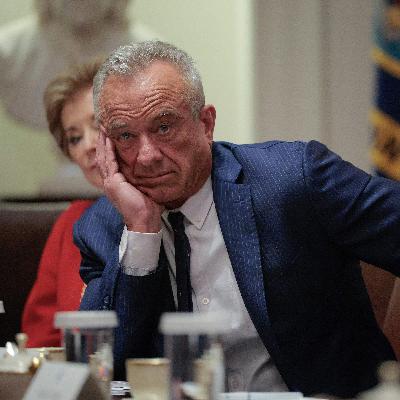
On Friday, the Centers for Disease Control and Prevention’s vaccine advisory panel voted to end a recommendation that all newborns be immunized at birth against hepatitis B. That guidance had been in place for more than 30 years. Hepatitis B is a highly infectious virus that can cause severe liver damage, including cirrhosis and cancer.The members of this panel, known as ACIP, were handpicked by Health and Human Services Secretary Robert F Kennedy Junior. That’s after he abruptly fired all the previous 17 members of the panel earlier this year. That which led top officials at the CDC to resign in protest.His new members have publicly stated they want to revisit the entire childhood vaccine schedule. And after the panel’s recent meeting, President Donald Trump expressed support for such a review.How will ending the recommended Hepatitis B shot for newborns affect public health? And what’s next for childhood vaccinations?Find more of our programs online. Listen to 1A sponsor-free by signing up for 1A+ at plus.npr.org/the1a. Learn more about sponsor message choices: podcastchoices.com/adchoicesNPR Privacy Policy

As of Thursday, the Pentagon says it’s attacked 23 boats and killed at least 87 people as part of the Trump administration’s campaign against drug trafficking in the Caribbean.In the months since the first strike on Sept. 2, one question has emerged that Defense Secretary Pete Hegseth cannot seem to shake: Are these boat strikes legal?The White House says yes. But several members of Congress, legal experts, and former defense and intelligence officials have their doubts. Questions also remain about whether it’s legal for President Donald Trump to deploy the National Guard in cities across the country.In this installment of our weekly politics series, “If You Can Keep It,” we convene a panel of experts on military law to help us find answers.Find more of our programs online. Listen to 1A sponsor-free by signing up for 1A+ at plus.npr.org/the1a.Learn more about sponsor message choices: podcastchoices.com/adchoicesNPR Privacy Policy

 1
1Defense Secretary Pete Hegseth was under the spotlight this week. Lawmakers on Capitol Hill are demanding video and audio of a “double-tap” strike he ordered on a boat allegedly carrying drugs into the U.S.The Trump administration has halted immigration applications from 19 countries. This comes after the shooting of two National Guard members by an Afghan national in Washington D.C.The city of San Francisco filed a lawsuit against food manufacturers over ultra processed products. It’s the first of its kind and argues that cities and states have been burdened with treating the diseases the food causes.Meanwhile, graphic depictions of at least two survivors being killed by a second U.S. military strike on an alleged Venezuelan drug boat sparked outrage on Capitol Hill. This comes as tensions between Caracas and Washington reach a fever pitch.Venezuelan President Nicolas Maduro confirmed that he did speak with President Donald Trump in a phone call that he described as “cordial.”An American delegation attended talks in Moscow, hoping to end the war in Ukraine. Russian President Vladimir Putin declined to compromise during negotiations.And the Israeli government announces it will reopen the Rafah border crossing, but only to for Palestinians to leave Gaza.Find more of our programs online. Listen to 1A sponsor-free by signing up for 1A+ at plus.npr.org/the1a. Learn more about sponsor message choices: podcastchoices.com/adchoicesNPR Privacy Policy
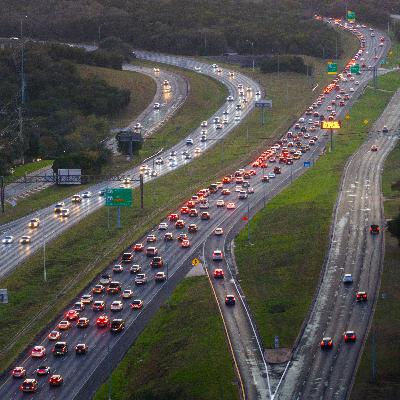
Between 2010 and 2022, pedestrian deaths in the U.S. jumped nearly 80 percent.Since then, the number of walkers struck and killed by cars has remained stubbornly high – with pedestrian deaths in some cities continuing to rise.What’s made our streets so dangerous and what can we do about it?Find more of our programs online. Listen to 1A sponsor-free by signing up for 1A+ at plus.npr.org/the1a. Learn more about sponsor message choices: podcastchoices.com/adchoicesNPR Privacy Policy

No matter where you live in the U.S., you’ve probably heard stories — or have your own — about not being able to afford to live. The couple in their 30s that can’t buy a home. The 20-something who can’t afford rent without living with several roommates. The family of five who feel pinched every time they visit the grocery store. The retiree struggling to pay their health insurance premium.Whatever the situation, these stories are becoming central to how Americans are experiencing the economy. And this feeling is shaping politics.A CBS poll from October suggests inflation and the economy are now the top concern among Americans. According to the Urban Institute, 52 percent of U.S. families don’t have the resources to cover what it costs to live. The average monthly cost of groceries has also risen 32 percent since 2019.What do when we mean when we say something is “affordable?” And how do we achieve that goal when the target keeps moving?Learn more about sponsor message choices: podcastchoices.com/adchoicesNPR Privacy Policy
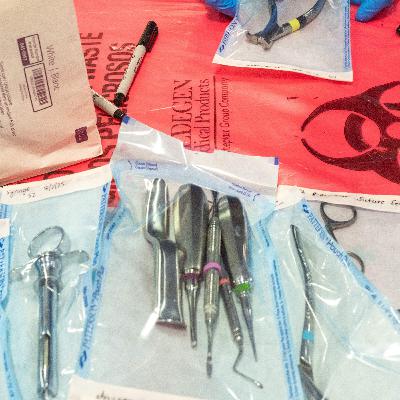
The longest government shutdown in U.S. history ended a little over two weeks ago. Federal workers are back on the job. But one of the biggest fights that helped fuel that shutdown remains unresolved.The enhanced subsidies that help millions of people afford health plans on the Affordable Care Act marketplaces are set to expire at the end of this year. Meanwhile, open enrollment for 2026 coverage is underway.As part of the shutdown deal, Republican Senate leaders promised Democrats a vote on extending health care tax credits by mid-December. But the politics haven’t changed. It remains unlikely that the extension will get through the Senate, clear the House, or get to President Donald Trump’s desk.What's in store for the future of the Affordable Care Act’s health insurance marketplaces? What kind of policy discussions are currently taking place?Find more of our programs online. Listen to 1A sponsor-free by signing up for 1A+ at plus.npr.org/the1a. Learn more about sponsor message choices: podcastchoices.com/adchoicesNPR Privacy Policy
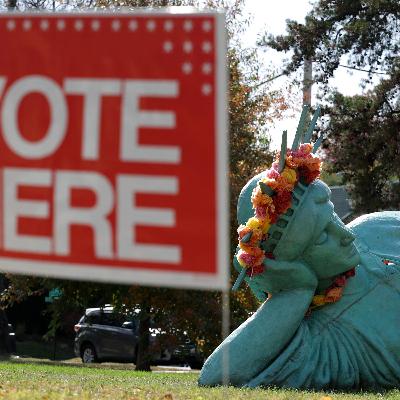
Over 210,000 federal workers left their jobs this year because of the Trump administration.That’s according to the Partnership for Public Service Harms Tracker. For many, it’s meant walking away from, or being pushed out of, a decades-long commitment to public service.And one trend that’s emerging? Fired or laid-off former federal employees and contractors are running for public office.We feature the voices of several former federal workers to hear why they see politics as the next step, especially after being forced out of jobs that were always meant to stay apolitical. What does it mean for the future health of our democracy?Find more of our programs online. Listen to 1A sponsor-free by signing up for 1A+ at plus.npr.org/the1a.Learn more about sponsor message choices: podcastchoices.com/adchoicesNPR Privacy Policy

Have you ever fantasized about going back in time to relive a moment — or change it? Maybe you’re more interested in traveling to the future where cars fly and the code to immortality has been cracked.If the idea of time travel resonates with you, you’re far from alone — particularly during a year of political upheaval. Scientists moved one step closer to understanding time travel, at least hypothetically, this year. Two physicists at the University of Queensland in Australia created a model for studying the phenomenon.We’re not there yet. But when it comes to books, movies and TV shows, that’s a different story. We’ve been thinking about hurtling through history for a very, very long time.Why do we return time and time again to stories about time travel? Will it ever become a reality?Find more of our programs online. Listen to 1A sponsor-free by signing up for 1A+ at plus.npr.org/the1a. Learn more about sponsor message choices: podcastchoices.com/adchoicesNPR Privacy Policy
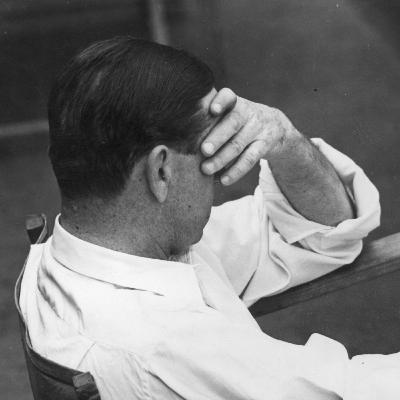
Headaches are one of the most common neurological conditions in the world. They’re also one of the most debilitating, mysterious, and misunderstood.According to the World Health Organization, 3 billion people worldwide suffer from headache disorders. And one in six Americans suffers from headaches that are so severe they limit their ability to work, sleep, or otherwise function.We discuss headaches as a part of our series “In Good Health,” where we talk about the bodily issues that most affect us. What do we know about headaches and who they affect? What works when it comes to treating headaches?Find more of our programs online. Listen to 1A sponsor-free by signing up for 1A+ at plus.npr.org/the1a. Learn more about sponsor message choices: podcastchoices.com/adchoicesNPR Privacy Policy
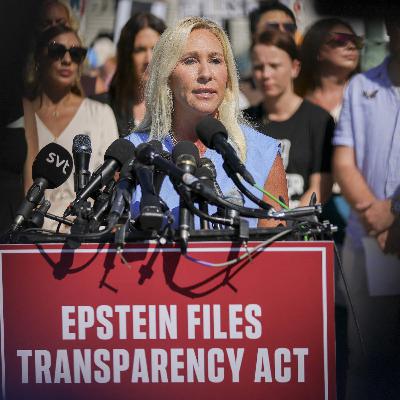
The Democratic party has been plagued by infighting over everything from its aging leadership to the war in Gaza. We talked about those divisions on the program earlier this month.Now, we’re turning our attention to the cracks in the GOP, which over the last few weeks, have only grown wider.Shortly after President Donald Trump won the 2024 election, the Republican party appeared to be in lockstep. Nearly a year later, a lot has changed.Internal divisions within the GOP include backlash over antisemitism and the release of the Epstein files. President Trump finally signed the order to release said files last week.In this installment of our weekly politics series, “If You Can Keep It,” we discuss what these divisions in the Republican party mean for the midterm elections and for its future.Find more of our programs online. Listen to 1A sponsor-free by signing up for 1A+ at plus.npr.org/the1a.Learn more about sponsor message choices: podcastchoices.com/adchoicesNPR Privacy Policy

Congress voted overwhelmingly to authorize the release of the Epstein files. President Donald Trump welcomed the decision, signing the bill on Wednesday.ICE activity in Charlotte, North Carolina, ramped up this week; authorities reportedly made some 250 arrests.The Bureau of Labor Statistics said the economy added 119,000 jobs in September, while the unemployment rate edged up to 4.4%. It is the only jobs report the BLS will release until December. On Wednesday, the agency canceled the October jobs report for the first time in 77 years.And, in global news, US President Donald Trump said Saudi Crown Prince Mohammed bin Salman “knew nothing” about the 2018 killing of journalist Jamal Khashoggi, in direct contradiction of U.S. intelligence. The president welcomed the kingdom’s de facto ruler to the Oval Office where they announced military and investment deals between the two nations.In Gaza this week, some of the deadliest Israeli airstrikes since the U.S. brokered ceasefire took effect on October 10. On Monday, the UN Security Council endorsed Donald Trump’s plan for Gaza, including the deployment of an international stabilisation force.And the war of words between Trump and Venezuelan President Nicolás Maduro is heating up. However, both sides have indicated they’d be willing to meet face to face.We cover the most important stories from around the world in the News Roundup.Find more of our programs online. Listen to 1A sponsor-free by signing up for 1A+ at plus.npr.org/the1a.Learn more about sponsor message choices: podcastchoices.com/adchoicesNPR Privacy Policy


Download from Google Play

Download from App Store
 United States
how does 0 percent of Mass killer reddrick making it in the news but this guy's trash is blasted every night since he died.
Originally uploaded: 5/24/2024
This episode failed to meet the podcast usual high standards with an author engaging in polarized discourse with a book to sell instead of actual information on education
dzszszzz,ßzd see ddexe,ex
meditation is not doing nothing
ALL>FUL>MOVIES>LINK👉https://co.fastmovies.org
Preserving classic video games is more critical than ever in today's rapidly evolving gaming landscape. As technology advances, older games risk being lost to time. However, initiatives like https://xn--o80bl8jezb35e91unugksh.com/ are working tirelessly to save these gems. By digitizing, archiving, and even remastering classic titles, they ensure future generations can experience the rich history of video games. These efforts not only honor the nostalgia of the past but also contribute to the cultural heritage of gaming.
I appreciate Jen pushing back on Dr. Le when she went on about how consumers need to be more proactive in learning about the products we're taking. Yes, we're all responsible, but there's only so much skepticism consumers can have when looking at an OTC label. Give us a break.
Just use herbs or other natural remedies!!
c vzbmk
If our legislators don't care about the reality of their constituents then what hope do we have of living freely? For a country that prides itself for the "Freedom" of its citizens, we really do like limiting the freedom we supposedly have in abundance.
What kind of music was made on the NES chip is quite incredible. I recently got a hold of A recreation of dark side of the moon that plays on the NES.
my husband David and I would love to contribute to the conversation as formally incarcerated alabamaians. non violent drug addicted and mentally ill. Mine and my husbands story especially are heartbreaking and shocking
#Mahsa_Amini #Nika_Shakarami #Dictator_Governance #Protest #Iran #مهسا_امینی #نیکا_شاکرمی ✌️✌️✌️
Can we say security theater and welfare program to pay unskilled agents above market rate?
Fantastic episode!
"Despite EU vow to end incitement, Palestinian textbooks remain unaltered -- report | The Times of Israel" https://www.timesofisrael.com/despite-eu-vow-to-end-incitement-palestinian-textbooks-remain-unaltered-report/amp/
I grew up in the area and my heart goes out to these poor poor people! 😭
I struggle with navigation, but I think it's more because I have poor working memory and not because I necessarily have poor spacial abilities? Or maybe it's a mix of both
rerun