


American Thought Leaders
Subscribed: 1,242Played: 181,456
Subscribe

© Copyright 2025 The Epoch Times
Description
At a time when our nation is portrayed as increasingly polarized, media often ignore viewpoints and stories that are worthy of attention. American Thought Leaders, hosted by The Epoch Times Senior Editor Jan Jekielek, features in-depth discussions with some of America’s most influential thought leaders on pertinent issues facing our nation today.
813 Episodes
Reverse

“We get a lot of inappropriate over-prescribing for almost everything,” says drug policy researcher and journalist Alan Cassels.Cassels is the co-author of “Selling Sickness: How the World’s Biggest Pharmaceutical Companies Are Turning Us All Into Patients.”For Cassels, it was one disease in particular—osteoporosis—that changed his entire view of medicine.Based on changing definitions of the disease, large swaths of Americans could suddenly be declared sick and in urgent need of drug treatment.They “medicalized normal aging of basically the entire female population. Overnight,” he says.In our interview, we discuss the influence of the pharmaceutical industry on overdiagnoses and prescriptions, and how the criteria for many diseases can be expanded arbitrarily.“When you look closely at the quality of prescribing, a lot of times, the decision-making is not really driven by evidence. It’s driven mostly by … marketing, biases, influence from thought leaders, and influence from guidelines, medical guidelines themselves, which are often appallingly biased,” he says.Many doctors, Cassels says, know little about the adverse effects of the many drugs they prescribe to their patients.We also dive into the connection between psychiatric drug prescriptions and violence, how psychiatry labels normal behaviors as abnormal, and how exaggerated statistics are used to sell theories of disease and drug treatments.Views expressed in this video are opinions of the host and the guest, and do not necessarily reflect the views of The Epoch Times.

 1
1“COVID was a really dark time for me and for a lot of people,” said Rob Schneider.For the famous comedian and actor, the years of the pandemic were a time to take stock of what had become of America, speak up about it—and even write a book. “You Can Do it! Speak Your Mind, America” was published in September 2024.“If we’re going to continue to have a free society, it’s going to require people to step up and be courageous,” Schneider said.Schneider, who is also a screenwriter and director, rose to prominence as a cast member and writer of NBC’s Saturday Night Live. He earned three Primetime Emmy Award nominations for his writing on the show.In this episode, he reflected on our current political and cultural moment.What really happened when Rob bumped into Robert De Niro at the SNL reunion? What is the role of comedy in an age of outrage? And how do we turn around the tribalism he sees gripping America?Views expressed in this video are opinions of the host and the guest, and do not necessarily reflect the views of The Epoch Times.

As early as 1989, intelligence officers in the Defense Intelligence Agency (DIA) recognized China as the next threat, says former DIA officer and physicist Michael Sekora.“We identified what [China] was doing to become a superpower faster than any country in history, and we were on track to containment,” Sekora says.Back in the 1980s, he led a classified Defense Intelligence Agency program called “Project Socrates” that was created under the Reagan administration to determine the cause of U.S. economic and military decline, find a way to reverse it, and outcompete Moscow. Later they turned their sights to Beijing.“It was very obvious what was going on: China was executing a national technology strategy, which basically was playing ... a very adroit game of worldwide offensive, defensive, technology exploitation chess,” Sekora says. “What we had in Socrates could have easily contained China.”The project was defunded by the Bush administration, and the United States went the opposite route, allowing many key technologies to be handed over to Beijing over the course of several decades.In this episode, he breaks down why he believes the United States has lost its edge in technological innovation and how this can be turned around.Views expressed in this video are opinions of the host and the guest, and do not necessarily reflect the views of The Epoch Times.
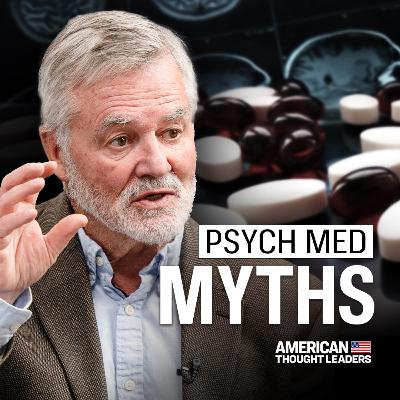
For the past half century, Americans have been told that psychiatric drugs fix chemical imbalances in the brain. But this is nothing but a myth, says journalist Robert Whitaker.Whitaker is the publisher of MadInAmerica.com and is known for his influential critiques of modern psychiatry and psychiatric drug treatment.It was hypothesized that depression was due to too little serotonin and that schizophrenia was caused by too much dopamine—and that drugs could fix that, just like insulin for diabetes. But that was never backed up by evidence, Whitaker said.“That was the story that was used to sell a whole second generation of psychiatric drugs and dramatically expand the psychiatric enterprise worldwide,” he said.In 1999, Whitaker co-wrote a series of articles for the Boston Globe on psychiatric research and became a finalist for the 1999 Pulitzer Prize for Public Service, thereby establishing his reputation in this field. Later, he served as director of publications at Harvard Medical School.“We have this story that we’re making great progress in diagnosing and treating mental disorders,” he told me.U.S. spending on treating mental disorders has risen substantially over the past decades, from tens of billions in the late 1980s to more than $100 billion per year today. But there is no evidence, he says, that these drugs improve long-term outcomes. On the contrary, there is plenty of evidence that psychiatric drugs can actually make things worse, he says.“They actually cause chemical imbalances, increase the chronicity of disorders, increase functional impairment, and you see rising disability rates wherever you see this paradigm of care adopted,” he says.Certain antipsychotics for schizophrenia, for instance, can actually reduce brain tissue, particularly in the first year, and that’s been associated with cognitive decline and a worsening of symptoms.Evidence shows that other countries, including developing nations, that have not adopted this same approach have seen much better outcomes, he says.In this episode, he breaks down his findings from decades of studying this issue. Whitaker is the author of “Mad in America” and “Anatomy of an Epidemic.”Views expressed in this video are opinions of the host and the guest, and do not necessarily reflect the views of The Epoch Times.
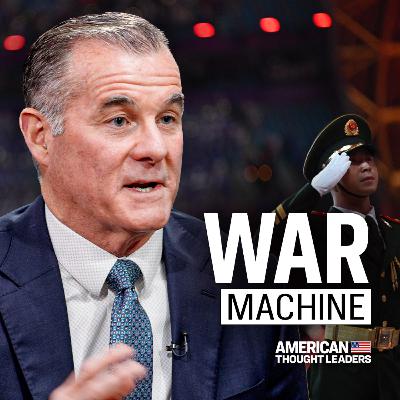
How might a potential Chinese invasion of Taiwan unfold? China’s anti-access/area-denial (A2/AD) strategy—a combination of missiles, submarines, sensors, and air defenses—is designed specifically to block and disrupt US air, sea, and even space and cyber power.But the true outcome of the operation will hinge on the rapid mobilization of People’s Liberation Army (PLA) ground forces, argues recently retired four-star general Charles Flynn, former commander of U.S. Army Pacific.He warns that the real “center of gravity” of a Chinese invasion will lie in its ability to rapidly assemble, deploy, and transport land forces across the Taiwan Strait.“What keeps me up at night is their ability to actually pull that off in 96 hours,” Flynn says.He is convinced that building a “strategic land power network” and forging deep, enduring ties with partner armies in Asia will be vital to deterring the Chinese regime.In this episode, Flynn lays out a roadmap for how the U.S. military should rethink its strategy, technology, and partnerships to deter Beijing and safeguard its allies in the Indo-Pacific.“This century is going to be defined by the relationship between the United States and China. … We’ve said we’ve pivoted to the Pacific for more than a decade, and in actual behavior and actions, that’s not accurate,” Flynn says.Before commanding U.S. Army Pacific, Flynn served as the Army’s Deputy Chief of Staff for Operations, Plans and Training (G3/5/7). He is the brother of General Michael Flynn, former national security advisor to President Donald Trump.Views expressed in this video are opinions of the host and the guest, and do not necessarily reflect the views of The Epoch Times.

Amidst ongoing U.S. efforts to mediate a Russia–Ukraine peace and the release of a new U.S. national security strategy that has sent shockwaves through Europe, I’m sitting down with the foreign minister of Latvia, Baiba Braze, to get her unique perspective.Latvia is a small Baltic country bordering Estonia, Lithuania, Belarus, and Russia. In the 1940s, the Soviets occupied Latvia and its neighboring countries—a reality that has made Latvia hyper-vigilant against potential Russian expansionism.Latvia joined both the EU and NATO in 2004, alongside Lithuania and Estonia.Latvia is one of the few NATO countries that spends considerably more than 2 percent of its GDP per year on its military.“We keep reminding [other NATO countries] that it’s possible to do that, and we are showing you as our example. In our case, it’s 5 percent hard defense capabilities,” Braze said.Latvia is working to reallocate state funding to hit a target of 4.91 percent of GDP in defense spending by 2026 and 5 percent in subsequent years.In our wide-ranging interview, Braze discusses the Ukraine war, how she sees a potential peace agreement taking shape, and how pressure can be mounted on Russia. She’s traveled four times to Ukraine in the 18 months since her appointment as Latvia’s minister of foreign affairs.Views expressed in this video are opinions of the host and the guest, and do not necessarily reflect the views of The Epoch Times.
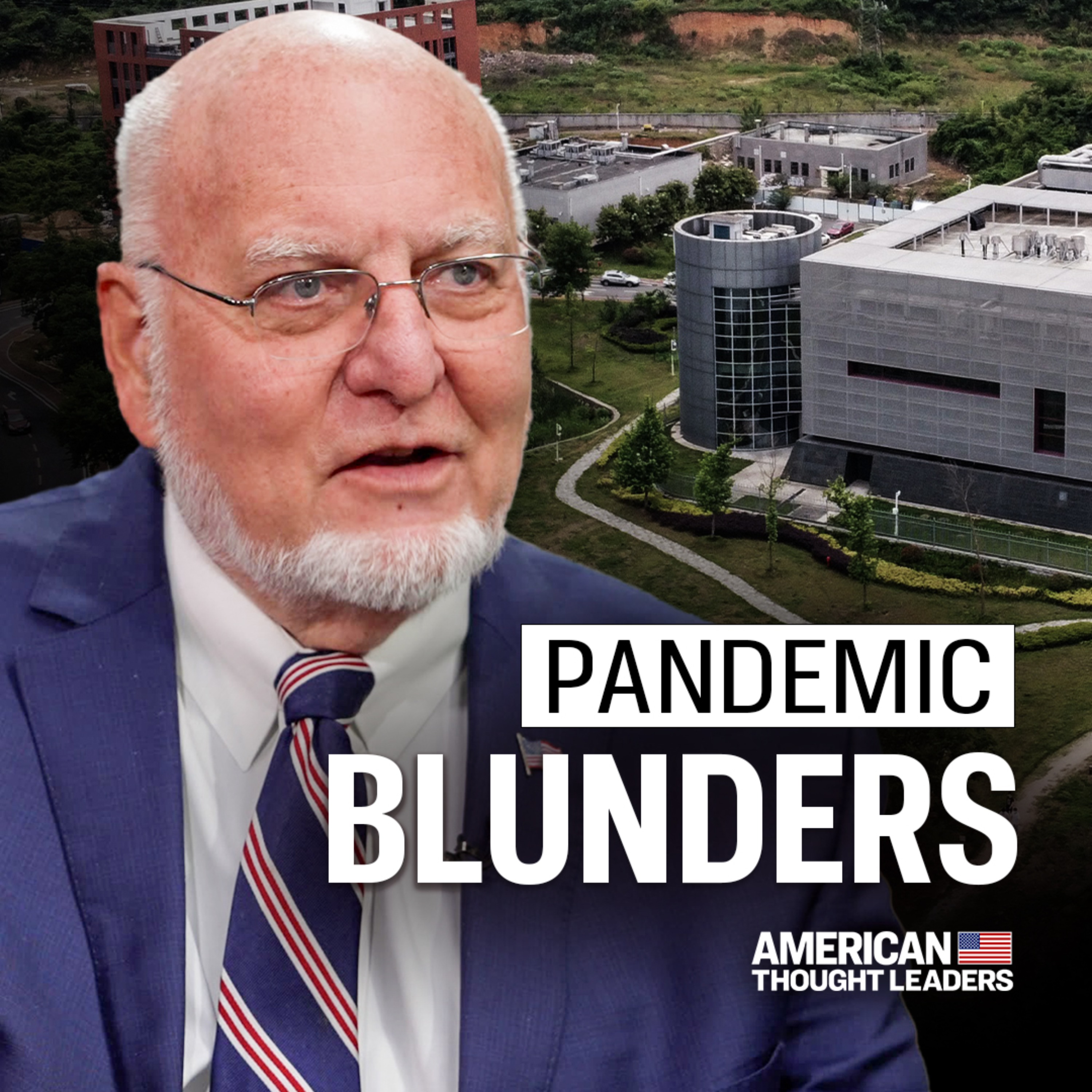
Dr. Robert Redfield, former director of the Centers for Disease Control and Prevention, says he’d like to see the mRNA COVID-19 vaccines phased out and eventually removed from the market.Redfield led the CDC from 2018 to 2021. While an avid proponent of vaccines in general, he hopes that the fallout from the emergency-authorized mRNA vaccines will lead to a broader recognition that vaccine manufacturers must no longer be exempt from liability.Redfield is a clinical virologist who, prior to his appointment as CDC director in 2018, spent decades in HIV/AIDS research and clinical care, including service in the U.S. Army Medical Corps and later at the University of Maryland, where he co-founded the Institute of Human Virology.Over the past few years, he’s been at the forefront of treating patients who were injured by the mRNA COVID-19 vaccines.In my interview with him, we covered at length the many hot topics and questions surrounding the recent pandemic and our pandemic response, among them:How and why was the true origin of SARS-COV-2 suppressed? What indicators were there early on that the virus was likely leaked from a lab? What did Dr. Redfield know from classified documents at the beginning of 2020?What were the most significant missteps America made in its response to the pandemic?Is there a role for gain-of-function research in America? Or should it be outlawed?What is the future of mRNA technology? Should mRNA technology be used for vaccines at all?Why weren’t the vaccine-injured publicly acknowledged and adequately cared for? What kinds of reforms are needed in America’s public health system?Redfield’s new book is titled “Redfield’s Warning: What I Learned (but Couldn’t Tell You) Might Save Your Life.”He argues a lab-created bird flu may be the next pandemic. But are we prepared?Views expressed in this video are opinions of the host and the guest, and do not necessarily reflect the views of The Epoch Times.
“I’ve been fighting communism by teaching capitalism,” says Robert Kiyosaki, holding up a copy of Karl Marx’s “Communist Manifesto” and a copy of his book “The Capitalist Manifesto.”Robert Kiyosaki became famous as the author of “Rich Dad Poor Dad,” a book that has sold 48 million copies worldwide since its 1997 publication.Kiyosaki maintains that in today’s America, plagued by high inflation and a crumbling dollar, rich dads are getting ever richer while poor dads are getting poorer:“Food gets up in price, but the poor and middle class have to pay for it. So my apartment houses go up, but the poor middle class go homeless. And that’s the seed of communism, that’s the seed of revolt,” he says.In this episode, we dive into what he sees as the roots of America’s economic woes and what young people can do in today’s economy to build wealth and prosperity.Views expressed in this video are opinions of the host and the guest, and do not necessarily reflect the views of The Epoch Times.
“Neuroscientists who stand up and say ‘we have souls’ are few and far between,” says pediatric neurosurgeon Dr. Michael Egnor.“But when you look carefully at the neuroscience—the best neuroscience over the past century—it clearly points to the existence of the soul and to the existence of aspects of our mind that don’t come from the brain.”Egnor himself started off as a materialist and atheist. But 40 years and more than 7,000 brain surgeries later, he concluded that reason and free will do not reside in the brain. In this episode, he reveals what he’s found.“Neuroscience is just fundamentally wrong in a lot of ways … because of the materialist bias in neuroscience. We can’t get away from this machine analogy, [but] we’re not machines, and we don’t work like machines work. And there’s overwhelming evidence in neuroscience for the existence of a soul,” he says.Dr. Egnor is a professor of neurosurgery and pediatrics at Stony Brook University, a senior fellow at the Discovery Institute, and the co-author of the book “The Immortal Mind: A Neurosurgeon’s Case for the Existence of the Soul.”Views expressed in this video are opinions of the host and the guest, and do not necessarily reflect the views of The Epoch Times.
Maryanne Demasi is an independent investigative journalist based in Australia and a former medical scientist with a PhD in rheumatology from the University of Adelaide.For many years, she worked for the Australian Broadcasting Corporation (ABC) and gained wide attention for reporting on controversial medical topics, particularly the efficacy and safety of statins and psychiatric drugs.Demasi was eventually suspended from her position at ABC in 2016 following controversies over her comprehensive and critical examination of statin drugs and other health risks. After leaving ABC, she continued her career as an independent investigative medical journalist.In this interview, we discuss how science can be weaponized and drug data manipulated or suppressed, even for many common drugs prescribed to millions of Americans.“Psychiatry is a classic example of where pharmaceutical companies have been sponsoring their own trials and burying data and then putting a spin on the medical journal, saying that the drug is safe and effective when the fact is, it’s not,” she says.“This is not an exception. This happens commonly. Throughout history, pharmaceutical companies have been sued for designing trials [and] hiding, burying data.”Demasi said she has been censored during her career as a journalist and understands the censorship and the pressures faced by journalists and medical professionals who challenge the data and narratives of the powerful pharmaceutical industry.“COVID was the unmasking of how all of this censorship came about,” she said. “It really was an event that woke people up to just how corrupt the system is at every level, from the media to the academia to the agencies that are meant to protect us to the medical journals.”Views expressed in this video are opinions of the host and the guest, and do not necessarily reflect the views of The Epoch Times.
In this exclusive interview with FBI Director Kash Patel, we dive into the agency’s crackdown on crime and foreign espionage, his trip to China, the “burn bags,” and recent criticisms.What exactly is the “764 network,” and how is the FBI working to target these actors? Why did President Donald Trump label Antifa a domestic terror organization, and how does this alter the playing field?Does the FBI director’s recent visit to China signify a pivot in the agency’s priorities? Given Beijing’s record of broken promises, can we really expect the regime to honor its side of the fentanyl deal?The criminal case against former FBI Director James Comey was dismissed—what’s next? What are the FBI “burn bags,” and what was really discovered in those Trump investigation documents?Patel also reacts to recent headlines and controversies regarding his use of an FBI aircraft, the security detail for his partner, Alexis Wilkins, and rumors that Trump planned to replace him as FBI director.Views expressed in this video are opinions of the host and the guest, and do not necessarily reflect the views of The Epoch Times.

For many Americans, the COVID-19 era revealed profound ruptures in American society. While some are eager to move on from that period and simply return to “normal,” there are others who wonder: Is it really that simple?How can we move forward without truly reconciling with the profound brokenness that was revealed in the last five years? How can we simply ignore or forget those who were censored, deplatformed, surveilled, fired, socially exiled, or irrevocably injured? And if a new virus were to spread in America, can we really say that the same things wouldn’t happen all over again?At the center of the people asking these questions is the Brownstone Institute, founded by Jeffrey Tucker, senior economics columnist at The Epoch Times. Brownstone has become a safe haven for free thinkers to deliberate on some of the most profound questions of our time.“We’re really at this precipice. We don’t know which way we’re going to go,” Tucker says.In this episode, he breaks down nine key foundational institutions of American life that he believes are in desperate need of reform.“We need a different system, a renewed and refreshed system of ideas production and teaching production in this country, with new independent institutions that are willing to stand up and do the right thing, [that] embrace classical forms of teaching and have a broad-minded approach to academia,” Tucker says.Views expressed in this video are opinions of the host and the guest, and do not necessarily reflect the views of The Epoch Times.
In a few years, America may not need to buy critical minerals from China anymore, says synthetic chemist and nanotechnologist James Tour.Why? Because of a method called flash Joule heating that he and his team have been studying at Rice University.China currently has a near-monopoly on global processing capacity for critical minerals, including rare earths. These are essential to much of our modern economy, from electronics to defense to medical devices.The United States has access to plenty of rare-earth reserves, but minimal capacity to process and refine them. Rebuilding these incredibly complex supply chains independent of China is a major uphill battle.But Tour and his team have pioneered a process that allows for the quick extraction of rare earths from something we have in abundance: electronic and industrial waste.“We realized that we could take certain materials, say industrial waste like fly ash … flash it, and get rare-earth elements to come out,” Tour says.The same method can be used to extract rare earths from mine tailings—the leftover, toxic material from old mines that were once too expensive to process.“So there’s huge availability of this. And if you recycle it—metals are infinitely recyclable,” Tour says.Tour is a professor of chemistry, materials science, and nanoengineering at Rice University. You can find him on X and other platforms: @drjamestourViews expressed in this video are opinions of the host and the guest, and do not necessarily reflect the views of The Epoch Times.
Most Americans have little understanding of the vast amount of private data harvested from their smartphones by third parties, said Joe Weil, a former Apple product manager and the founder of Unplugged.Where you go, who you associate with, what you like, is all easily discoverable, Weil said.“It’s publicly available. It’s purchasable.”What’s even worse is that the Fourth Amendment does not protect this advertising data, he said. The U.S. government, for example, does not require a warrant to access it.Data brokers sell this data freely, and by applying just a few filters, anyone—foreign governments, intelligence services, criminal cartels—can easily triangulate it to surveil and target individual people or groups, Weil said.“We can’t do [surveillance] in China. They can do it here, and it’s a huge vulnerability. They can easily find the people they want to take off the board—it’s mapped out from our phones,” he said.Weil worked for 10 years at Apple in product strategy before founding Unplugged, a tech company that has built a smartphone designed to block tracking, data harvesting, and behavioral profiling at the system level.Views expressed in this video are opinions of the host and the guest, and do not necessarily reflect the views of The Epoch Times.
Modern medicine is veering away from the traditional Hippocratic Oath that required physicians to do no harm and use their knowledge and skills solely for the purpose of healing the patient, says psychiatrist and bioethics expert Dr. Aaron Kheriaty.Now, physicians are euthanizing patients, removing healthy organs in certain transgender-related surgeries, and injecting drugs for late-term abortions even when the mother’s life is not threatened.Hippocratic principles are being superseded by utilitarian ethics that prioritize the “greater good” over the well-being and rights of individual patients, Kheriaty says. That’s fueling, for instance, the push to expand the dead-donor eligibility criteria for organ donations.It’s also manifesting in the push to adopt technological advancements like germ-line gene editing that could be used to create “designer babies” or in vitro gametogenesis (IVG), a process that uses stem cells, such as those derived from skin cells, to create human eggs and sperm in a lab.Earlier this year, an op-ed in the MIT Technology Review argued for the creation of “spare” human bodies called “bodyoids.” These would essentially be human bodies created in laboratories from human stem cells, but without brains or consciousness. Proponents say they would revolutionize medical research and drug testing and create an unlimited supply of organs.It sounds like the stuff of science fiction. What are the true ethical implications? Is this really where we want medicine to go?Kheriaty is the director of the bioethics and American democracy program at the Ethics and Public Policy Center and former director of the medical ethics program at UCI Health.His latest book is titled “Making the Cut: How to Heal Modern Medicine.”“The biggest advance [that] medicine needs to make is to accept the limits of medicine,” he says.Views expressed in this video are opinions of the host and the guest, and do not necessarily reflect the views of The Epoch Times.

Declan Ganley’s company, Rivada Networks, is developing a technology that may revolutionize global connectivity and security—and it appears that the Chinese communist regime is desperately seeking to gain control of it.As much as 99 percent of global internet traffic today relies on a series of subsea fiber-optic cables around the world that are vulnerable to natural disasters and attacks. Chinese cable-cutting incidents have shown how easily they can be sabotaged.Ganley is working on something called the Outernet, a constellation of 600 Low Earth Orbit (LEO) satellites that would make up the world’s first self-contained communications network.Unlike traditional satellite networks that route data back to Earth repeatedly, the satellites are interlinked by high-speed lasers and advanced onboard routers, making it possible for data to travel directly through space, touching the Earth only at the start and the final destination.But progress has been slow. Why? Ganley refused to partner with Chinese companies on the project.“They decided to launch a torrent, a tsunami of lawsuits that were baseless, that were unwinnable, that were almost cartoonish in their flakiness—but in the full knowledge that we would have to spend money to defend against these insane lawsuits,” he says.So far, he and his company have already had to spend $36 million to defend against a flurry of lawsuits across multiple jurisdictions.Nonetheless, he believes it’s a battle worth fighting.“I know what the Outernet can do. I would rather burn it down than have the Communist Party of China have the Outernet. Our way of life could depend on them not having the Outernet,” Ganley said.Ganley was one of the very early voices warning about the dangers of Chinese technology in Western telecommunications networks: “I know how dumb governments are. I saw them implement policies and regulations that allowed Huawei and China to dominate the global wireless industry and literally deploy 5G networks in Western democracies.”“We have absolutely handed them data network dominance on a plate, and now they want this Outernet. Why do they want it? Because they want the fastest network in the world, the lowest latency network in the world, the most secure network in the world,” Ganley added.Views expressed in this video are opinions of the host and the guest, and do not necessarily reflect the views of The Epoch Times.
Filmmaker Natalya Murakhver has recently released her new documentary “15 Days: The Real Story of America’s Pandemic School Closures.”It shows the devastating effects that remote learning had on children and families. What was the true impact of the school closures on a generation of children? How can we begin to measure it?“Viewers will bear witness to the stories of the people who experienced the closures directly. The film was shot almost immediately following the closures. We started in 2022, so the pain was still extremely raw,” Murakhver says.“I felt [that] we better get those stories in now, because people won’t want to talk about them in a couple of years. ... As we show the film, I see people’s body language, and they shudder. It takes them back to a very dark time.”Murakhver co-founded parent advocacy organization Restore Childhood in 2021 and played a leading role in mobilizing New York City parents to reopen public schools during the pandemic.In the spring of 2021, she filed a lawsuit against New York City and its Department of Education, seeking a judicial order to fully reopen public schools for five days a week of in-person learning.“People watch the film … and they realize how important it is to know the history,” she says.Views expressed in this video are opinions of the host and the guest, and do not necessarily reflect the views of The Epoch Times.
Why did Patrick Girondi, a successful singer and songwriter, become the founder and CEO of a pharmaceutical company?Originally from the South Side of Chicago, Girondi dropped out of high school and became a musician and also, quite by accident, a highly successful commodities trader.In the early 1990s, his young son Rocco was diagnosed with thalassemia, a rare blood disorder caused by a defect in the globin genes.Girondi was told by doctors that his son would not live to be a teenager.So Girondi set out to find a cure. His company has been working on developing gene therapies and treatments for rare blood disorders such as thalassemia and sickle cell disease.He’s now recruiting for clinical trials, and his son will be among the first to receive his new treatment for thalassemia in the coming months.When I sat down with Girondi to hear his life’s story, he told me: “San Rocco Therapeutics … has become involved in so many different rare diseases, because people would reach out to us. Parents, in desperation, would read about me, find my story, find me. Sometimes through friends. … Sometimes they would come to me after concerts.”There are 6,000 rare diseases in the world, also called “orphan diseases,” he says, because nobody wanted to invest in expensive research to find a cure.Girondi has released seven albums to support rare disease awareness, and he is the author of “Flight of the Rondone: High School Dropout VS Big Pharma: The Fight to Save My Son’s Life.”Views expressed in this video are opinions of the host and the guest, and do not necessarily reflect the views of The Epoch Times.
Recently, Bill Gates very publicly pivoted on climate change, rejecting “doomsday” predictions and calling for a more pragmatic, human-centered approach.Is that a sign that the era of climate alarmism is coming to a close?That’s what I wanted to find out when I sat down with Michael Shellenberger, author of “Apocalypse Never” and founder of Public.news and the nonprofit Environmental Progress.From rising sea levels to surging forest fires to dying polar bears to disappearing coral reefs, much of what we’ve been told about climate change is not true, he says.The rising sea level narrative, for example, rests entirely on computer models that were manipulated to produce the desired outcome, Shellenberger says.“It’s clear that the activist scientists were manipulating models to show an acceleration in sea level rise when the only long-term, reliable source of data, which is called tide gauge data ... shows no acceleration from the 1850s on,” he says.How is data cherry-picked or skewed to create misleading narratives when it comes to climate change? What’s behind the sudden embrace of nuclear energy—after it had been demonized for decades? How might it be related to the global AI race?Views expressed in this video are opinions of the host and the guest, and do not necessarily reflect the views of The Epoch Times.
“We don’t want Americans to participate in any way, shape, or form in this kind of organ harvesting and transplantation scheme. … You can actually sit in America, [and] make an appointment for a heart, lung transplant in China right now,” says Congressman Neal Dunn (R-Fla.), a former Army surgeon who is also founding president of the Advanced Urology Institute in Florida.“I want to make that illegal.”As a starting point, Dunn has introduced the Block Organ Transplant Purchases from China Act, also known as the BLOCK Act, which would prohibit federal reimbursement for organ transplants and related medical services if the origins of the organs cannot be verified, as is the case in communist China.In our wide-ranging interview, we cover China’s illicit organ trade, the biowarfare program, and President Donald Trump’s new trade deal with leader Xi Jinping, as well as how America can accelerate rare earth mineral production, and the strategic significance of Pacific island nations like the Solomon Islands.As a member of the House Select Committee on the Strategic Competition Between the United States and the Chinese Communist Party—often referred to as the House CCP Select Committee—Dunn receives intelligence briefings on the multifaceted threats that Beijing poses to American national security.The CCP “is gathering biological data on all of us,” he says. “One of the most insidious ways they gather biological DNA sequencing on us is they run a set of blood banks in the United States.”Views expressed in this video are opinions of the host and the guest, and do not necessarily reflect the views of The Epoch Times.


Download from Google Play

Download from App Store
 United States
Joel salatin that is fantastic! I am so glad he's back in the newspaper business again! wow you guys are really getting more and more important. on the right track, I got to get a subscription.
seems like that interview ended quickly. fascinating stuff can't wait to hear from James tour again, please do another interview soon
I think America is so hungry for this. productive, feel good at the end of the day, difficult thinking work. I hope manufacturing in China brings about democracy freedom over there but we need to get it back here before it's too late do we need to get our health better so we can do this kind of work, with our minds and our bodies, otherwise we'll never get anything done.
need a transcript. this guy is hard to understand.
halfway through and all I'm hearing is a politician speak. I guess I got to keep listening to the end, but I can already hear it in Jan's voice, this isn't the interview he was hoping for. but out of respect for him...
Great guy
Amazing podcast on Post-Journalism also check https://nolieshere.com/what-happened-to-carl-azuz/
Geometry Dash Breeze is a new version with superior designs and gameplay. Enjoy exciting adventures while keeping an eye out for threats and collecting cash. https://geometrydashbreeze.org
it cut off the interview midway
If only every self-described socialist were suddenly as capable of critical thinking!
Only 12 minutes long. most of the interview is missing.
Weather barroon! Totary not for spying!
Without a way out Putin will keep killing civilians.... But if we let Putin win then China will just attack Taiwan...
Looking forward to this interview. I read Capt. Lohmeier's book - FANTASTIC! Highly recommend to everyone. I'm going to buy a few more copies and place them in little libraries around my woke neighborhood. These people need to be educated.
how can I download the full episode? I have a digital subscription.
Jan, thanks for the great interview! Sure wish I'd have heard this before I sent my college-aged kids to public schools. Back then I didn't think I was qualified, or had the right chemistry with my kids to teach a classical education. Thank you Han and Ms. Bortins for inspiring the next generation of families; we're counting on them to turn the tide of craziness back to sobriety and wisdom.
Thank you, General Flynn🙏🇺🇸
👍👍
👍👍 Recommend
Great episode. Thanks, Victor.