


 Claim Ownership
Crossing Faiths
Subscribed: 6Played: 116
Subscribe

© 2025 Crossing Faiths
Description
Crossing Faiths is a podcast where people from diverse religious backgrounds openly discuss everything you're NOT supposed to discuss at the dinner table. Join hosts Jt Pinna, a career national security, international affairs, and D.C. insider, and Elliot Toman, a former media director in the Evangelical church, as they engage in lively conversations about the impact of faith on current events. Crossing Faiths also welcomes guests from various religious and experiential backgrounds to share their insights.
The podcast was initially developed in collaboration with Matt Hawkins, a former policy director for the Southern Baptist Convention. Their conversations are built on a decade of collaboration, advocating in Washington, D.C., for religious freedom domestically and globally. The two developed the podcast to share conversations that model friendship and cooperation despite profound differences in religion and background. The podcast has reached almost 3 million multi-faith listeners, 83% millennials.
The podcast was initially developed in collaboration with Matt Hawkins, a former policy director for the Southern Baptist Convention. Their conversations are built on a decade of collaboration, advocating in Washington, D.C., for religious freedom domestically and globally. The two developed the podcast to share conversations that model friendship and cooperation despite profound differences in religion and background. The podcast has reached almost 3 million multi-faith listeners, 83% millennials.
196 Episodes
Reverse

In this episode of Crossing Faiths, John Pinna speaks with Mandana Hendessi about her career in human rights advocacy and international development across Iraq and Afghanistan, with a particular focus on her novel, The Almond Garden of Kabul (https://www.afsana-press.com/the-almond-garden-of-kabul). Drawing from her real-life experiences providing legal aid and counseling at the Badam Bagh women's prison, Hendessi explores the systemic oppression of women through the lens of "moral crimes" and the contradictions between national law and conservative judicial interpretations. The interview delves into the harrowing realities of sexual abuse and trafficking within the prison system, while also highlighting the profound sense of sisterhood and resilience found among a diverse group of incarcerated women. Ultimately, the conversation examines themes of trauma, institutionalization, and the complexities of translating Western concepts of mental health and empowerment into the cultural and linguistic nuances of Afghan society.
Mandana Hendessi (https://www.afsana-press.com/mandana-hendessi) (OBE) is a writer and women's rights advocate whose thirty years in gender equality and humanitarian work have taken her from the corridors of Westminster to the crowded refugee camps of the Middle East and the dimly lit cells of Afghan prisons. These encounters – layered with resilience, grief, and defiance – have given her a rare insight into the human cost of injustice, an insight that continues to infuse her fiction. Lived at the intersection of politics, war, and survival, these experiences shape her writing, which seeks to give voice to those too often silenced.
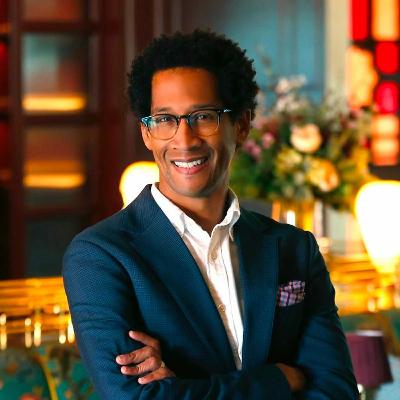
In this episode of Crossing Faiths, John Pinna speaks with Shaka Mitchell, founder of the Come Together Music Project, about utilizing music as a tool to deepen relationships and foster vulnerability across cultural and political divides. They discuss the origins of Mitchell's podcast, which invites guests to share songs based on specific prompts, leading to unexpected and humanizing conversations—such as a dialogue between strangers regarding their differing perspectives on safety and isolation during the COVID-19 pandemic. The pair also explores the intersection of faith and community, touching on the nuances of celebrating Christmas in diverse households, the communal nature of holiday traditions like caroling, and the parallels between church bells and the recently approved broadcast of the Islamic call to prayer in New York City. Ultimately, the interview highlights how music serves as a universal language that can lower defenses and allow individuals from opposing backgrounds to find common ground.
Shaka Mitchell Substack:
https://substack.com/@shakamitchell
Come Together Podcast:
https://open.spotify.com/show/13xN302EaRVizFTrsDZVRq
https://podcasts.apple.com/sn/podcast/come-together-podcast/id1691123150
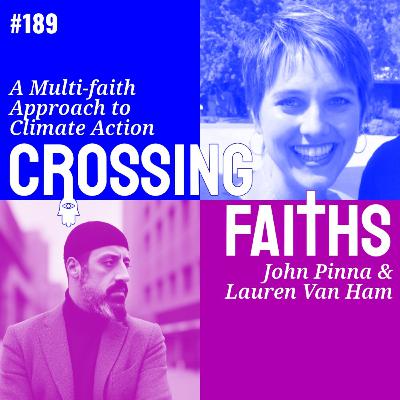
In this episode of Crossing Faiths, John Pinna speaks with Lauren Van Ham, an interfaith minister and the Earth Restoration Coordinator for the United Religions Initiative (URI), about the vital intersection of spirituality and environmental stewardship. Van Ham details her journey to becoming an "Eco-Chaplain," a role dedicated to caring for the Earth as our collective home, and explains how her multi-faith background informs her approach to climate action. The discussion explores the necessity of moving beyond symbolic gestures like Earth Day toward cultivating a daily, intimate relationship with the natural world, while also examining how diverse religious traditions provide theological frameworks for protecting the planet. They further discuss URI’s "Peacebuilding through Earth Restoration" program, which fosters grassroots interfaith cooperation to address issues like land degradation and resource scarcity, ultimately arguing for a shift away from anthropocentrism to recognizing humanity's deep interdependence with nature.
URI: https://www.uri.org/
About Lauren: https://www.uri.org/lauren-van-ham
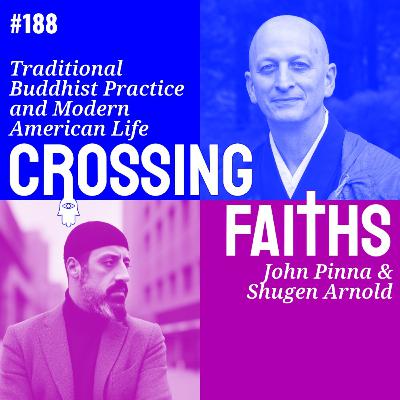
In this episode of Crossing Faiths, John Pinna speaks with Geoffrey Shugen Arnold, the Abbot of the Zen Mountain Monastery, about the intersection of traditional Buddhist practice and modern American life. Shugen elucidates the role of an Abbot as both a spiritual teacher and administrator before diving into core Buddhist concepts, explaining how the suffering caused by clinging to a permanent sense of self can be alleviated through the "Middle Way" and non-attachment. The conversation explores Shugen’s personal journey, from his upbringing in Atlanta during the Civil Rights movement—where the societal silence regarding segregation prompted his deep questioning of culture and history—to his transition from a budding career in mathematics and music to a disciplined monastic life in the Hudson Valley. They conclude by discussing the delicate balance between maintaining a cloistered environment for deep meditation and fulfilling the Bodhisattva vow of service, highlighting the monastery's efforts to engage with the wider community through social justice initiatives and anti-bias training.
Geoffrey Shugen Arnold, Roshi is the Head of the Mountains and Rivers Order and Abbot of Zen Mountain Monastery. Shugen entered full-time residential training in 1986 after studying mathematics and receiving a degree in classical music. He received dharma transmission from John Daido Loori, Roshi in 1997. His teachings on Zen, social justice and environmental stewardship have appeared in various Buddhist journals, and The Best Buddhist Writing 2009 (Shambhala Publications). His book of poetry, O, Beautiful End (https://monasterystore.org/o-beautiful-end/), a collection of Zen memorial poems, was published in 2012.
https://zmm.org/
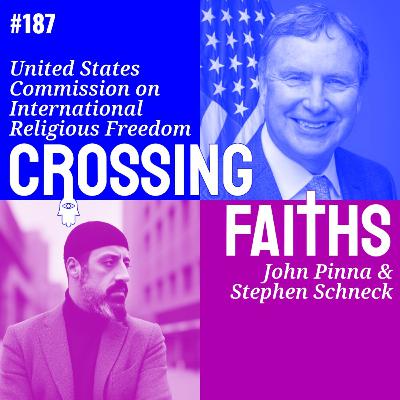
In this episode of Crossing Faiths, John Pinna speaks with Stephen Schneck, a Commissioner for the United States Commission on International Religious Freedom (USCIRF), about the vital role the independent, bipartisan commission plays in monitoring and advocating for freedom of belief worldwide. Schneck details the distinction between USCIRF’s advisory role and the State Department’s policy implementation, while highlighting his specific focus on the intersection of religious persecution and the global refugee crisis. The conversation delves into Schneck’s background as a political philosopher and practicing Catholic, exploring how the American founders' ideals and the Catholic Church’s modern embrace of inter-religious dialogue inform his approach to human rights. Finally, the two discuss the difficulties of securing tangible victories in the current geopolitical climate and the critical necessity of Congressional reauthorization to ensure the Commission can continue its work amidst rising threats to religious liberty.
A political philosopher by training, Stephen Schneck retired from The Catholic University of America in 2018, after more than thirty years as a professor, department chair, and dean. At the university he was also the founder and long-time director of the Institute for Policy Research & Catholic Studies. He received his doctorate from the University of Notre Dame.
A well-known advocate for Catholic social justice teachings in public life, Schneck currently serves on the governing boards of Catholic Climate Covenant, which advocates for environmental justice and care for creation, and of Catholic Mobilizing Network, a Catholic organization working to end the death penalty and advance restorative justice. His writings appear regularly in the religious media and he is a frequent commentator on Catholic matters for national and international news services. Previously, he was the executive director of Franciscan Action Network, which promotes environmental, economic, racial, and social justice on behalf of the Franciscan communities of the United States. He served the administration of President Barack Obama as a member of the White House Advisory Council for Faith-Based and Neighborhood Partnerships.
Born and raised in Clinton, Iowa, Schneck now lives with his wife, Suzanne, on Bald Head Island, North Carolina.
In this episode of Crossing Faiths, John Pinna speaks with Brian Grim from the Religious Freedom and Business Foundation about his influential research on global religious freedom. Grim recounts how his personal experiences living in the Muslim world, particularly during 9/11, led him to develop the groundbreaking framework that measures religious restrictions through two distinct lenses: government actions and social hostilities. He argues that this nuanced understanding is crucial for the workplace, asserting that accommodating and respecting employees' diverse faiths fosters a more productive and engaged environment, drawing a parallel between inclusive national policies and successful corporate cultures. The conversation explores the practical challenges of accommodating various religious practices, the importance of universal religious freedom for all faiths to ensure it for any, and the critical role of data in providing perspective, informing policy, and navigating the complexities of religious persecution beyond mere anecdotes.
Dr. Brian J. Grim is a globally recognized expert on the socio-economic impact of religious freedom. He is the Founding President of the Religious Freedom & Business Foundation (RFBF) and serves as the Global Chair of Dare to Overcome, an initiative that fosters mutual respect and engagement among diverse faith-and-belief groups in workplaces worldwide.
With a Ph.D. in quantitative sociology from Pennsylvania State University, Dr. Grim has authored numerous academic articles and books. His pioneering work at the Pew Research Center led to the development of global indexes measuring Government Restrictions on Religion (GRI) and Social Hostilities Involving Religion (SHI), which are now key tools for monitoring religious freedom worldwide.
Dr. Grim’s research has shown that religion contributes approximately $1.2 trillion annually to the U.S. economy, surpassing the combined revenues of top tech companies like Apple, Amazon, and Google. His approach to religious freedom emphasizes building inclusive environments for people of all faiths and those without religious affiliation.
He has lived and worked extensively across China, Central Asia, Europe, the Middle East, and the former USSR, where he helped establish the first Western-style business school in the Soviet Union. His global influence included advisory roles with the World Economic Forum, the Tony Blair Faith Foundation, Notre Dame University Law School’s Religious Liberty Initiative, Brandeis University’s Chaplaincy Innovation Lab, and affiliations with Boston University and Baylor University.
Dr. Grim is also known for organizing the Global Business & Intercultural Peace Awards, held in cities like Rio de Janeiro, Seoul, Tokyo, New Delhi, and Washington, D.C., with support from global leaders and organizations including the United Nations Global Compact and American Airlines.
He and his wife, Julia Beth, are co-authors of Grims’ New Fairy Tales of Love Overcoming Evil (https://grimsfairytales.com/), parents of four and grandparents of 18.
In this episode of Crossing Faiths, John Pinna speaks with Rushan Abbas, an advocate for the Uyghur community and founder of the Campaign for Uyghurs, about the history and ongoing genocide of her people. Abbas explains the Uyghurs' distinct identity as a Turkic, Muslim people from East Turkestan (now called Xinjiang by China), tracing the evolution of their persecution from the Cultural Revolution to the present day. She details the current atrocities, linking them to Xi Jinping's Belt and Road Initiative, and describes the horrific conditions in concentration camps, including torture, forced sterilization of women, family separation, and the use of forced labor to create a profitable genocide. Sharing her personal story of how her own activism led to her sister's imprisonment, Abbas highlights the Chinese government's transnational repression and concludes with a powerful call to action, urging listeners to educate themselves, use their consumer power to boycott goods made with forced labor, and pressure their governments to hold China accountable.
In this episode of Crossing Faiths, John Pinna speaks with Matt Hawkins (https://matthewthawkins.com/), a founder of the podcast, about his return to the international religious freedom (IRF) space and his new role as Executive Vice President of the IRF Secretariat. Hawkins explains how the Secretariat serves as an administrative support body for the global religious freedom movement, primarily by convening the IRF Roundtable (https://irfroundtable.org), a multi-faith platform for collaboration and advocacy. They discuss Hawkins' personal journey away from and back to this work, which included significant health challenges and a period in Christian publishing, as well as the evolution of the IRF movement itself. Hawkins outlines the movement's three-pronged strategy of advocacy, cooperative engagement, and building local capacity, and highlights upcoming initiatives like a high-level meeting in Prague.
https://matthewthawkins.com/
https://irfroundtable.org
In this episode of Crossing Faiths, John Pinna speaks with Guy Elhanan, an Israeli actor and member of the Parents Circle–Families Forum, a joint Israeli-Palestinian organization of bereaved families. Elhanan shares his personal journey from a typical Israeli upbringing to a peace activist, detailing how his artistic awakening in an arts high school was abruptly curtailed by the dehumanizing experience of mandatory military service. He discusses how the military and societal narratives of conflict create a "numbness" and a narrow, aggressive definition of identity, which he later began to heal from through travel, art, and pantomime. The conversation explores the profound impact of his family's loss and his father's eventual embrace of the Parents Circle, centered on the realization that "the pain is one." Key themes include the destructive nature of militarized culture, the challenge of overcoming societal propaganda and racism, and the powerful, essential role of empathy and recognizing shared humanity as the only path toward reconciliation and a future beyond the conflict.
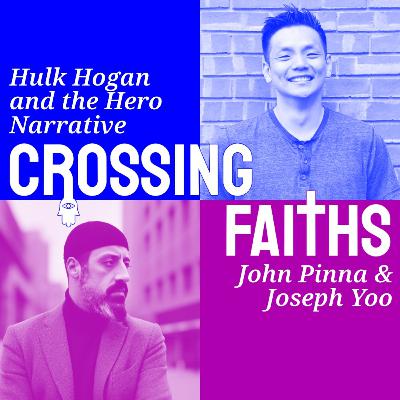
In this episode of Crossing Faiths, John Pinna speaks with Joseph Yoo for a "wellness check" following the death of professional wrestler Hulk Hogan, a shared childhood hero. They explore the complex emotions of mourning a figure they once idolized, grappling with the stark contrast between Hogan's heroic on-screen persona and the flawed, often controversial, reality of the man, Terry Bollea. The discussion delves into the power of nostalgia, the nature of parasocial relationships with celebrities, and the difficulty of reconciling a beloved character with a problematic individual. They reflect on how wrestling's simplified good-versus-evil narratives shaped their youth and compare the fervor of "Hulkamania" to a form of religious belief, ultimately concluding that their grief was for the loss of the character and the significant part of their childhood he represented.
Joseph Yoo is the priest of Mosaic Episcopal church in Houston. You can visit https://linktr.ee/JosephYoo to connect with him.
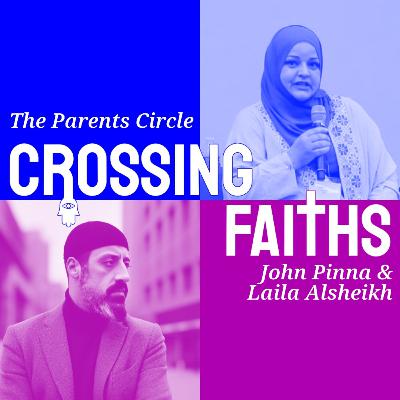
In this episode of Crossing Faiths, John Pinna speaks with Laila Alsheikh, a Palestinian from Bethlehem and a member of The Parents Circle-Families Forum, a joint Israeli-Palestinian organization of over 700 bereaved families. Laila shares the deeply personal and tragic story of losing her six-month-old son, who died after being denied timely passage through an Israeli checkpoint for urgent medical care. She recounts her journey from profound grief and anger to joining the organization, detailing a pivotal moment where she came face-to-face with the soldier responsible, only to find shared humanity and a path toward reconciliation. The conversation explores the organization's mission to use shared pain as a bridge for dialogue, advocating for an end to the cycle of violence. Laila emphasizes that the solution to the conflict lies not in political sides but in ensuring equal rights, freedom, and dignity for all, and calls for an end to the conflict so that no other families have to endure such loss.
Laila Alsheikh lives in Bethlehem in the West Bank. In 2002, her 6 months old son, Qussay, became ill and Israeli soldiers prevented Layla from taking him to the hospital for more than five hours. Qussay soon died from the lack of timely treatment. Laila joined the Parents Circle in 2016. Following her son’s death, she never thought of revenge, but rather has devoted her time and energy to ensuring a better, more peaceful future for her children.
The Parents Circle - Families Forum is a joint Israeli-Palestinian organization made up of over 800 bereaved families. Their common bond is that they have lost a close family member to the conflict. But instead of choosing revenge, they have chosen a path of reconciliation. Through their educational activities, these bereaved members have joined together to take tens of thousands of Palestinians and Israelis on journeys of reconciliation. It is often raw and always emotional. But out of these interactions, comes change. Not the kind of change that makes headlines, but a more personal and profound shift in perspective.
As a joint Israeli-Palestinian peace organization, the PCFF models constructive dialogue around shared values. Even since October 7th, 2023, its staff, members, and thousands of participants are still committed to peace and a way forward that centers around empathy and humanization. The PCFF focuses on the shared value of the sanctity of human life. This conversation brings our attention to the values that Palestinians and Israelis can agree upon even in the darkest of times.
Links:
Website: https://www.parentscirclefriends.org/
Facebook: https://www.facebook.com/ParentsCircleFamiliesForum/
Instagram: https://www.instagram.com/parentscirclefriends/
Twitter: https://twitter.com/thepcff?lang=en
LinkedIn: https://www.linkedin.com/company/american-friends-of-the-parents-circle-families-forum
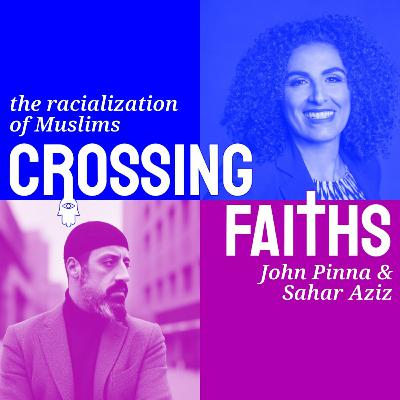
In this episode of Crossing Faiths, John Pinna speaks with Sahar Aziz, a distinguished professor of law and director of the Center for Security and Race and Rights, about the profound impact of 9/11 on Muslim identity and civil liberties in America. Aziz introduces the concept of the "racial Muslim," explaining how the collective trauma and government overreach post-9/11 led to the racialization of Muslims, treating their religious identity as if it were a racial characteristic, resulting in systemic discrimination rather than just individual bigotry. The conversation explores how American-raised Muslims, accustomed to fighting for rights, grappled with this new reality, contrasting it with older generations' responses. They discuss the historical evolution of religious freedom in the U.S., critiquing contemporary shifts towards 'religious liberty' that prioritize certain faiths and contribute to ethno-nationalist tendencies, mirroring similar 'cultural wars' globally. Finally, Aziz offers actionable strategies for vulnerable populations, emphasizing the importance of cross-racial coalitions, structural reforms, and active civic engagement to counter these increasingly authoritarian and discriminatory trends, stressing that those with privilege have a responsibility to contribute to a more equitable and just society.
Sahar Aziz's scholarship examines the intersection of national security, race, religion, and civil rights with a focus on the adverse impact of national security laws and policies on racial, religious, and ethnic minorities. She is the author of "The Racial Muslim: When Racism Quashes Religious Freedom" and co-editor of "Global Islamophobia and the Rise of Populism." She also serves as the founding director of the Center for Security, Race and Rights. Professor Aziz is a recipient of the Derrick A. Bell Award from the Association of American Law Schools and was named a Middle Eastern and North African American National Security and Foreign Policy Next Generation Leader by New America in 2020 and a Soros Equality Fellow in 2021.
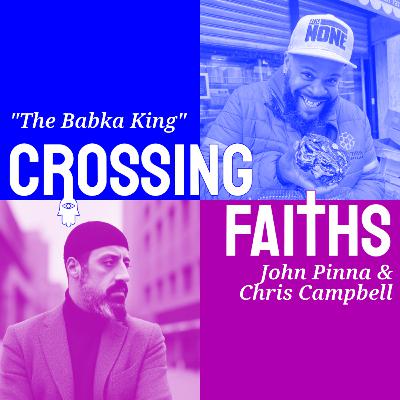
Chris Campbell—better known online as Chris CARESNONE, “The Babka King”—is a Chicago‑born speaker, podcaster, and viral food creator who uses humor and high‑energy storytelling to turn everyday dishes into unexpected lessons on unity. His cross‑cultural food videos have attracted nearly half‑a‑million TikTok fans, hundreds of thousands on Instagram, plus growing Facebook and YouTube communities, while mainstream outlets from NBC New York Live to the Times of Israel label him a bridge‑builder for our polarized era.
Raised in Chicago’s northwest suburbs, Campbell studied Mass Communication at Harper College, laying the groundwork for the relatable voice he wields today. A 2020 diagnosis of chronic lymphocytic leukemia reframed his outlook; he now calls life “house money,” a perspective he credits for the fearless tone of his brand.
A single babka review triggered a wave of Jewish‑food content, earning Campbell the affectionate “Babka King” tag. NBC New York Live dedicated a full segment titled “Breaking the Babka Code,” highlighting his knack for translating pastry into empathy. The Times of Israel later profiled how his sweet‑tooth adventures “bridge cultural gaps on Instagram, one blintz at a time.”
Whether sampling Hasidic cholent in Brooklyn, mole tacos in Chicago, or German schnitzel in Detroit, Campbell frames every bite as proof that flavors beat borders. Aish.com praised his “funny and heartwarming” approach to classic Jewish fare, while the Jewish Telegraphic Agency spotlighted how his trademark greeting—“Y’all been gatekeeping all the good food?!”—turns potential tension into shared laughter.
Campbell’s north‑star goal is clear: feed connection, not conflict. From a forthcoming book on audience‑building to plans for a traveling Babka Festival, he proves that a camera, a good bite, and a fierce belief in human potential can taste‑test us toward a kinder world—one cultural mash‑up at a time.
In this episode of Crossing Faiths, John Pinna speaks with Brad Knight, son of Paula White Cain and stepson of Jonathan Cain. Knight details his parents' unique meeting on a Southwest flight and how their diverse backgrounds (his mother as a faith advisor and his stepfather as Journey's keyboardist) have influenced their lives. The conversation then shifts to Knight's personal journey, sharing his experience as a pastor of Story Life church, which he took over from his mother, emphasizing a storytelling and prophetic approach to faith rooted in love and grace rather than judgment. He reveals his own past as an atheist and his powerful, personal spiritual encounter, contrasting this experiential faith with rigid theological apologetics. Knight also discusses his involvement with the National Faith Advisory Board, highlighting its role in fostering interfaith engagement, particularly since the Trump administration, to preserve shared values and encourage people of faith to actively participate in the political sphere, asserting that faith and public life should not be separated.
About Brad Knight
Brad Knight is the Lead Pastor of StoryLife Church (https://www.storylifechurch.com/) in Apopka, FL. In addition to pastoring, he works with the National Faith Advisory Board to engage the faith community on issues that matter most to them.
That's all wonderful, but he knows most people just know him as the son of Paula White-Cain, a prominent preacher and political figurehead. He's cool with that.
He's 14 years into a marriage to a beautiful firebrand named Rachel Knight and has the two cutest kids in the world—his 8-year-old daughter, Asher, and his 6-year-old son, Nick.
He really believes Bret Hart is "The Best There Is, The Best There Was, And The Best There Ever Will Be." Will preach for baseball tickets.
 1
1In this episode of Crossing Faiths, John Pinna speaks with Sumbul Ali-Karamali about transgender identity, emphasizing its nature as a medical condition rather than a choice. She explains gender dysphoria as a debilitating psychological state with potential biological roots, highlighting the high suicide rates among transgender youth. Ali-Karamali asserts that, from an Islamic perspective, being transgender is not forbidden; she points to the absence of prohibitions in the Quran and Hadith, and the historical acceptance and approval of gender reassignment surgery by many Sunni and Shia scholars. She argues that Islamic legal principles, such as Maqasid al-Sharia (objectives of Islamic law) and ethical concepts like Tajassus (not seeking out transgressions), advocate for human dignity and non-persecution, directly supporting transgender rights. Ali-Karamali contrasts this inherent inclusivity with the restrictive anti-trans laws prevalent in some modern nations, suggesting these are often inherited from colonial impositions rather than Islamic tradition itself. She urges listeners to reject prejudice and embrace Islam's historically compassionate and adaptable approach to human diversity.
Sumbul Ali-Karamali is a Muslim American who grew up in California, answering questions on Islam ever since she can remember. After becoming a corporate lawyer, she earned an additional degree in Islamic law. She specializes in synthesizing academic material for general audiences and is the author of The Muslim Next Door and Growing Up Muslim. A popular speaker on topics related to Islam and Muslims, she hopes to promote intercultural understanding with her work, at least when she’s not watching Star Trek reruns, listening to opera, or (reluctantly) white-water rafting with her husband.
Connect with Sumbul on her website: www.sumbulalikaramali.com.
In this episode of Crossing Faiths, John speaks with Michael Hirshorne, a motivational speaker and author, about the concept of "Dawn of Peace" and the path to achieving it through personal and collective transformation. Hirshorne outlines his philosophy of self-actualization, arguing that the current turbulent global climate is a prime opportunity for "radical change" which requires "radical thinking." The discussion revolves around the metaphor of viewing the world through different "lenses," the difficulty of changing one's perspective, and the importance of seeing "the other" as an extension of the self. They cover topics such as the self being under siege in the digital age, the danger of jumping on ideological bandwagons without personal research, and the illusion of our physical reality. Hirshorne advocates for proactive change through meditation, deep self-reflection, and focusing on desired outcomes, ultimately encouraging listeners to create a life they can look back on with a smile rather than regret.
Michael Hirshorne links:
https://podfol.io/profile/michael-hirshorne
In this episode of Crossing Faiths, John and Elliot discuss a wide range of interconnected themes, beginning with the pulp hero The Shadow and how his powers of mind control relate to the cultural trope of mysticism found in the world's unexplored frontiers. They explore the human psychological need for mystery, from ancient lost civilizations in the Hindu Kush to modern conspiracy theories, and debate whether our current civilization is an apex or merely built upon the ruins of greater, forgotten ones. The conversation then shifts to a deep analysis of the modern global financial and political systems, arguing that these structures are designed for self-preservation and profit, often at the expense of individuals and without genuine concern for existential threats like climate change or war. Using examples from the 2008 financial crisis, the university system, and international rivalries, they posit that while these systems sustain the current world order, their inherent flaws and the petty conflicts of those in power prevent true progress and leave humanity vulnerable.
In this episode of Crossing Faiths, John Pinna talks with Joseph Yoo, an Episcopalian pastor, about a wide array of topics, beginning with their shared, humorous appreciation for professional wrestling, which serves as a recurring touchstone for discussions on belief, community, and the nature of fandom. Yoo shares his journey from a Methodist upbringing (his father was a preacher) to becoming an Episcopalian priest and his current work planting a new, inclusive church in a former bakery in Texas, emphasizing the importance of belonging before believing. They explore themes of faith deconstruction, the interpretation of scripture (using Jonah as an example), the challenges and nuances of church leadership, and outreach in the modern world, all interwoven with personal anecdotes and lighthearted banter about cultural differences in religious practice and the human need for meaning.
Joseph Yoo is the priest of Mosaic Episcopal church in Houston. You can visit https://linktr.ee/JosephYoo to connect with him.
John Pinna sits down with Karen Volker, the newly appointed Executive Director of the United Religions Initiative (URI). Karen shares URI's inspiring 25-year evolution into a powerful global grassroots interfaith network, detailing how its local "Cooperation Circles" tackle diverse challenges by applying a "health approach" to violence prevention, inspired by models like Cure Violence. Listeners discover URI's strategic focus on building capacity, fostering connections, and measuring the tangible impact of interfaith actors working collaboratively to create cultures of peace, justice, and healing, offering a hopeful vision for how diverse communities can achieve real-world change.
This podcast interview between John Pinna and Maurice Bloem of the Joint Learning Initiative (JLI) on Faith and Local Communities explores the JLI's unique approach to leveraging data and evidence for just and sustainable development. Bloem emphasizes the importance of going beyond traditional top-down models and incorporating local wisdom and diverse perspectives, including what he calls the "Ducky" framework for growth and collaboration. The conversation highlights the critical role of faith-based organizations in development due to their long-term community relationships and understanding of faith as a core aspect of identity, while also addressing the challenge of navigating bias and promoting genuine listening and dialogue in an increasingly polarized world.
Maurice A. Bloem is the President and CEO of the Joint Learning Initiative on Faith and Local Communities (JLI), where he leads the organization through a time of strategic transformation. With more than three decades of experience in humanitarian assistance and development, he brings a deep global perspective rooted in local realities to his leadership.
Before joining JLI in August 2023, Maurice served in multiple senior roles at Church World Service (CWS), including Executive Vice President and Chief Sustainability and Impact Officer. He founded the CWS Innovation Hub and led the CWS Faith and Partnership Hub. As CWS’s representative to the United Nations, he championed faith engagement in global policy processes, advancing action on the Sustainable Development Goals, climate justice, and equitable partnerships. Earlier, he directed CWS’s work in Indonesia and Timor-Leste, coordinating disaster response efforts after the 2004 tsunami and 2005 earthquakes.
Originally from the Netherlands, Maurice holds a master’s degree in cultural anthropology from Leiden University. He currently serves on the board of Growing Hope Globally and is a member of the Advisory Council for the Center for Ecumenical and Interreligious Engagement at Seattle University.
Maurice is also the founder and host of the Walk Talk Listen podcast, a platform for deep conversations about connection, sustainable development, and meaningful change. Since 2012, he has walked 100 miles annually to raise awareness and funds to end hunger, poverty, and injustice—a tradition that continues today. Outside of work, he enjoys long walks in nature, playing the drums and ukulele, reading, watching soccer, and spending time with his children, who live across the world.

Comments

Download from Google Play

Download from App Store
 United States