


 Claim Ownership
Cybersecurity Today
Subscribed: 2,685Played: 112,039
Subscribe

Description
Updates on the latest cybersecurity threats to businesses, data breach disclosures, and how you can secure your firm in an increasingly risky time.
1234 Episodes
Reverse

In this episode of Cybersecurity Today, Jim Love covers major vulnerabilities and security threats, including the exposure of over 3 million Fortinet devices, a critical flaw in Docker's AI assistant, and a sophisticated Android malware campaign using Hugging Face repositories. Discover the latest updates on these critical issues and gain insights into the measures being taken to mitigate these threats. Sponsored by Meter, providing integrated networking solutions for performance and scale. Cybersecurity Today would like to thank Meter for their support in bringing you this podcast. Meter delivers a complete networking stack, wired, wireless and cellular in one integrated solution that's built for performance and scale. You can find them at Meter.com/cst 00:00 Introduction and Sponsor Message 00:43 Fortinet Devices Vulnerability 03:35 Docker AI Assistant Security Flaw 06:27 Hugging Face Android Malware Campaign 09:25 Conclusion and Sponsor Message
Cybersecurity Today: Google's Proxy Network Takedown, AI Agent Hijack, and More In today's episode of Cybersecurity Today, host David Shipley covers major cybersecurity stories, including Google's disruption of the massive residential proxy network IP Idea, the hijacking vulnerability of AI agent platform MT Book, and attackers abusing single sign-on platforms. We also delve into the coordinated cyber attack on Poland's energy sector by Russian state-linked actors and the misuse of eScan antivirus updates to deliver malware. Stay informed about the latest in cybersecurity with us! Cybersecurity Today would like to thank Meter for their support in bringing you this podcast. Meter delivers a complete networking stack, wired, wireless and cellular in one integrated solution that's built for performance and scale. You can find them at Meter.com/cst 00:00 Introduction and Sponsor Message 00:52 Massive Residential Proxy Network Disrupted by Google 02:41 AI Agent Platform Security Flaw Exposed 04:46 Single Sign-On Platforms Targeted by Attackers 06:28 Coordinated Cyber Attack on Poland's Energy Sector 08:15 Antivirus Software Compromised by Attackers 09:45 Conclusion and Call to Action 10:13 Sponsor Message and Closing Remarks

In this episode of Cybersecurity Today, host Jim Love welcomes David Shipley, CEO of Beauceron Security, as a guest. Together, they delve into the latest research from Beauceron Security with assistance from he University of Montreal. They discuss the effectiveness of phishing simulations, the importance of reporting suspicious activities, and the psychological factors that lead to clicking on phishing emails. The episode also highlights the surprising advantages small businesses have over larger organizations in phishing defense, and how management's attitude towards cybersecurity significantly impacts a company's overall security culture. Don't miss this thorough, insightful conversation that will change how you think about cybersecurity training and culture! Cybersecurity Today would like to thank Meter for their support in bringing you this podcast. Meter delivers a complete networking stack, wired, wireless and cellular in one integrated solution that's built for performance and scale. You can find them at Meter.com/cst 00:00 Introduction and Sponsor Message 00:19 Meet the Guest: David Shipley 01:46 David's Research with University of Montreal 02:17 Phishing Simulation Training Insights 03:16 The Importance of Real Research 04:30 Human Risk Management vs. Security Awareness 05:49 Understanding Phishing and Its Impact 11:10 The Role of Technology and Human Resilience 14:34 Effective Phishing Training Strategies 19:02 Analyzing Click Behavior and Reporting 27:17 Why People Click: Survey Insights 36:07 High Click Rates and Psychological Safety 38:13 Management's Role in Cybersecurity Culture 39:29 Impact of Tenure and Compensation on Click Rates 40:58 The Importance of Security Awareness Programs 43:35 Feedback and Reporting in Cybersecurity 54:12 Small Companies vs. Large Companies in Cybersecurity 56:44 Surprising Findings and Future Directions 01:02:12 Conclusion and Report Availability
In this episode of Cybersecurity Today, host Jim Love explores the burgeoning world of actionable AI agents, examining key developments from companies like Google and Anthropic. The episode delves into the rapid rise of MoltBot, an open-source AI agent tool that has taken the developer community by storm. Jim also highlights the significant security concerns associated with these advanced AI systems, including delegated control, exposable credentials, and the potential for real-world consequences due to misuse. The podcast wraps up with a discussion on the future implications of these technologies and a preview of upcoming research by David Shipley from Beauceron Security on phishing. Brought to you with the support of Meter, delivering integrated networking solutions for optimized performance and scale. Cybersecurity Today would like to thank Meter for their support in bringing you this podcast. Meter delivers a complete networking stack, wired, wireless and cellular in one integrated solution that's built for performance and scale. You can find them at Meter.com/cst 00:00 Introduction and Sponsor Message 00:24 Emerging AI Agents: Google and Anthropic 01:59 The Rise of Molt Bot 07:51 Security Concerns with AI Agents 11:09 Looking Ahead: The Future of AI Agents 13:47 Conclusion and Upcoming Episodes

Cybersecurity Today: WhatsApp Privacy Lawsuit, Google's Personal AI, Canada Computers Breach, and Mass Password Leak In this episode, host Jim Love discusses pressing cybersecurity issues, including a lawsuit against WhatsApp for allegedly misleading users about message privacy, concerns over Google's new personal AI and its data security implications, a delayed response to a credit card skimming attack at Canada Computers, and the exposure of 149 million stolen passwords. Sponsored by Meter, the podcast also highlights the risks of using the same passwords and the importance of timely breach responses. Cybersecurity Today would like to thank Meter for their support in bringing you this podcast. Meter delivers a complete networking stack, wired, wireless and cellular in one integrated solution that's built for performance and scale. You can find them at Meter.com/cst 00:00 Introduction and Sponsor Message 00:21 WhatsApp Privacy Lawsuit 02:48 Google's Personal AI Security Concerns 05:58 Canada Computers Payment Card Breach 09:10 149 Million Stolen Passwords Exposed 12:16 Conclusion and Sponsor Message

Cybersecurity Today: Critical Fortinet Flaws, Windows 11 Issues, and Major Cloud Security Near Miss In today's episode of Cybersecurity Today, host David Shipley covers several pressing cybersecurity topics including the continued exploitation of Fortinet flaws despite recent patches, Windows 11 systems failing to boot after January updates, a thwarted cyber attack on Poland's energy sector by the Sandworm group, a sophisticated phishing campaign targeting the energy sector, and a critical AWS vulnerability that posed a significant risk to cloud security globally. Stay informed on these key issues and more. Cybersecurity Today would like to thank Meter for their support in bringing you this podcast. Meter delivers a complete networking stack, wired, wireless and cellular in one integrated solution that's built for performance and scale. You can find them at Meter.com/cst 00:00 Introduction and Sponsor Message 00:48 Fortinet Flaws Still Actively Exploited 03:08 Windows 11 Update Issues 04:44 Cyber Attack on Poland's Energy Systems 06:18 Phishing Campaign Targeting Energy Sector 07:48 AWS CodeBuild Vulnerability 10:26 Conclusion and Final Thoughts

Discovering Void Link: The AI-Generated Malware Shaking Up Cybersecurity In this episode, we explore the fascinating discovery of 'Void Link,' one of the first documented cases of advanced malware authored almost entirely by artificial intelligence. Hosts delve into an eye-opening interview with experts from Checkpoint Research—Pedro Drimel and Sven Rath—who were integral to uncovering this next-gen cyber threat. Learn how Void Link's design, rapid development, and sophisticated features signify a new age in malware creation, and understand the implications for cybersecurity, particularly in cloud and Linux environments. This episode provides a compelling look into the tools and methodologies behind the groundbreaking find, and a rare glimpse into the evolving landscape of AI-driven cyber threats. LINK TO CHECKPOINT RESEARCH PAPER: https://research.checkpoint.com/2026/voidlink-early-ai-generated-malware-framework/ Cybersecurity Today would like to thank Meter for their support in bringing you this podcast. Meter delivers a complete networking stack, wired, wireless and cellular in one integrated solution that's built for performance and scale. You can find them at Meter.com/cst 00:00 Introduction and Sponsor Message 00:19 AI-Generated Malware: The Void Link Case 03:16 Interview with Checkpoint Researchers 04:05 Background of the Researchers 06:56 Discovering Void Link 10:27 Analyzing the Malware 14:46 AI's Role in Malware Development 19:55 Implications and Future of AI in Cybersecurity 21:21 Introduction to IDE and Agent Support 21:45 Jailbreaking AI Models for Malware Development 22:24 Challenges and Implications of AI in Malware 23:43 AI's Role in Malware Detection and Development 26:35 The Future of AI in Cybersecurity 32:30 Operational Security and AI Limitations 33:59 Concluding Thoughts and Future Research 36:28 Final Remarks and Acknowledgements 37:32 Show Wrap-Up and Sponsor Message

Fortinet Firewall Breached, Hidden Linux Vulnerability & Ransomware Boss Pleads Guilty | Cybersecurity Today In this episode of Cybersecurity Today, host David Shipley discusses the latest breach involving Fortinet FortiGate firewalls, an 11-year-old critical Linux vulnerability that was recently discovered, and a rare courtroom case where a ransomware boss pleaded guilty. The episode also highlights a report on widespread credential exposure in the retail sector. Stay informed on the latest cybersecurity news and developments. Sponsored by Meter. 00:00 Introduction and Sponsor Message 00:39 Fortinet Firewalls Breached 02:05 Critical Linux Vulnerability Exposed 03:31 Ransomware Boss Pleads Guilty 04:52 Widespread Credential Exposure in Retail 05:47 Conclusion and Sign-Off 06:11 Sponsor Message and Closing Remarks
Critical Cybersecurity Updates: Microsoft, Goot Loader, Anthropic, and AI-Generated Malware In this episode of Cybersecurity Today, host Jim Love discusses the latest security patches and threats in the industry. Topics include Microsoft's recent patch for a Windows Admin Center flaw, the resurgence and evolution of Goot Loader malware, Anthropic's quiet patching of key vulnerabilities in their Git MCP server, and the emergence of Void Link, an advanced AI-generated malware targeting Linux-based servers. Tune in to learn about the implications of these updates and what steps you can take to protect your systems. Cybersecurity Today would like to thank Meter for their support in bringing you this podcast. Meter delivers a complete networking stack, wired, wireless and cellular in one integrated solution that's built for performance and scale. You can find them at Meter.com/cst 00:00 Introduction and Sponsor Message 00:20 Microsoft Patches Critical Windows Admin Center Flaw 02:54 Goot Loader Malware Resurgence 06:18 Anthropic Patches Git MCP Vulnerabilities 09:55 Void Link: AI-Generated Malware

Critical Security Flaws Patched by Cisco and Fortinet Amidst Recent Cyber Threats In this episode of Cybersecurity Today, host David Chipley covers several pressing cybersecurity issues. Cisco has patched a maximum severity zero-day vulnerability in its Async OS software, which has been exploited by a Chinese state-linked group. Fortinet has also addressed a critical vulnerability in its 40 Seam product, which is being actively exploited in the wild. The Dutch National Police are still recovering from a Citrix breach, emphasizing the need for modern infrastructure. Meanwhile, a spear-phishing campaign targeting US organizations uses Venezuela-themed lures. The episode wraps up with a discussion on a recent study revealing that training AI to produce insecure code can lead to broader problematic behaviour. Cybersecurity Today would like to thank Meter for their support in bringing you this podcast. Meter delivers a complete networking stack, wired, wireless and cellular in one integrated solution that's built for performance and scale. You can find them at Meter.com/cst 00:00 Introduction and Sponsor Message 00:46 Cisco Patches Critical Async OS Bug 02:26 Fortinet Vulnerability Exploited in the Wild 04:04 Dutch National Police and Aging IT Infrastructure 05:55 Spear Phishing Campaign with Venezuelan Lure 07:54 AI Writing Buggy Code: Unexpected Consequences 10:21 Conclusion and Final Thoughts

Building Secure Software with Tanya Janca: From Coding to Cybersecurity Advocacy In this episode of Cybersecurity Today, host Jim Love interviews Tanya Janca, also known as She Hacks Purple, a renowned Canadian application security expert and author. Tanya shares her journey from a software developer and musician to becoming a penetration tester and cybersecurity advocate. She discusses her work in training developers on secure coding practices and application security, emphasizing the need for integrated security training in academic programs and the software development lifecycle. Tanya also talks about the challenges women face in the cybersecurity field and her efforts to empower underrepresented groups through initiatives like WOsec and We Hack Purple. Sponsored by Meter, this episode dives deep into the importance of building security into software development and the potential role of AI in improving code security. 00:00 Introduction and Sponsor Message 00:18 Meet Tanya Janca: The Journey Begins 01:05 From Developer to Pen Tester 03:14 Empowering Women in Cybersecurity 13:11 Challenges in Academia and Training 19:18 The Need for Secure Coding 21:22 Challenges in Medical Device Security 22:18 The Economics of Open Source 24:43 Building Security into Development 26:14 Training and Cultural Shifts 32:33 AI and Secure Coding 39:03 Incident Response and Preparedness 39:54 Final Thoughts and Future Directions

Cybersecurity Challenges: Data Privacy Failures, AI Risks, and New Malware Threats In this episode of Cybersecurity Today, host David Shipley covers a range of pressing issues. The discussion kicks off with Staples Canada reselling laptops without wiping customer data, highlighting loopholes in Canada's privacy laws. Next, David delves into a new class of attacks known as 'Reprompt' that target Microsoft Co-pilot, exposing vulnerabilities in large language models. The episode also explores a critical flaw in ServiceNow's virtual agent that allowed attackers to impersonate legitimate users, emphasizing the importance of robust identity verification. Lastly, a newly discovered advanced Linux malware framework designed for cloud environments is dissected, pointing to evolving threats that leverage customer mistakes. The episode concludes with a call to address these problems through better people, processes, and cultural practices. Cybersecurity Today would like to thank Meter for their support in bringing you this podcast. Meter delivers a complete networking stack, wired, wireless and cellular in one integrated solution that's built for performance and scale. You can find them at Meter.com/cst 00:00 Introduction and Sponsor Message 00:48 Staples' Privacy Lapse: A Recurring Issue 03:03 Microsoft Co-pilot Vulnerability: Reprompt Attack 05:22 ServiceNow's AI Vulnerability: Authentication Gaps 07:02 Advanced Linux Malware: A Cloud-First Threat 08:46 Conclusion and Key Takeaways 09:37 Closing Remarks and Sponsor Acknowledgment
Cybersecurity Today: Credit Card Skimming, Valley Rat Malware, WhatsApp Exploit & AI Defenses In this episode of Cybersecurity Today, hosted by Jim Love, we explore several critical cybersecurity threats and advancements. We cover a massive credit card skimming campaign active since early 2022, a severe bug in HPE OneView, the stealthy Valley Rat malware, and a potential zero-click exploit in WhatsApp. Additionally, we delve into AI-driven advancements in cybersecurity defense being developed at US National Laboratories. Stay informed and vigilant with the latest insights in cybersecurity. 00:00 Introduction and Sponsor Message 00:48 Credit Card Skimming Campaign Uncovered 02:49 Critical Vulnerability in HPE OneView 04:16 Valley Rat Malware Threat 06:22 Suspected Zero-Day Vulnerability in WhatsApp 08:29 AI-Powered Cyber Defenses in US National Labs 10:08 Conclusion and Sponsor Message

In this episode of Cybersecurity Today, host David Shipley covers the FBI's warning about North Korean state-sponsored QR code phishing campaigns targeting U.S. organizations. Additionally, he discusses Europol's arrest of 34 individuals in Spain tied to the infamous Black Acts crime syndicate and the uncertainty surrounding CISA's pre-ransomware notification initiative after the departure of its lead developer. Stay informed with the latest in cybersecurity news and learn how to protect yourself and your organization from emerging threats. Cybersecurity Today would like to thank Meter for their support in bringing you this podcast. Meter delivers a complete networking stack, wired, wireless and cellular in one integrated solution that's built for performance and scale. You can find them at Meter.com/cst 00:00 Introduction and Sponsor Message 00:20 FBI Warns of QR Code Phishing 04:44 Europol's Major Crackdown on Black Acts 07:11 Uncertainty Over Ransomware Alerts Program 09:41 US Withdraws from Cybersecurity Organizations 10:25 Conclusion and Final Thoughts
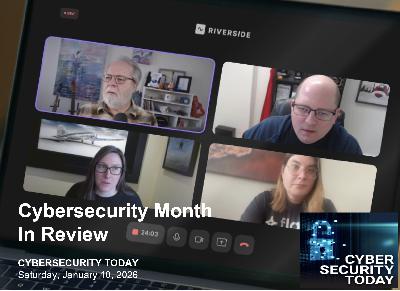
In this episode of Cybersecurity Today, brought to you by Meter, we review key events and stories from the past few weeks. Join host Jim along with experts Tammy Harper from Flair, Laura Payne from White Tuque, and David Shipley from Beauceron Security as they discuss major cybersecurity events that unfolded over the holidays, including the MongoDB vulnerability 'Mongo Bleed', the compromises at Rainbow Six Siege, and the ethical implications of hacktivism. The panel also explores the complexities of AI in cybersecurity, the vulnerability of critical infrastructure, and the dichotomy between ethical hacking and cybercrime in the industry. As always, we emphasize the intersection of cybersecurity with people, processes, and our daily lives. Cybersecurity Today would like to thank Meter for their support in bringing you this podcast. Meter delivers a complete networking stack, wired, wireless and cellular in one integrated solution that's built for performance and scale. You can find them at Meter.com/cst 00:00 Introduction and Sponsor Message 00:20 Panel Introduction and Holiday Recap 02:26 MongoDB Vulnerability: Mongo Bleed 05:15 AI and Responsible Disclosure 16:20 Gaming Security: Rainbow Six Siege Hack 20:13 Video Games and Malware Risks 24:54 Fake Video Propaganda and Infrastructure Attacks 25:48 The Dilemma of Cybersecurity Censorship 26:34 Deepfakes and Cognitive Warfare 27:37 Cyber Operations and Infrastructure Vulnerability 34:42 The Role of Private Companies in Cyber Conflicts 36:19 Internal Threats in Cybersecurity 43:20 Hacktivism: Ethics and Boundaries 49:03 Conclusion and Final Thoughts
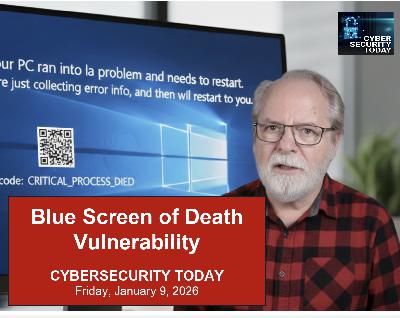
Cybersecurity Today: Sideloaded App Issues, Fake Blue Screen Attacks, and Rising Ransomware Threats In this episode of Cybersecurity Today, host Jim Love discusses HSBC blocking sideloaded apps with its banking app, new social engineering attacks using fake Windows blue screens to install malware, and the discovery of long-standing compromised Chrome extensions. Additionally, a new report reveals a significant rise in ransomware victims in 2025 despite major takedowns of ransomware groups. Special thanks to Meter for their support. 00:00 Introduction and Sponsor Message 00:21 HSBC Blocks Sideloaded Apps 02:44 Fake Blue Screen of Death Malware 04:49 Compromised Chrome Extensions 06:33 Ransomware Trends in 2025 08:33 Conclusion and Sponsor Message

In this episode of Cybersecurity Today, host Jim Love discusses the latest in cybersecurity threats including the rapidly growing Kim Wolf botnet affecting millions of devices, the rising threats to file-sharing environments, and the intersection of cybercrime with physical supply chains. He also covers an audacious hacktivist takedown of white supremacist websites. Tune in to learn about the evolving landscape of cybersecurity and practical measures you can take to protect your systems. Thank you to our sponsor Meter for supporting this podcast. Cybersecurity Today would like to thank Meter for their support in bringing you this podcast. Meter delivers a complete networking stack, wired, wireless and cellular in one integrated solution that's built for performance and scale. You can find them at Meter.com/cst 00:00 Introduction and Sponsor Message 00:21 Kim Wolf Botnet: A Growing Threat 04:07 Mitigation Strategies for Kim Wolf 05:22 Corporate Data Breaches: Zestix and ShareFile 07:48 Cyber-Enabled Cargo Theft: The Lobster Heist 09:44 Hacktivism: Root Takes Down White Supremacist Sites 11:46 Conclusion and Contact Information

In this episode of 'Cybersecurity Today', host David Shipley discusses significant cyber events and their implications. The podcast explores hints by President Donald Trump regarding the use of cyber tactics in a U.S. operation that resulted in a power outage in Venezuela. The episode also delves into the April 2025 data breach at Nova Scotia Power, detailing the company's efforts to keep incident specifics confidential and the extensive recovery measures taken. Lastly, it updates listeners on the Trust Wallet compromise linked to the Sha-Hulud supply chain attack, elucidating how the breach occurred and its aftermath. The episode underscores the growing cyber threat landscape and the critical need for enhanced cybersecurity measures. 00:00 Introduction and Sponsor Message 00:46 US Cyber Operations in Venezuela 03:13 Implications for Cybersecurity Professionals 04:37 Nova Scotia Power Breach Details 08:52 Trust Wallet Hack Update 10:46 Conclusion and Final Thoughts
In this episode, host Jim Love discusses the importance of cybersecurity awareness and training, featuring insights from Michael Joyce of the Human-Centric Cybersecurity Partnership at the University of Montreal and David Shipley of Beauceron Security. They explore the impact of cybersecurity awareness programs, the decay of sustained vigilance post-training, and the nuances between phishing reporting and clicking behaviors. The conversation also critiques recent research claims that question the efficacy of phishing training, emphasizing the need for continuous, empirically supported approaches in cybersecurity education. The episode highlights the value of balanced, layered defenses involving both technical solutions and informed user behavior. 00:00 Introduction and Podcast Announcement 00:14 Sponsorship Acknowledgment 00:35 The Nature of Cybersecurity Awareness 01:09 Introduction to the Research Show 01:21 Guest Introductions 02:15 Human-Centric Cybersecurity Partnership 03:46 The Importance of Canadian Research 04:40 Cybersecurity and Culture 05:27 The Role of Research in Cybersecurity 07:12 David's Research and Collaboration with Michael 08:46 The Value of Independent Research 13:33 Cybersecurity Awareness Month Impact 17:23 Phishing Simulation and Reporting 23:49 Awareness Decay and Vigilance 30:55 The Importance of Reporting and Feedback Loops 40:00 Optimal Frequency for Cybersecurity Training 40:27 Critiques and Misconceptions in Phishing Training 42:00 Empirical Data and Training Effectiveness 43:19 Insights from Phishing Simulations 47:14 Understanding Why People Click 52:43 Challenges in Cybersecurity Research 01:04:06 The Importance of Layered Defenses 01:17:17 Concluding Thoughts on Cybersecurity Training
In this episode, the host shares a pre-recorded favorite interview with David Decary-Hetu, a criminologist at the University of Montreal. They discuss the dark web, its technology, and its role in cybercrime. Decary-Hetu explains how the dark web operates, its users, and the dynamics between researchers and law enforcement in tackling cyber threats. Key topics include the economics of illicit markets, the cat-and-mouse game between law enforcement and criminals, the role of cryptocurrencies, and the evolution of cyber threats. The episode offers insights into the social aspects of cybercrime and the measures being taken to combat it. 00:00 Introduction and Sponsor Message 00:52 Understanding the Dark Web 02:16 Interview with David Decary-Hetu 05:10 The Basics of the Dark Web 06:27 Technology Behind the Dark Web 14:49 Law Enforcement Challenges 21:50 Trust and Transactions on the Dark Web 23:45 Recruitment and Structure of Cybercriminals 26:42 Cultural Dynamics in Hacking Communities 27:32 Researching the Impact of Technology on Crime 29:01 Challenges in Policing the Dark Web 30:12 The Role of Social Engineering in Cybercrime 31:18 Law Enforcement Strategies and Conditional Deterrence 32:09 The Evolution of Cybercrime and Cryptocurrency 41:24 Legal and Ethical Considerations in Cybercrime 43:47 Advice for Policymakers and Corporations 48:44 Educational Resources and Conferences 50:57 Conclusion and Final Thoughts


Download from Google Play

Download from App Store
 United States
just discovered your show I love it
Jim ... do not worry ... to ERR.... is to be human.... go Canada...
hey old guy !!!!! confiscate my phone please.... dangerous game you're playing old guy ... 😊😊😊😊
instead of calling it social engineering why don't you call it what it really is... TAKING ADVANTAGE OF REALLY NAIVE AND STUPID DUMB PEOPLE... because that's what it is....
these fucking idiots getting hacked... you mean to tell me you can't walk past a fucking QR code without scanning it ???????? are you fucking this fucking stupid ????? anybody who feels the need to scan this and download that or click on this or open every goddamn rile that comes your way deserves to get hacked and to get fucked right in the ass.... you deserve it moron.... 🌴🌴🌱🌱🌴🌴
elon musk..... PUBLIC ENEMY NUMBER ONE.... congratulations you made the list....
In this episode, we explore the latest cybersecurity developments and solutions designed to protect both individuals and organizations. We begin with a discussion on the growing threats in the digital landscape, including a new double-click exploit that bypasses browser protections and a large-scale Chrome compromise impacting millions through malicious extensions. We also cover the U.S. Treasury hack, which has been attributed to Chinese state-sponsored hackers, and how CrowdStrike has managed to recover from the largest IT outage in history. To address these escalating risks, we introduce Clearnetwork Managed SIEM solutions https://www.clearnetwork.com/managed-siem/, a cybersecurity company founded in 1996, which specializes in providing managed security solutions that help both public and private organizations strengthen their defenses affordably. Join host Jim Love as we dive into these crucial topics and explore how businesses and individuals can better protect themselves in an i
Acronis Cyber Backup is a comprehensive data backup and recovery solution designed to protect data, systems, and applications. It's used by businesses and individuals to ensure that their critical information is safeguarded against data loss, hardware failures, cyberattacks, and other unexpected events. Acronis Cyber Backup offers features like full disk imaging, incremental backups, cloud storage, and quick recovery to keep operations running smoothly. It provides flexible deployment options, allowing backups to be stored locally or in the cloud, and integrates advanced cybersecurity features to defend against ransomware and other cyber threats. For a thorough cybersecurity assessment and data protection strategy, you might consider consulting with cybersecurity experts like those at https://www.wizlynxgroup.com/hk/en/
Acronis Cyber Backup is a comprehensive data backup and recovery solution designed to protect data, systems, and applications. It's used by businesses and individuals to ensure that their critical information is safeguarded against data loss, hardware failures, cyberattacks, and other unexpected events. Acronis Cyber Backup offers features like full disk imaging, incremental backups, cloud storage, and quick recovery to keep operations running smoothly. It provides flexible deployment options, allowing backups to be stored locally or in the cloud, and integrates advanced cybersecurity features to defend against ransomware and other cyber threats. For a thorough cybersecurity assessment and data protection strategy, you might consider consulting with cybersecurity experts like those at Wizlynx Group. They specialize in security testing and cybersecurity consulting to help businesses identify vulnerabilities and implement effective defense measures. You can learn more about their servic
When you use a third party platform that offers an app for your on-premise platform - https://www.protectimus.com/platform/ , you are automatically taking advantage of the multi-factor security that they offer. It is easy to forget when you are using your computer, tablet, or smartphone that all of your data is being tracked in some way. With the use of a Protectimus application, your data is encrypted and protected even more. You are also provided with a second layer of security as a secondary level of protection. This helps to make your business' data secure even more.