


 Claim Ownership
Dream Machines: Physical AI, Robotics, Being Human
Subscribed: 0Played: 5
Subscribe

© Evan Helda
Description
Dream Machines is a podcast & newsletter exploring physical AI, robotics, and the future of the human experience.
These new tools unlocking human potential in ways we can barely imagine.
But they're also going to challenge everything we know about the human experience — our sense of self, of reality, of each other.
Which is why Dream Machines isn’t just about where technology is going—it's about where it’s taking us....
Dream Machines is hosted by Evan Helda: a writer and technologist who has been at the forefront of spatial computing for the past 9 years. He's currently the Head of Physical AI & Robotics at Nebius, of the world's leading AI clouds.
www.dreammachines.ai
These new tools unlocking human potential in ways we can barely imagine.
But they're also going to challenge everything we know about the human experience — our sense of self, of reality, of each other.
Which is why Dream Machines isn’t just about where technology is going—it's about where it’s taking us....
Dream Machines is hosted by Evan Helda: a writer and technologist who has been at the forefront of spatial computing for the past 9 years. He's currently the Head of Physical AI & Robotics at Nebius, of the world's leading AI clouds.
www.dreammachines.ai
35 Episodes
Reverse
Apple Podcast LinkSpotify Podcast LinkWhat if machines could learn the world the way humans do?Not by crunching data and predicting tokens, but by understanding the world and how it works?Imagine a robot that doesn’t just see a chair, but understands it— its purpose, its relationship to the table, the way you might pull it closer before sitting down.That’s the world Matt Miesnieks is building.Matt is the CEO of Primate.AI, a new kind of physical AI company rethinking how machines perceive and interact with reality. His team is exploring what happens when perception stops being a math problem and starts becoming an act of intuition.Before founding Primate, Matt helped shape the modern era of spatial computing. He co-founded 6D.AI, the company that pioneered the AR Cloud—a real-time 3D map of the world that made digital content persistent in physical space. 6D.AI was later acquired by Niantic, creators of Pokémon Go, where its technology now powers their next generation of AR experiences.Now, with Primate.AI, Matt’s taking his biggest swing yet: building machines that perceive reality the way we do—not through pixels, but through concepts, memory, and innate understanding.If 6D.AI gave AR its eyes, Primate.AI is giving machines a mind.In this conversation, we explore the future of embodied intelligence, what comes after language models, and why understanding the world like a human may be the only real path to AGI. This is a public episode. If you would like to discuss this with other subscribers or get access to bonus episodes, visit www.dreammachines.ai
Today’s guests are building one of the most ambitious startups in the entire spatial computing industry.The company is called RP1, and we’re sitting down with co-founders Sean Mann and Dean Abramson.On its face, RP1 is the world’s first true metaverse browser, trying to do for spatial computing what browsers like Mosaic and Internet Explorer did for the web.But that’s just the tip of the iceberg.Beneath the surface, RP1 is so much more... They’re building all the infrastructure and protocols required for a truly spatial internet—one where immersive, persistent digital worlds stream on demand, where physical and virtual environments seamlessly merge, and where millions of users can interact in one, shared world, not a bunch of silo’d virtual experiences.In this episode, we dive into what RP1 actually is, how it scales to millions of users, and why they believe app stores must die.We also unpack their vision for the core backbone of this future, a Spatial Fabric—a kind of real-time, distributed protocol for the metaverse that manages everything from identity and maps to avatars and live services.This one’s technical, philosophical, and wildly ambitious. Let’s get into it. This is a public episode. If you would like to discuss this with other subscribers or get access to bonus episodes, visit www.dreammachines.ai
Apple Podcast LinkSpotify Podcast LinkThis interview is with Alvin Graylin — one of the boldest voices out there today on AI, reimagining civilization in the age of intelligence.Alvin is the best-selling author of the book, Our Next Reality, which is a super thought provoking exploration of how immersive tech and artificial intelligence are going to reshape every layer of society. Prior, Alvin spent over a decade on the front lines of the XR industry—building and leading HTC’s VR business in China, and serving as Chairman of the Virtual World Society.Today, Alvin's on a new mission: to help humanity navigate the AI transition—researching, writing, and evangelizing ways to ensure AI serves a greater good and unlocks an age of abundance.And While Alvin is an optimist, he’s also a realist—and he’s clear that this transition won’t be smooth unless we get a few critical things right.We talk about…* The real risks of AGI—not just killer robots, but unaligned incentives, unchecked power, and job displacement. * His call for an “AI Bill of Rights,” and why the U.S. and China must shift from competition to cooperation—perhaps through what he calls a CERN for AI. (worth checking out the link to AI Bill of Rights here)* And finally, we explore XR—not as a form of escape, but as a tool for empathy, education, and rewiring human behavior at scale.This conversation is expansive, urgent, and radical. Let’s get into it. Enjoy. This is a public episode. If you would like to discuss this with other subscribers or get access to bonus episodes, visit www.dreammachines.ai
Apple Podcast LinkSpotify Podcast LinkToday’s guest is a legend within spatial computing. We're speaking with Philip Rosedale, one of our spaces most renowned pioneers and the visionary founder of Second Life.Long before the 'metaverse' and 'web3' became buzz words, Second Life was the first, commercially successful, virtual world, with a self-sustaining, digital society where millions could create, trade, and become whoever they wanted to be.Philip does a lot of podcasts, so I tried to make this one unique. Call me biased, but mission accomplished. This is easily my favorite conversation of the year. We explore the enduring magic of Second Life, what it taught him about economics, identity, and why adults—not just kids—still crave virtual connection.We dive into the deep stuff—how avatars act as mirrors of the self, why virtual identity can actually reshape real-world behavior, and how platforms like Second Life may hold the key to understanding consciousness itself. We talk about the illusion of self, the Proteus Effect, and what it means to co-create identity in a shared digital world.And we ask: what happens when AI agents start growing up in these spaces? Could virtual worlds become safe playgrounds for emerging machine minds—and what might they teach us in return?We then get philosophical, in all the best ways. We explore:* Avatars as mirrors of the self* How virtual identity can reshape real-world behavior* What happens when AI agents start growing up in these spaces? Could virtual worlds become safe playgrounds for emerging machine minds—and what might they teach us in return?So, definitely strap in for this one and enjoy, its wonderfully wide-ranging, it's mind bending, and it's most importantly, full of soul... With that, I bring you Philip Rosedale. This is a public episode. If you would like to discuss this with other subscribers or get access to bonus episodes, visit www.dreammachines.ai
Apple Podcast LinkSpotify Podcast LinkIt’s time for some straight talk.No hype, no press release optimism, no corporate spin. Just two guys with some scar tissue—and a lot of history—talking about what’s really happening in the world of spatial computing/XR.In this episode, I sit down with Kharis O’Connell—former design leader at AR headset startup: Meta (the original Meta), Google, and Amazon. Kharis has been in the XR arena since before the game began. From early experiments with Nokia's Point & Find in 2007 to helping define zero-learning-curve design principles at (OG) Meta, he’s seen the promise, the collapse, and the recycled hype cycles firsthand.But this isn’t just a walk down memory lane.It’s a reckoning.Kharis recently left the XR industry. He’s no longer building AR glasses or pitching immersive futures to execs in Silicon Valley boardrooms. And that’s what makes this conversation special. He’s honest. Candid. Unfiltered. It’s the kind of clarity you only get once you’re no longer trying to raise funding or ship a prototype.Reasons to listen:* If you’re in the spatial computing space and having doubts* If you’ve ever wondered why AR hasn’t had its iPhone moment* If you’re building in this space and unsure whether to keep goingWe cover:* The philosophical vision behind the original Meta and why it failed* Why “zero learning curve” design is mostly a myth* What really happened at Google’s stealth AR program (and why it shut down)* The failure of imagination across today’s use cases (yes, cooking demos again)* Whether Apple Vision Pro was our “iPhone moment” (spoiler: it wasn’t)* How the obsession with technology becomes an echo chamber—and how Kharis broke out* The one big question every builder should ask themselves: Who is this for—and at what cost?This episode won’t give you all the neat answers. But it will definitely give you better questions.And if you’re like me—still carrying a flicker of belief that this tech can nourish the soul, not just the shareholder—then maybe that’s enough to keep going. This is a public episode. If you would like to discuss this with other subscribers or get access to bonus episodes, visit www.dreammachines.ai
![Introducing... Dream Machines [Audio]](https://substackcdn.com/feed/podcast/509588/post/166471300/86a52012be19f54ca061ef458060801a.jpg "Introducing... Dream Machines [Audio]")
Medium Energy is now Dream Machines, narrowing the focus on the most powerful force in technology today: the convergence of spatial computing and AI.These tools are two sides of the same coin. Problem is... most people don't realize how and why. Nor do they realize what it means for their business, their careers, their children, their relationships, the list goes on.This newsletter/pod will change that.You see... Spatial computing has been misunderstood.It's far more than just AR/VR headsets and the 'metaverse'.Spatial computing is about any machine/device that can see, interact, and localize itself in the real world: this includes AR glasses, robots, drones, and self driving cars.It also includes data, of an incredibly important kind... spatial data, i.e. data with an X-Y-Z coordinate, or what I like to call... 'world data' representing people, places, and things.For decades, much of this data has lied dormant. Despite being immensely valuable, it's been woefully hard to access and to use. This ranges from 3D data (CAD, point clouds), to sensor data (IoT), to visual data of all types (photos, videos, scans)But now, the terrain is shifting, and this data has an all new raison d'être...AI is now supercharging spatial computing, and spatial is returning the favor — giving AI a body (robots), a perspective (3D computer vision), and a way to hear, navigate, and interact with the world (AR glasses).Of most importance, it will give AI real world agency, and ultimately, the feedback loop needed to unlock the holy grail: AGI (artificial general intelligence).At which point, the machines will dream, while helping humanity realize many of its dreams along the way.As such, Dream Machines isn’t just a nod to the power of spatial + AI. It’s your window into all the ways the boundary between imagination and reality is about to collapse. This is a public episode. If you would like to discuss this with other subscribers or get access to bonus episodes, visit www.dreammachines.ai

Today’s episode is an inspiring ride through the future of medicine, healing, and human potential.My guest is Dr. Walter Greenleaf, a legend in the world of virtual reality and healthcare. For nearly 40 years, Walter’s been building and studying how immersive tech can treat PTSD, chronic pain, anxiety, addiction, and even rewire how we think and feel.Walter's primary role today is within Stanford Universty, where a Direector within Stanford Medical Mixed Reality center, and the resident AR/VR expert within ther Virtual Human Interaction Lab. His work sits at the cutting edge of neuroscience, immersive design, and digital wellness—and he’s advised countless startups and health systems on how to bring these technologies into the real world at scale.In this conversation, we go deep on...- the rise of emotionally intelligent technology- the science of neuroplasticity, how VR can train us to be more mindful parents or more compassionate teammates- how it might soon work alongside psychedelics, AI, and even becomes a tool to explore our future selves. This is a public episode. If you would like to discuss this with other subscribers or get access to bonus episodes, visit www.dreammachines.ai
* Apple Podcast Link* Spotify Podcast LinkI recently sat down with Ashley Crowder, CEO of VNTANA, on her podcast Connected in 3D. We discussed all things at the intersection of spatial computing, digital twins, and AI, and where this convergence is heading within the enterprise space.We covered…* Why spatial computing is more than just headsets—it’s any system that sees and simulates the world* The real reason most companies are stuck in pilot purgatory* What a “spatial data plane” is and why companies need one* How AI + 3D data unlocks powerful new use cases—from training robots to designing factories* And why I believe generative UI will be the breakthrough that makes this all mainstreamIf you’re interested in using digital twins, immersive tech, or AI to make better decisions—not just more noise—this one’s worth a listen. And if you enjoy, please do give us some stars on your favorite podcast player, and please consider sharing with a friend or two! Really helps us spread the good word :) This is a public episode. If you would like to discuss this with other subscribers or get access to bonus episodes, visit www.dreammachines.ai
How much of your life is spent staring at a screen?Probably more than you care to admit.Now imagine, all that distraction and friction disappearing. No more scrolling, typing, tapping. No more barriers between you and the information you need. No more heads down moments, getting lost in an array button, menus, and icons, breaking the flow of conversation and connection.Instead, AI gets unleashed from tiny text boxes. It greets you as a companion in the real world, enhances your day without distracting from it, and moves us from a world of fixed, flat UI’s to generative, spatial UI’s, adapting based upon what we’re doing, who we’re with, and where we are; perhaps even how we’re feeling…That’s the world a new startup called LIBBA is building; a world in which AR glasses and AI fuse to transform human-computer interaction, and our relationship with technology.In this episode, we’ll jump 5-10 years into the future to explore the human experience once LIBBA accomplishes this mission.How do we get there? Where are we now in the technology adoption cycle? And in classic Medium Energy fashion, we explore the philosophical questions behind this degree of merging the digital with the physical, and ask: how do we ensure that this future makes us more human—not less?To help answers these questions, I bring you Nir Daube, CEO of LIBBA. This is a public episode. If you would like to discuss this with other subscribers or get access to bonus episodes, visit www.dreammachines.ai
We’re closing out the year with a special one…As most of you know, part of the Medium Energy mission is to explore what it means to be human in the age of exponential technology.If that question interests you, this conversation absolutely delivers.We’re peeling back the layers of the human psyche and exploring the future of emotional and psychological well-being. At the heart of the conversation is the power of curiosity.We’ve all felt curiosity. But let’s be honest—how many of us truly know how to harness it as a tool to improve our lives?To help us do exactly that, we're speaking with Todd Kashdan, a renowned psychologist and one of the world’s top authorities on not just curiosity, but also on the psychology of well-being, psychological strength, mental agility, and social relationships.Todd is also one of my favorite authors, with numerous books that have reached millions of people. What sets his work apart is that he doesn’t just study human behavior; he dissects it, challenges it, and rebuilds it from the ground up. In doing so, he’s developed some rather contrarian takes, all of which I think are spot on. And I’m not the only one… his research is starting to blow up. He's been featured in major outlets like Harvard Business Review, The New York Times, Fast Company, Forbes, and the Hidden Brain podcast. And if that’s not impressive enough, Todd ranks in the top 1% of cited scientists worldwide, with over 225 published articles and more than 48,000 citations.So buckle up—this is a special episode with a special thinker. And spoiler alert—I’m already looking forward to doing a Part II, as we uncovered so many more ideas to unpackWith that…. enjoy this first conversation with Todd Kashdan. This is a public episode. If you would like to discuss this with other subscribers or get access to bonus episodes, visit www.dreammachines.ai
Apple Podcast LinkSpotify Podcast LinkWelcome to our quarterly market update for Q3 2024, with Hatem Dhiab, Managing Partner at renowned investing firm, Gerber Kawasaki. In this series, we share our observations & leanings from the most recent quarterly earnings calls. The goal of this series is to help you stay calibrated to the latest market & investing trends.This conversation kicks off with an exploration of modern investing strategies and psychology (hint: I think traditional market theory is erroding, and the traditional strategies are breaking down)We then focus on where value might accrue next in the AI stack, and cap off with a debate around Bitcoin’s resurgence and role in the financial system. As always, this is not investing advice. DYOR! (Do Your Own Research). This is a public episode. If you would like to discuss this with other subscribers or get access to bonus episodes, visit www.dreammachines.ai
Alright folks, we're taking a different tack with this episode.We’re diving into some more… soulful topics, while also getting rather personal and vulnerable.Part of our core thesis at Medium Energy is that exponential technologies like Spatial Computing and AI… these are democratizing tools. They’re going to help more people climb the proverbial ladder that is Maslow’s ‘Hierarchy of Needs’, all the way to that top rung, i.e. the mystical notion of self-actualization, or the idea of becoming who we're meant to be, finding our purpose, and fulfilling potential...Now I know sometimes the pursuit of these things can get a bit woo woo. But in this episode, we keep it practical and tactical.To do so, we're talking to Tommy Sobel, an impressive entrepreneur with a business and a coaching practice focused on digital wellness, digital habits, and most recently personal & career development.Tommy’s created a great formula for uncovering what many people call their 'zone of genius’, and upon hearing about it, we went a bit off script. I couldn’t help but ask Tommy do a live coaching session with me right there on the spot, just like he does for his clients. So you're welcome, you're effectively getting a free session here of immense value yourself ;-)So perk up and get ready to take some notes. This one is full of all kinds of golden nuggets that I'm going to certainly put into practice, and that I think you will find useful as well.So without further adieu, I bring you Tommy Sobel. This is a public episode. If you would like to discuss this with other subscribers or get access to bonus episodes, visit www.dreammachines.ai
Today’s episode is as sci-fi as it gets.We're exploring the complete merging of man and machine via spatial computing and BCIs (brain computer interfaces); a combo that will give us the ability to control machines with our minds.And yes, this stuff is way more real and way more imminent than you think.To explore the topic, we're diving into a company at the cutting edge of this frontier.The company is called uCat (strange I know, but you’ll see why), and this conversation is with their Founder/CEO, Sam Hosovsky.Sam has an incredible vision, and believe it or not, its very human centric and altruistic. Upon listening, I think you’ll see that this future doesn’t have to be as dystopian/Black Mirror’ish as some think…To explore how and why, we start by exploring all the new innovations that need to exist, including:* New types of AI to interpret neural signals* New types of software to translate those neural signals* New forms of avatar technology to map neural signals to a virtual body, such that we can have complete agency in virtual space.We also discuss who this will be for, how they will benefit, and of course (in classic Medium Energy fashion) we get philosophical, exploring what this means for the human experience and what daily life might look like when it is real.So buckle up. This one is mind expanding in the most literal way.Without further adieu, I bring you Sam, aka ‘Saborg’, Hosovsky. This is a public episode. If you would like to discuss this with other subscribers or get access to bonus episodes, visit www.dreammachines.ai
Apple Podcast LinkSpotify Podcast LinkIf you're interested in how to build a more immersive and experiential internet (aka the spatial web), than this is your episodeWe're interviewing an old friend and old colleague, Felix HerbstFelix the CEO and co-founder of Needle, which has the most impressive suite of tools I've seen to date for building web-native, spatial applications.For years now, the web has been highly sought after by the 3D and XR developers. But its been difficult to build web apps that are as compelling as their client side counterparts, which are built with powerful game engines like Unity and Unreal. These game engines have historically produced much better levels of animation, rendering, simulation, and interaction.But with Needle, that's starting to change...Felix and I know each other from the OG Meta days (the AR startup, not Facebook 2.0). When he left, I told myself, that’s a guy I need to stay in touch with. He’s going to go on and do something special.I failed to stay in touch, but lo and behold, I recently bumped into Felix at aconference. And to no surprise, he’s on to something big… attacking one of the most important problem spaces within our domain; making it easy to build compelling 3D & spatial websites. The long term vision? The Squarespace or Wix for 3D.In my opinion, until something like this exists, this notion of the metaverse will remain hypothetical.With all that said… whether you’re a business leader looking to build a more engaging website, or a 3D developer looking for better ways to build for the web, I think you're gonna really enjoy this oneSo strap in, get ready to take some notes, and enjoy this episode with Felix Herbst. This is a public episode. If you would like to discuss this with other subscribers or get access to bonus episodes, visit www.dreammachines.ai

This is Part II of our mini-series with prominent bitcoin investor, thinker, and creator, Marty Bent in which we chart the necessary path towards ‘Bitcoin Enlightenment’, aka the phases of knowledge required to fully appreciate Bitcoin's purpose and potential. The goal of this series is to address Bitcoin's marketing problem as one of the most misunderstood yet important technologies in common parlance todayIf you've not listened to Part I, I'm going to refrain from shouting at you emphatically, and just say with complete patience and kindness... Press pause and go give Part I a listen. It was truly an awesome convo. We discuss the first 5 phases out of 7 and cover off on the 'what & why' of bitcoinHere in Part II, we focus more on the 'how' and hit some of the more technical aspects that Bitcoin special & unique. We also discuss:- Marty's views on the Future of Media & Podcasting- How he's going to run his media company on a Bitcoin standard- His experience and foresight in running the largest bitcoin only investment firm, and the type of bets they are making. So strap in, put on your slightly more technical hat, and enjoy this episode with Marty Bent This is a public episode. If you would like to discuss this with other subscribers or get access to bonus episodes, visit www.dreammachines.ai

Despite being around for a while now, bitcoin remains woefully misunderstood.It’s alarming to me how many people still roll their eyes at the topic. Yet, more often than not, these same people haven’t made any effort to understand why Bitcoin exists, what problems it solves, and why its useful.This is especially alarming considering the current fiscal and economic environment we're in (as I discussed in this essay here: Why Bitcoin (Really) Matters)So, to tackle said marketing problem, there's few people in the world more qualified than our guest, Marty Bent. He's one the most renowned thinkers, investors, and creators in the Bitcoin space, and he has quite the pedigree...Throughout this conversation, we package up all this knowledge into what we believe are the necessary steps, or ‘phases of knowledge’, required to fully appreciate Bitcoin's purpose and potential. Perhaps I’ll call these phases the path, or at least a path, to ‘Bitcoin Enlightenment’.We broke this convo into a two-parter. Here in Part I, we cover steps 1-5 (out of 7) towards enlightenment. This includes:1/ Understanding the Problem (aka the water we swim in, which I cover in depth in this essay here)2/ Recognizing that we're being deceived3/ Grasping what sound money is and isn’t4/ Seeing the financial incentive & game theory at play, and5/ Understanding the role of energy in both bitcoin and the wider energy gridSo if you're new bitcoin, prepare to expand your mind and start thinking a bit different. And if you're a bitcoin veteran, sit back and enjoy the unique musings of no other than Marty Bent. This is a public episode. If you would like to discuss this with other subscribers or get access to bonus episodes, visit www.dreammachines.ai
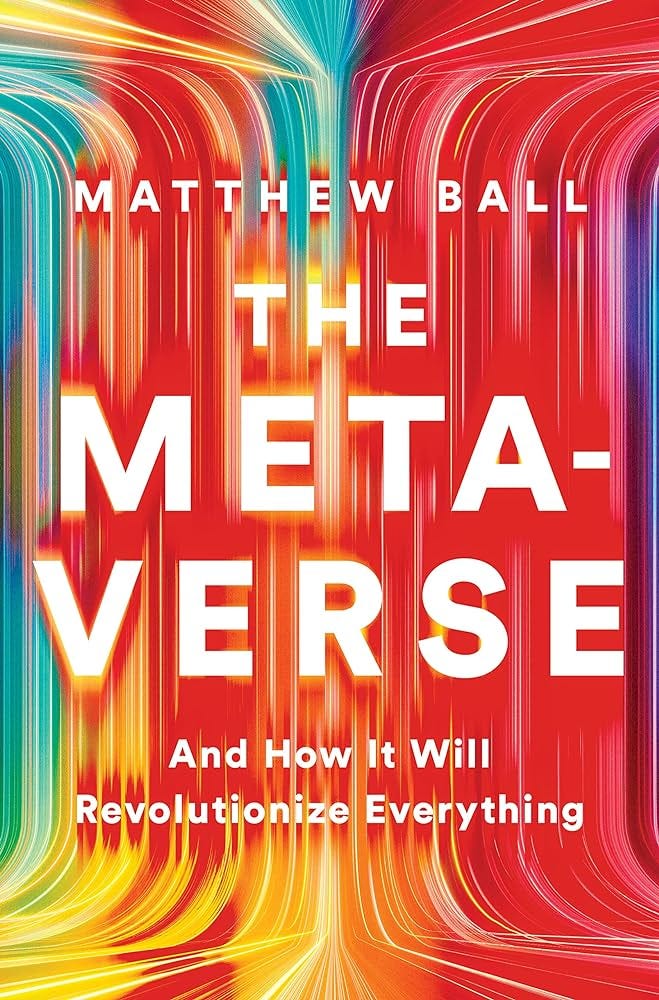
This episode was a huge milestone for the podcast and a major personal goal, which was to interview Matthew Ball, author of the renowned best-selling book, ‘The Metaverse’. If you want a quick and robust download on the latest/greatest in immersive tech + spatial computing, this is as good as it gets... Matthew is one of (if not the) world’s most esteemed experts on the metaverse and spatial computing (AR, VR, immersive 3D).In today’s show, we discuss the revised and updated version of Matthew’s book, coming out in mid-July. The new title is ‘The Metaverse: Building the Spatial Internet’.This isn’t your typical ‘revised edition’. About 70% of the content is entirely new.I mean… what testament to how fast this space is moving! For this level of update to be so necessary, and so worthwhile, all within just two years, is kind of crazy.But it makes sense. So much has happened since, from the acceleration of AI, NVIDIA’s meteoric rise, the Apple Vision Pro, the competitive tension with Meta, the crypto bubble bursting and bouncing, the list goes on.And in this conversation, we cover all of it, including:* Matthew's more philosophical views on the space.* The updates to the new book and how this market is evolving* The ‘adjacent possible’ at the intersections of AI and Blockchain* Digital twins + simulation + AI* The future of identity* The most important question society should be asking itself at this moment in timeWe also ask Matthew, if he was starting a company today, where/how would he be focusing?And at the end, we play a fun game to put Matthew's skills as a strategist to the test…So if the broader evolution of the internet interests you, and if your curious how to take advantage, then strap in and perk up; this is a special one with one of the most renowned, most thoughtful, and most nuanced thinkers in the entire industry.With that I bring you, Matthew Ball. This is a public episode. If you would like to discuss this with other subscribers or get access to bonus episodes, visit www.dreammachines.ai
Welcome back to our mini-series on spatial computing in the enterprise with Sven Brunner, CEO of Sphere: one of the top apps for enterprise grade collaboration/communication.If you missed Part I, highly suggest you back and take a listen. Lots of important context around the state of enterprise adoption today, along with where & how companies are having success with AR, VR, and 3D more broadly.Here in Part II, we cover:* The convergence of Spatial Computing and AI* How & why they're really a marriage made in heaven* Where there's some real utility now, where this combo is heading.We also hit on the impact of the Apple Vision Pro, and of course, in classic Medium Energy fashion, we end on a philosophical note, exploring why this future will be a good thing for humanityPer usual, let know what you think of this one, and if you have 30 seconds to spare, would greatly appreciate a share with one friend, and if feeling generous, perhaps review on your favorite podcast player! This is a public episode. If you would like to discuss this with other subscribers or get access to bonus episodes, visit www.dreammachines.ai
Apple Podcast LinkSpotify Podcast LinkGood day friends! We have another great show for you all today… especially if you're interested in all things spatial computing in the enterprise, along with its intersections with AI.This interview is with Sven Brunner, the Founder & CEO of Sphere.Sphere is one of the leading spatial computing apps in the enterprise space today. I liken them to a spatial Swiss army knife, satisfying a variety of use cases centered around immersive collaboration, and really any moment of knowledge transfer that would benefit from immersive, 3D visualization or ‘just in time’ information. This recording went longer than expected, so we're breaking this episode into a two part mini-series. Here in Part I we focus on the current state of enterprise adoption and hitting on a range of topics, including:* What the future of work & collaboration is going to look like* The challenges holding the back main stream adoption today* Where & how customers are finding success and utility* What conditions need exist for meaningful scaleIn Part II, we’ll do a deep dive on the convergence of AI and Spatial.Let me know what you think of this one. And if you enjoy, please consider sharing with a friend or three! (Oh, and toss a rating if you get a moment :-)Alright, enough from me. Put on your business cap and enjoy this episode with Sven Brunner. This is a public episode. If you would like to discuss this with other subscribers or get access to bonus episodes, visit www.dreammachines.ai
Alright folks, we’re launching a new addition to the content lineup: ‘The Quarterly Market Update’Typically, we cover the more philosophical and practical sides of AI, Spatial Computing and Crypto.Today, we’re exploring how to make money and grow wealth from these innovations.Towards that end, this new segment will explore the most important things happening in financial markets and in the economy, with the goal of helping you better invest and plan for the future.The plan is to do this right on the tails of earnings season... after all the most important companies show their financial cards.To kick off this new series, we're leaning on a good friend and my go-to person for navigating the complexity of today’s market... and that's Hatem Dhiab.Hatem is a Managing Partner at Gerber Kawasaki: one of the more renowned wealth management firms here in LA area.Gerber Kawasaki well known for being more on the cutting edge of investing, particularly for being early bulls on Tesla and NVIDIA, placing heavy bets before the consensus rush. They've also trail blazed in giving clients early access to crypto.So put on your money making cap, and enjoy this wide ranging chat on all things investing & current market conditions. This is a public episode. If you would like to discuss this with other subscribers or get access to bonus episodes, visit www.dreammachines.ai

Comments

Download from Google Play

Download from App Store
 United States