



 Claim Ownership
HISTORY This Week
Subscribed: 12,855Played: 517,535
Subscribe

© A&E Television Networks, LLC. All Rights Reserved.
Description
This week, something big happened. You might have never heard of it, but this moment changed the course of history. A HISTORY Channel original podcast, HISTORY This Week gives you insight into the people—both famous and unknown—whose decisions reshaped the world we live in today. Through interviews with experts and eyewitnesses, each episode will give you a new perspective on how history is written.
Stay up-to-date at historythisweekpodcast.com and to get in touch, email us at historythisweek@history.com.
HISTORY This Week is a production of Back Pocket Studios in partnership with the History Channel.
292 Episodes
Reverse
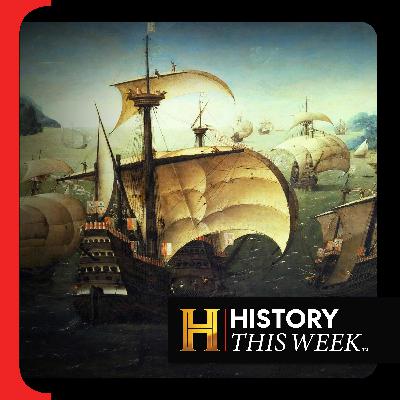
December 1, 1564. Spanish vessels left a secret port in Mexico about two weeks ago. Their goal: to sail across the Pacific and back, charting a new route for international trade, and giving Spain an edge against its chief colonial rival, Portugal. But today, when a storm hits, the smallest ship is separated from the rest of the fleet. Now, that ship, the San Lucas, is on its own. The following year, when the San Lucas makes it back to Mexico, against all odds, its pilot—a Black mariner—is accused of treason. How did the San Lucas—the smallest ship in the fleet—complete a near-impossible journey that would connect the world? And how did the trailblazing mariner Lope Martín get erased from the story?
Special thanks to our guest, Andrés Reséndez, author of Conquering the Pacific: An Unknown Mariner and the Final Great Voyage of the Age of Discovery.
** This episode originally aired November 29, 2021.
Get in touch: historythisweekpodcast@history.com
Follow on Instagram: @historythisweek
Follow on Facebook: HISTORY This Week Podcast
To stay updated: http://historythisweekpodcast.com
To learn more about listener data and our privacy practices visit: https://www.audacyinc.com/privacy-policy
Learn more about your ad choices. Visit https://podcastchoices.com/adchoices
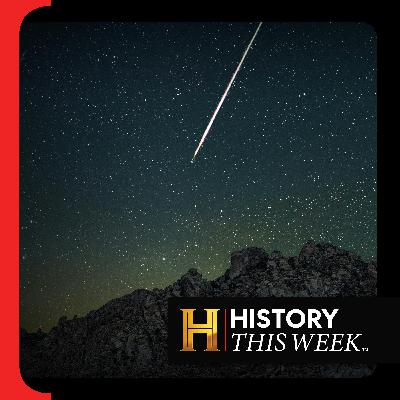
November 30, 1954. At about 12:45 in the afternoon, a space rock comes plummeting through the roof of a house in Sylacauga, Alabama. It bounces off a stand-up radio, ricochets around the living room, and collides with the thigh of Mrs. Ann Hodges, who’s been napping on the couch. Newspapers declare: “experts agreed unanimously that Mrs. Hodges was the first person known to have been struck by a meteorite.” What happened to this space rock after it crashed to Earth and thrust itself into volatile human affairs? And what happened to the human beings whose lives were upended by this rarest of rare events?
Thanks to our guests: Dr. Julia Cartwright, planetary scientist at the University of Alabama; Billy Field, professor at the University of Alabama and screenwriter; and Julie Love Templeton, attorney in Tuscaloosa, Alabama.
Dr. Cartwright is involved in a number of art/science collaborations to engage and educate the public about meteorites and planetary science. You can find out more on her website, https://le.ac.uk/people/julia-cartwright. Keep an eye out for Billy Field’s latest project, TheStoryAcorn.com, which launches in January 2023. The website will feature history from the Civil Rights movement, told by those who lived it. The website teaches students to gather stories from their own communities and share them with the world. Thanks also to Mary Beth Prondzinski, former collections manager at the Alabama Museum of Natural History, and to the Alabama Museum of Natural History.
** This episode originally aired November 28, 2022.
--
Get in touch: historythisweekpodcast@history.com
Follow on Instagram: @historythisweek
Follow on Facebook: HISTORY This Week Podcast
To stay updated: http://historythisweekpodcast.com
To learn more about listener data and our privacy practices visit: https://www.audacyinc.com/privacy-policy
Learn more about your ad choices. Visit https://podcastchoices.com/adchoices
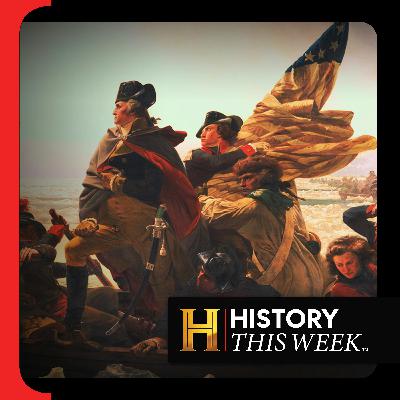
November 16, 1776. George Washington rows toward Manhattan to inspect the fort that bears his name, only to meet a full-scale British assault already underway. By afternoon, Fort Washington has fallen, and General Washington is forced to abandon New York City.
The Continental Army is sick, outnumbered, and demoralized. For a moment, the Revolution seems lost. Facing his worst defeat of the war, Washington himself is questioning their odds.
In their new PBS documentary, The American Revolution, Ken Burns and Sarah Botstein set out to tell this version of the Founding Fathers, showing fear, chaos, and uncertainty. They also highlight oft-overlooked characters: the women and children following the army in supporting roles, the Native nations whose decisions shaped the continent, or the enslaved people listening closely to talk of liberty.
This week, we talk with Ken Burns and Sarah Botstein about the revelations behind their decade-long project. How did they revisit a story that’s been told so many times, it almost feels like a myth? And how does that myth fit into the world today?
The American Revolution is a six-part, 12-hour documentary now premiering on PBS. The series is directed by Ken Burns, Sarah Botstein, and David P. Schmidt. It's also narrated by a guest from one of our recent episodes, Peter Coyote.
--
Get in touch: historythisweekpodcast@history.com
Follow on Instagram: @historythisweek
Follow on Facebook: HISTORY This Week Podcast
To stay updated: http://historythisweekpodcast.com
To learn more about listener data and our privacy practices visit: https://www.audacyinc.com/privacy-policy
Learn more about your ad choices. Visit https://podcastchoices.com/adchoices
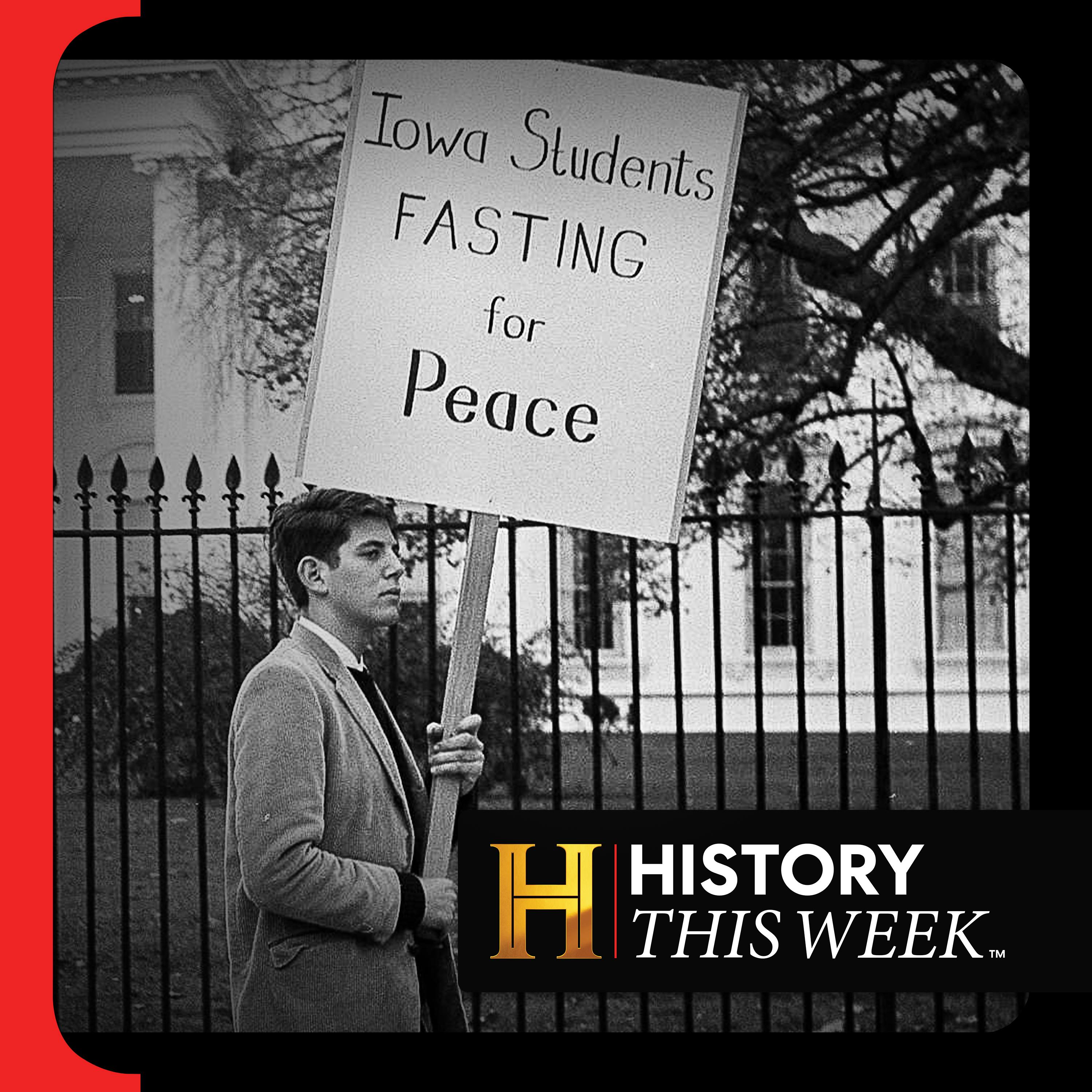
November 16, 1961. Fourteen college students from Iowa have driven nearly a thousand miles to the White House. They’re fasting, protesting, and calling for an end to nuclear bomb testing. These students, later known as the Grinnell 14, will help ignite the student peace movement of the 1960s.
Actor Peter Coyote (then Peter Cohon) was one of them. He joins us to remember how it felt to grow up under the shadow of the bomb, why they believed Kennedy’s “peace race” could change the world, and what happened when they found themselves face-to-face with the White House.
Special thanks to Peter Coyote. He requested we credit him as a “good person,” which we agree with.
--
Cover art: Peter Cohon protesting in front of the White House on Nov. 16, 1961, AP Photo/Harvey Georges
Get in touch: historythisweekpodcast@history.com
Follow on Instagram: @historythisweek
Follow on Facebook: HISTORY This Week Podcast
To stay updated: http://historythisweekpodcast.com
To learn more about listener data and our privacy practices visit: https://www.audacyinc.com/privacy-policy
Learn more about your ad choices. Visit https://podcastchoices.com/adchoices
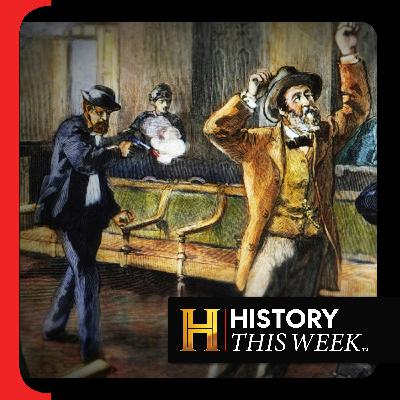
November 3, 1880. Congressman James Garfield wakes up on his quiet farm in Ohio to learn that he’s been elected President of the United States. He never campaigned to be on the ticket. He never wanted the presidency. But the nation, weary of corruption and hungry for reform, has chosen him to lead.
But four months after taking office, Garfield will be shot by a man who believes he’s owed a government position. And the president’s short, remarkable life will end in tragedy.
This week, we’re talking with writer and showrunner Mike Makowsky, creator of the new Netflix series Death by Lightning, about the extraordinary story of America’s forgotten president. How did Garfield rise from poverty to the presidency? What might he have achieved if he’d lived? And what does his assassination reveal about political violence, then and now?
Death by Lightning releases on Netflix on November 6th. It’s an adaptation of Destiny of the Republic by Candace Millard, which we also consulted for this episode.
--
Get in touch: historythisweekpodcast@history.com
Follow on Instagram: @historythisweek
Follow on Facebook: HISTORY This Week Podcast
To stay updated: http://historythisweekpodcast.com
To learn more about listener data and our privacy practices visit: https://www.audacyinc.com/privacy-policy
Learn more about your ad choices. Visit https://podcastchoices.com/adchoices
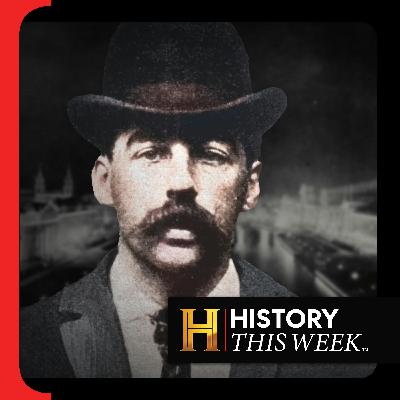
October 28, 1895. It’s the first day of a murder trial in Philadelphia, and H.H. Holmes has been left to represent himself. His lawyers say they haven’t had time to prepare for his case, although they may just want to avoid defending the man some newspapers are already saying is “sure to grace a gallows.” Holmes has been accused of murdering his business associate, but rumors swirl that he may have killed dozens, even hundreds more.
A century later, some still call him "America's first serial killer." But how did H.H. Holmes earn this reputation? And why is it so hard to learn the truth about this legendary fiend?
Special thanks to Adam Selzer, author of H.H. Holmes: The True Story of the White City Devil, and Harold Schechter, professor emeritus of literature at Queens College and author of Depraved: The Shocking True Story of America's First Serial Killer.
** This episode originally aired October 25, 2021.
Get in touch: historythisweekpodcast@history.com
Follow on Instagram: @historythisweek
Follow on Facebook: HISTORY This Week Podcast
To stay updated: http://historythisweekpodcast.com
To learn more about listener data and our privacy practices visit: https://www.audacyinc.com/privacy-policy
Learn more about your ad choices. Visit https://podcastchoices.com/adchoices
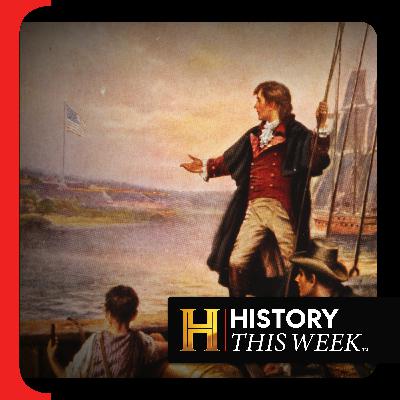
October 19, 1814. An eager audience files into the Holliday Street Theater in Baltimore, about to see a debut performance, described as a “much-admired new song.” The composer of this song, Francis Scott Key, had written the lyrics during a recent battle in Baltimore, trapped on a British ship as he watched the rockets red glare from afar. Key wasn’t a professional songwriter – a prominent lawyer in Washington D.C., he specialized in cases related to slavery, both defending enslaved people and slave catchers. But his real legacy became this song, entitled “The Star-Spangled Banner.”
How did Key come to watch the Battle of Baltimore play out from the deck of an enemy ship? And how did his relationship with race and slavery shape the song we now call our national anthem?
Special thanks to authors Marc Leepson and Tim Grove for sharing their voices and expertise for this episode.
** This episode originally aired October 19, 2020.
--
Get in touch: historythisweekpodcast@history.com
Follow on Instagram: @historythisweek
Follow on Facebook: HISTORY This Week Podcast
To stay updated: http://historythisweekpodcast.com
To learn more about listener data and our privacy practices visit: https://www.audacyinc.com/privacy-policy
Learn more about your ad choices. Visit https://podcastchoices.com/adchoices
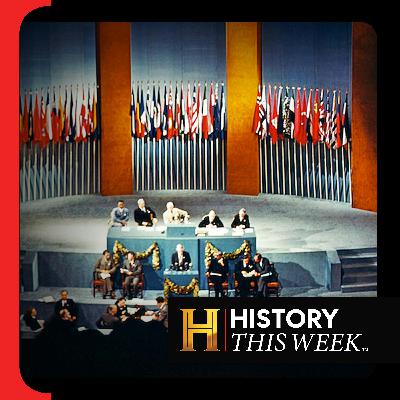
October 24, 1945. The Charter of the United Nations is signed, promising to “save succeeding generations from the scourge of war.” Back when the charter was drafted a few months earlier in San Francisco, delegates from around the world gathered to build a new era of peace and human rights.
Among them is Mary McLeod Bethune, the only Black woman in the U.S. delegation, and she already sees the contradictions beneath the moment: colonial powers writing freedom into a document that excludes millions. Years later, journalist Marguerite Cartwright will carry that insight forward, holding the UN to the ideals it claimed to represent.
Why did these two Black women believe the UN was so important, when their own country continued to deny them equality? And how can their work reframe the way we view the struggle for Civil Rights beyond U.S. borders, for all nations?
Special thank you to Keisha Blain, professor of Africana Studies and History at Brown University and author of Without Fear: Black Women and the Making of Human Rights.
--
Get in touch: historythisweekpodcast@history.com
Follow on Instagram: @historythisweek
Follow on Facebook: HISTORY This Week Podcast
To stay updated: http://historythisweekpodcast.com
To learn more about listener data and our privacy practices visit: https://www.audacyinc.com/privacy-policy
Learn more about your ad choices. Visit https://podcastchoices.com/adchoices

October, 1955. In living rooms across Denmark, children tear open the box of a brand-new toy: the LEGO System in Play. Inside are plastic bricks, a printed playmat of roads, little houses and trees — everything in perfect scale. As they build, something new is taking shape.
It looks simple, but it’s a radical idea — every piece connects, no matter when or where it’s made. It’s more than a toy — it’s a system. That quiet innovation will turn a small family workshop into one of the most successful companies in the world.
How did a small-town Danish carpenter launch a plastic toy empire? And how did LEGO re-envision what a toy can be?
Special thanks to Kristian Reimer Hauge, corporate historian at the LEGO Idea House; Daniel Konstanski, historian for Blocks Magazine and author of The Secret Life of LEGO® Bricks: The Story of a Design Icon; and Chris Byrne, researcher, historian, and “The Toy Guy.”
We also want to thank Dana Goldsmith, Andreas Friis, and Roberta Cardazzo.
Get in touch: historythisweekpodcast@history.com
Follow on Instagram: @historythisweek
Follow on Facebook: HISTORY This Week Podcast
To stay updated: http://historythisweekpodcast.com
To learn more about listener data and our privacy practices visit: https://www.audacyinc.com/privacy-policy
Learn more about your ad choices. Visit https://podcastchoices.com/adchoices
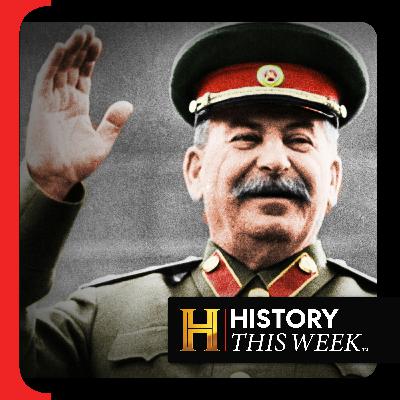
October 11, 1955. Nearly three hundred of the Soviet Union’s top scientists sign a secret letter demanding the removal of one man: Trofim Lysenko. For decades, Lysenko had Joseph Stalin’s ear, ruling Soviet biology with an iron fist—banning genetics, rewriting textbooks, and sending dissenting scientists to prison or worse.
How did a peasant-turned-agronomist convince Stalin that wheat could turn into rye, and that ideology mattered more than evidence? And when politics replace science, what—and who—gets destroyed?
Special thanks to William deJong-Lambert, author of The Cold War Politics of Genetic Research: An Introduction to the Lysenko Affair; and Nikolai Krementsov, author of Stalinist Science.
--
Get in touch: historythisweekpodcast@history.com
Follow on Instagram: @historythisweek
Follow on Facebook: HISTORY This Week Podcast
To stay updated: http://historythisweekpodcast.com
To learn more about listener data and our privacy practices visit: https://www.audacyinc.com/privacy-policy
Learn more about your ad choices. Visit https://podcastchoices.com/adchoices
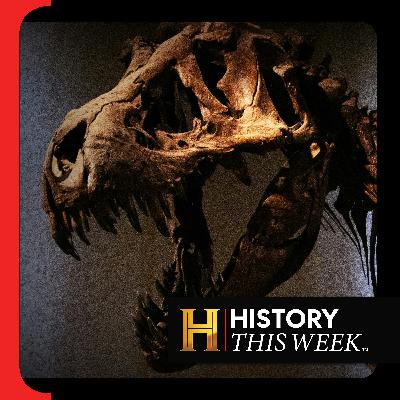
October 4, 1915. President Woodrow Wilson designates Dinosaur National Monument as a national historic site. That’s a big deal, right? There must’ve been a grand ribbon-cutting ceremony, maybe even a parade. But no. In 1915, nobody really cares about dinosaurs. But that is all about to change. And when it does, it is largely because of two paleontologists. Two guys who started off as best friends … until their growing obsession with unearthing and cataloging dinosaur bones would turn them into rivals. Then enemies. How did the competition between a pair of paleontologists lead to unprecedented dinosaur discoveries? And how did their rivalry unhinge them both?
Special thanks to guest Dr. Hans Sues, curator of vertebrate paleontology at the Smithsonian’s National Museum of Natural History.
** This episode originally aired October 3, 2022.
Get in touch: historythisweekpodcast@history.com
Follow on Instagram: @historythisweek
Follow on Facebook: HISTORY This Week Podcast
To stay updated: http://historythisweekpodcast.com
To learn more about listener data and our privacy practices visit: https://www.audacyinc.com/privacy-policy
Learn more about your ad choices. Visit https://podcastchoices.com/adchoices
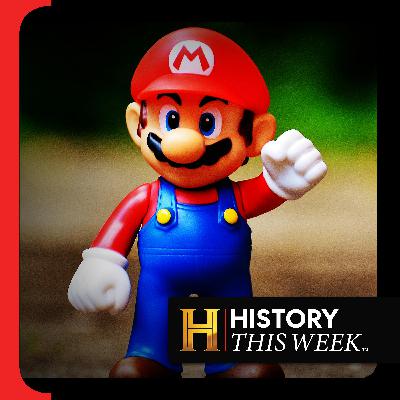
September 27, 1986. You’re a kid in the mid-80s. You get home from school, flip on the TV, and see something strange: a commercial where a giant egg hatches behind a family’s console, revealing a toy robot. His name is R.O.B. — the Robotic Operating Buddy — but he's just an accessory. The real product: Nintendo.
Today, the Nintendo Entertainment System is launching nationwide. Just a few years earlier, the U.S. video game market had collapsed under the weight of bad games and too many consoles. But Nintendo had a plan — to sell Americans on something that didn’t look like a video game at all.
With a plastic robot, a disguised gray box, and a plumber named Mario, how did Nintendo manage to sneak video games back into living rooms—and rescue a dying industry?
Special thanks to Jeremy Parish, media curator at Limited Run Games, producer of NES Works, and co-host of the Retronauts podcast.
--
Get in touch: historythisweekpodcast@history.com
Follow on Instagram: @historythisweek
Follow on Facebook: HISTORY This Week Podcast
To stay updated: http://historythisweekpodcast.com
Apple: https://podcasts.apple.com/us/podcast/history-this-week/id1493453604
Spotify: https://open.spotify.com/show/2YFm0ezrXmMqLXbxgZpkmd?si=9a84fadee11447d4
Audacy: https://www.audacy.com/podcast/history-this-week-71b4d
To learn more about listener data and our privacy practices visit: https://www.audacyinc.com/privacy-policy
Learn more about your ad choices. Visit https://podcastchoices.com/adchoices
 1
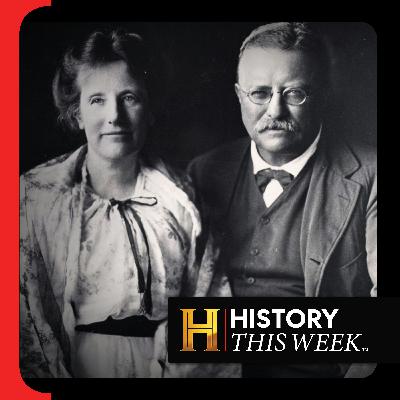
1September 14, 1901. Midnight in the Adirondacks. A pounding knock at the door jolts Theodore and Edith Roosevelt awake. William McKinley is dead. Hours later, Theodore will be sworn in as the youngest president in U.S. history. But Edith barely flinches—her diary that day notes her children’s sniffles before her husband’s rise to power.
Who was this woman who grew up alongside Theodore, helped shape his presidency, reinvented the role of First Lady, and yet tried to erase her own story from the record?
Special thanks to Kathleen Dalton, author of Theodore Roosevelt: A Strenuous Life; and Edward O’Keefe, author of The Loves of Theodore Roosevelt: The Women Who Created a President. O'Keefe is also the CEO of the Theodore Roosevelt Presidential Library, set to open next 4th of July.
Artwork: Studio portrait of Edith and Theodore Roosevelt seated together, by Walter Scott Shinn, 1916.
Get in touch: historythisweekpodcast@history.com
Follow on Instagram: @historythisweek
Follow on Facebook: HISTORY This Week Podcast
To stay updated: http://historythisweekpodcast.com
Apple: https://podcasts.apple.com/us/podcast/history-this-week/id1493453604
Spotify: https://open.spotify.com/show/2YFm0ezrXmMqLXbxgZpkmd?si=9a84fadee11447d4
Audacy: https://www.audacy.com/podcast/history-this-week-71b4d
To learn more about listener data and our privacy practices visit: https://www.audacyinc.com/privacy-policy
Learn more about your ad choices. Visit https://podcastchoices.com/adchoices

September 10, 1986. It’s just before 8am when Cliff Stoll’s pager jolts him awake. A computer at Lawrence Berkeley Lab has flagged a problem: a tiny 75-cent accounting error. But when Stoll rushes to his office, he realizes this isn’t about missing spare change. Someone has slipped into the lab’s network, tunneling thousands of miles away into U.S. military computers.
Cliff isn’t a spycatcher. He’s an astronomer. And yet, from this moment on, he’ll spend months chasing a hacker who may be working for the KGB.
How did spare change uncover a spy ring? And why did this case mark the end of innocence on the Internet?
Special thanks to Cliff Stoll, astronomer, teacher, and author of The Cuckoo's Egg: Tracking a Spy Through the Maze of Computer Espionage; and J.J. Widener, cybersecurity expert currently serving as Director of Cybersecurity Architecture at Kimberly-Clark.
Artwork: Cliff Stoll promo image
Get in touch: historythisweekpodcast@history.com
Follow on Instagram: @historythisweek
Follow on Facebook: HISTORY This Week Podcast
To stay updated: http://historythisweekpodcast.com
To learn more about listener data and our privacy practices visit: https://www.audacyinc.com/privacy-policy
Learn more about your ad choices. Visit https://podcastchoices.com/adchoices
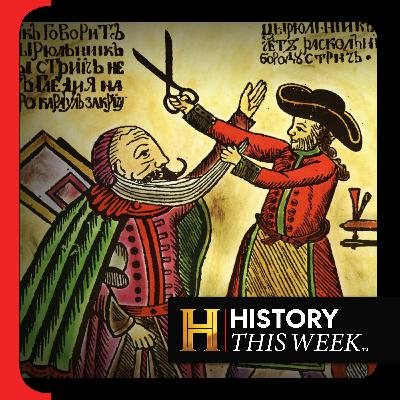
Sept 5, 1698. Tsar Peter the Great of Russia returns home from a year-long European tour. When noblemen, religious figures, and friends gather to welcome him home, Peter pulls out a straight razor, holds it to their throats, and…forcibly shaves their beards. This event will go down in history as a first step toward Russian geopolitical power. Before Peter’s reign, Russia was an isolated nation that was largely ignored by the rest of the world.
How did Peter the Great almost single-handedly drag Russia onto the world stage? And how did his great beard-shaving endeavor lead to the Russia we know today?
Special thanks to our guest, Lynne Hartnett, Ph.D., Professor of History, Villanova University, and author of Understanding Russia: A Cultural History.
Artwork: Russian political cartoon depicting Peter the Great as a barber, ca. 18th century
** This episode originally aired August 31, 2020.
Get in touch: historythisweekpodcast@history.com
Follow on Instagram: @historythisweek
Follow on Facebook: HISTORY This Week Podcast
To stay updated: http://historythisweekpodcast.com
To learn more about listener data and our privacy practices visit: https://www.audacyinc.com/privacy-policy
Learn more about your ad choices. Visit https://podcastchoices.com/adchoices

August 28, 1920. In the town of Tequila, fireworks burst overhead as people celebrate Mexico’s independence. Then… gunshots. Malachías Cuervo, heir to the famous tequila dynasty, has just reignited a bitter feud with his family’s rivals, the Sauzas.
For decades, his brother José Cuervo fought to rebuild the family business through drought, revolution, and political upheaval—turning a struggling operation into an empire. His tactfulness allowed Cuervo to survive as one of the most popular tequila brands in the world today.
How is José Cuervo able to navigate the Mexican Revolution, and a cutthroat industry? And what does his life reveal about the history of his country?
Special thanks to Ted Genoways, author of Tequila Wars: José Cuervo and the Bloody Struggle for the Spirit of Mexico.
Artwork: José Cuervo, ca. 1914 (colorized)
--
Get in touch: historythisweekpodcast@history.com
Follow on Instagram: @historythisweek
Follow on Facebook: HISTORY This Week Podcast
To stay updated: http://historythisweekpodcast.com
To learn more about listener data and our privacy practices visit: https://www.audacyinc.com/privacy-policy
Learn more about your ad choices. Visit https://podcastchoices.com/adchoices
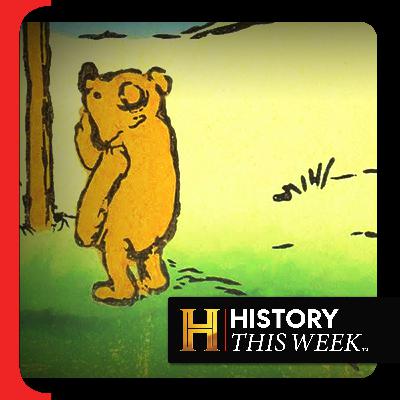
August 24, 1914. A train pulls up to the lumber town of White River, Ontario, carrying a regiment of Canadian troops on board. On the tracks where they disembark is a small black bear cub. An army veterinarian decides to buy the bear and name her Winnipeg—Winnie for short—after the town where he's been living.
When the soldiers are deployed to the European front, Winnie is left at the London Zoo, where a child named Christopher Robin Milne will meet her. He'll later rename his own teddy bear after her: Winnie-the-Pooh.
How did a real-life boy and a real-life bear inspire some of the world's most famous literary characters? And what impact did these stories ultimately have on the people who helped bring them to life?
Special thanks to Ann Thwaite, whose book about Milne and Winnie-the-Pooh is titled Goodbye Christopher Robin: A.A. Milne and the Making of Winnie-the-Pooh.
Artwork: From "Christopher Robin Leads an Expedition to the North Pole" by A.A. Milne, 1926. Illustration by E.H. Shepard. (Cooper Hewitt, Smithsonian Design Museum)
** This episode originally aired August 23, 2021.
--
Get in touch: historythisweekpodcast@history.com
Follow on Instagram: @historythisweek
Follow on Facebook: HISTORY This Week Podcast
To stay updated: http://historythisweekpodcast.com
To learn more about listener data and our privacy practices visit: https://www.audacyinc.com/privacy-policy
Learn more about your ad choices. Visit https://podcastchoices.com/adchoices
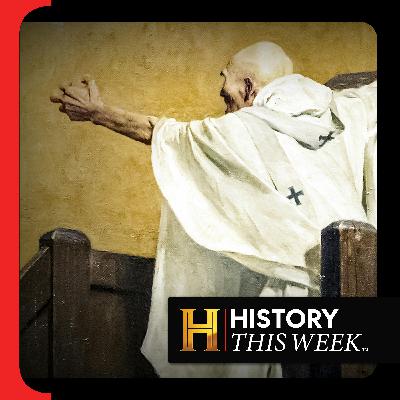
August 24, 394. On the walls of a fading Egyptian temple, a priest carves what will become the last known hieroglyph in history. At the same moment, in Alexandria, a fiery archbishop named Theophilus is rising to power. He mocks the ancient Egyptian gods, desecrates their temples, and sets out to stamp out “paganism” for good.
But Theophilus is fighting more than ancient religion—he clashes with monks, rivals, even fellow bishops, in a ruthless bid to make Alexandria the beating heart of the Christian world. What drives him to destroy? And can an entire faith really be erased?
Special thanks to our guests: Solange Ashby, Assistant Professor of Egyptology and Nubian Studies at UCLA in Los Angeles, author of Calling Out to Isis: the Enduring Nubian Presence at Philae; Stephen Davis, Woolsey Professor of Religious Studies and Professor of History at Yale University; and Christine Luckritz Marquis, Associate Professor of Church History at Union Presbyterian Seminary, and author of Death of the Desert: Monastic Memory and the Loss of Egypt's Golden Age.
Artwork: Saint John Chrysostom and the Empress Eudoxia by Jean-Paul Laurens.
--
Get in touch: historythisweekpodcast@history.com
Follow on Instagram: @historythisweek
To stay updated: http://historythisweekpodcast.com
To learn more about listener data and our privacy practices visit: https://www.audacyinc.com/privacy-policy
Learn more about your ad choices. Visit https://podcastchoices.com/adchoices
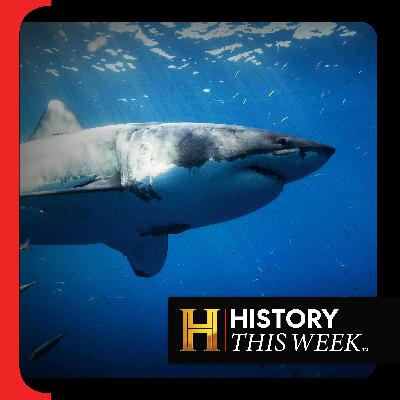
August 15, 1915. American diplomat J. T. Du Bois publishes a letter in The New York Times. It’s not about diplomacy or foreign affairs. This letter is about sharks. It’s Du Bois’ attempt to prove to the American public that “Man-Eating Sharks” - as he calls them - are real.
Because in 1916? Most people think they’re a myth. Experts say that sharks aren’t dangerous. That they’re “rabbit” tame and too weak-jawed to pose any real threat to humans—at least, in the North East.
But the following summer, a series of mysterious attacks in New Jersey will radically change the conversation and lead to a giant sea change in our feelings about sharks. What happens when the myth of the man-eater becomes real?
Special thanks to Richard G. Fernicola, author of Twelve Days of Terror: A Definitive Investigation of the 1916 New Jersey Shark Attacks, and Dr. Gavin Naylor, director of the Florida Program for Shark Research at the Florida Museum of Natural History. We also referenced the book Close to Shore: The Terrifying Shark Attacks of 1916 by Michael Capuzzo.
To learn more about listener data and our privacy practices visit: https://www.audacyinc.com/privacy-policy
Learn more about your ad choices. Visit https://podcastchoices.com/adchoices
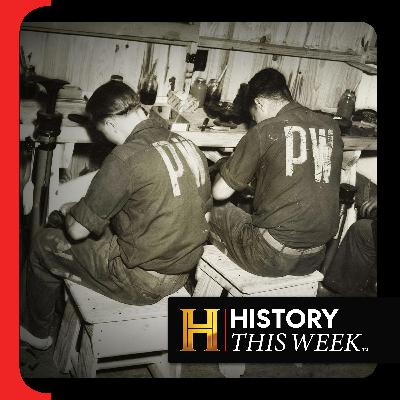
August 7, 1943. Off the coast of Venezuela, a Nazi U-boat is under siege. For nine days, it’s hunted by Allied aircraft across the Caribbean, until its engines fail and its commander gives the order: abandon ship. Forty-three German sailors plunge into shark-infested waters, and are pulled out by their enemy - the United States.
The Germans think the worst is behind them. Instead, they’re headed for a POW camp in the American heartland, where life will actually be pretty comfortable. They play soccer, harvest corn, eat well… until things turn violent.
How did Nazi prisoners of war end up murdering each other on U.S. soil? And what does American justice look like when applied to the enemy?
Special thanks to William Geroux, author of The Fifteen: Murder, Retribution, and the Forgotten Story of Nazi POWs in America.
To learn more about listener data and our privacy practices visit: https://www.audacyinc.com/privacy-policy
Learn more about your ad choices. Visit https://podcastchoices.com/adchoices


Download from Google Play

Download from App Store
 United States
I come back to this episode thanksgiving!
interesting to learn how Clara Barton ans Red Cross were tied to this story. thanks for sharing
never going to forgive this podcast for making me listen to Eric Adams speak
Yay we are back!
never unsubscribed hoping this announcement would come!
🥳🥳🥳🥳🥳🥳🥳
🔴✅📺📱💻ALL>Movies>WATCH>ᗪOᗯᑎᒪOᗩᗪ>LINK>👉https://co.fastmovies.org
I never knew the behind the scenes story regarding this song!! thanks for sharing
I lived listening to history this week, you will be missed! thank you very much.
You lost me in the 1st 10 seconds. Sept 2, 31 BCE? Before Common Era? You, and others, are trying to rewrite history. For Centuries mankind has measured time by Christ. This was 31 BC....Before Christ. Evil.
Aw, finished early. Bummer.
I was crying when I was listening this story.
The bonus podcasts for other channels is nice but REALLY annoying how frequently it's been lately or even better why not make it an actual bonus in addition to the weekly episode not in replace of. Have this week's episode as normal because we wait all week only to find out we get nothing from History the week. Very disappointing.
the narrator is not right for this kind of podcast.
Great episode
Hammerin' Hank Aaron was a GREAT ballplayer who, during his years on the field, never really received the credit for being a baseball superstar that he deserved! He might have been revered by the fans in Milwaukee and Atlanta, but it wasn't until it was obvious without any doubt that he was going to eclipse the Babe's home run record, that he was treated like the other superstars of the day - May's, Clemente, Mantle, Koufax, Gibson, just to name a handful - as a living, breathing GOD of the baseball diamond. That was an injustice to him!
You should look up Hannah Jumper.
oh look another podcast FULL of adds
not listening to is podcast anymore bunch of left thinking fucks
yet I still smoke