


 Claim Ownership
How I Invest with David Weisburd
Subscribed: 6,927Played: 7,972,345
Subscribe

© Copyright 2025 How I Invest with David Weisburd
Description
How I Invest with David Weisburd is a podcast that interviews the world's leading institutional investors. Previous guests include The Ford Foundation, Northwestern University Endowment, CalPERS, Stepstone, and other top limited partners.
271 Episodes
Reverse
How do you spot a frontier-tech company before it becomes obvious and why is being early so much harder than being right?
In this episode, I talk with Jonathan Lacoste, Founder and General Partner of Space VC, about investing at the moment when ideas are still non-consensus. Jonathan explains the difference between deep tech and frontier tech, why founder migration is the strongest signal of emerging opportunity, and how pre-seed investors create alpha by backing contrarian founders before markets agree. We discuss how grit and mission outperform IQ, why concentration beats diversification in early-stage portfolios, and how patience compounds into an edge over time.
What if the most important decision in wealth planning isn’t the tax strategy—but who you trust to make decisions when you no longer can?
In this episode, I talk with Thomas Monroe, Founder and President of Blue Sky Trust, about the real role of a trustee and why independence, judgment, and governance matter more than technical structuring alone. Thomas explains how trustees sit at the intersection of tax, legal, investment, and family dynamics—and why poor trustee selection can quietly undermine even the most sophisticated planning. We explore real-world trust use cases, parenting and purpose across generations, and how thoughtful structuring creates optionality without eroding values.
What happens when you throw out the playbook of traditional private equity and instead build businesses with permanent capital, no exits, and no management fees?
In this episode, I talk with Brent Beshore, founder and CEO of Permanent Equity, about a radically different approach to investing that focuses on ownership, compounding, and alignment with operators over decades—not years. Brent explains why avoiding leverage and fees isn’t just philosophically different but materially better for long-term outcomes, how Permanent Equity partners with founders who want legacy and culture to endure, and why patient reinvestment beats short-term optimization. We break down how permanent capital accelerates growth, how to think about cash flow vs. IRR optics, and the unique investor mindset required to succeed outside the traditional private equity model.
Why do so many strong GPs struggle to raise capital today and what actually separates fast, oversubscribed fundraises from stalled ones?
In this episode, I talk with Alexander Russ, Senior Managing Director at Evercore and Head of North America for the firm’s Private Funds Group, about what really drives fundraising success in today’s crowded private markets. Alex breaks down the psychology of LP decision-making, why momentum in the first close matters more than almost anything else, and how the best GPs differentiate themselves through narrative, preparation, and credibility rather than fee discounts. We dive into why fundraising is ultimately a momentum machine, how to engineer demand early, and why trust—built over years—can be lost in a single raise.
Do private markets actually outperform public markets once you properly adjust for risk or is that belief built on flawed data?
In this episode, I talk with Dr. Gregory W. Brown, one of the leading academic researchers in alternative investments, about what decades of data really say about private equity, venture capital, and risk-adjusted returns. We break down why private-market performance is so hard to measure, how tools like the Kaplan–Schoar PME changed institutional thinking, and what investors misunderstand about beta, volatility, and alpha. Greg also explains why buyouts and ventures behave very differently, how fund size and geography affect outcomes, and what this research implies for building diversified portfolios today.
Why do most investors fail at the exact moments when staying invested matters most—and how can options help fix that?
In this episode, I talk with Hamilton Reiner, Managing Director at J.P. Morgan Asset Management and CIO of the U.S. Core Equity Team, about how options can be used not for speculation, but to create discipline, manage risk, and help investors stay invested through market volatility. Hamilton shares lessons from more than three decades managing equities and derivatives, explains why volatility is misunderstood, and breaks down how hedged strategies, rebalancing, and risk-based portfolio construction can dramatically improve long-term outcomes—without requiring heroic market timing.

Why do the most successful investors and founders still miss their best opportunities—and how much of that comes down to poor relationship management?
In this episode, I talk with Patrick Ewers, founder of Mindmaven, about why relationships—not intelligence or effort—are the true limiting factor in professional success. Patrick shares lessons from being an early employee at LinkedIn under Reid Hoffman, coaching partners at top firms like Sequoia and Andreessen Horowitz, and building a systemized approach to relationship management that scales. We break down why important things lose to urgent ones, how delegation and leverage unlock effectiveness, and why small, consistent actions compound into billion-dollar outcomes.
How do the best venture investors consistently spot unicorn founders before the rest of the market even knows they exist?
In this episode, I talk with Jamie Lee, Co-Founder and Managing Partner of Tamarack Global, about sourcing asymmetric deal flow in deep tech and why founder referrals are the single strongest signal of future breakout companies. Jamie explains how Tamarack applies hedge-fund-level diligence at the seed stage, why intuition and pattern recognition matter as much as data, and how concentrated conviction—combined with relentless research—drives their unusually high unicorn hit rate. We also explore humanoid robotics, labor automation, and why the next industrial revolution is already underway.

How do you scale a growth equity firm from a $52M first fund to $5B across six funds—without losing discipline or trust?
In this episode, I talk with Brian Neider, Managing Partner at Lead Edge Capital, about building a durable growth equity platform by combining rigorous metrics with deep relationship-building. Brian shares how Lead Edge created a differentiated LP model centered on high-net-worth individuals who actively support portfolio companies, why communication and education compound trust over decades, and how a strict investment framework helps avoid negative alpha as the firm scales. We also discuss why exits matter more than paper gains, how to think about “walking dead” portfolio companies, and what truly energizes long-term investing.
How do you build portfolios that survive liquidity crises, inflation shocks, and the most volatile market regimes in modern history?
In this episode, I talk with Alfred Lee, Deputy Chief Investment Officer at Q Wealth Partners and one of Canada’s most experienced multi-asset portfolio architects. Alfred previously managed over $75 billion across equities, fixed income, commodities, factor strategies, and thematic ETFs at BMO—while also spending a year at the Bank of Canada running part of its quantitative easing program during the pandemic. He shares what he learned from overseeing $25B in fixed income and $50B in equities, how ETFs transformed the public markets, why alpha is harder to generate than ever, and why alternatives, real assets, CTAs, and discretionary macro strategies must anchor the next generation of portfolios.
What does it take to build a sovereign wealth fund from scratch—and still outperform in some of the hardest markets in decades?
In this episode, I talk with Peter Madsen, Chief Investment Officer of the Utah School & Institutional Trust Funds Office (SITFO), one of the most quietly sophisticated sovereign wealth funds in the United States. Peter shares how he went from running hedge fund portfolios in London to becoming the first investment hire tasked with modernizing Utah’s endowment. We break down SITFO’s philosophy on mean reversion, factor-based investing, public vs. private markets, active vs. passive strategy, and how a small CIO team competes with far larger institutions. Peter also explains why small caps are broken, how he shifted capital into private equity, why micro-VC funds outperform mega-funds, and how SITFO uses AI and collaborative models to underwrite managers in a world of overwhelming information.
How do you turn distressed opportunities into structural alpha—again and again—in an asset class most investors still misunderstand?
In this episode, I’m joined by Philip Benjamin, Co-Founder and Managing Partner of Colzen Capital, about how he built a differentiated pre-exit liquidity strategy that serves founders, executives, and investors simultaneously. Philip shares how his fourth-generation real estate background and the 2008 financial crisis shaped his investing worldview, how he applies a distressed-real-estate mindset to late-stage ventures, and why Colzen’s structured equity financing model creates downside protection, aligned incentives, and access to elite companies long before IPO. We also discuss portfolio construction, expected return math, founder psychology, and why this emerging asset class is quietly becoming massive.

What does it take to build four top-decile crypto funds in one of the most volatile asset classes on earth?
In this episode, I talk with Rennick Palley, Founder of Stratos, about how he approaches crypto investing with a disciplined, mathematically grounded framework. We break down how Stratos constructs top-performing venture and liquid portfolios, why crypto is shifting from momentum-driven trends to fundamentals, how to size positions without blowing up, and why Bitcoin and gold are behaving the way they are in today’s macro environment. Rennick also shares his philosophy on decisiveness, conviction, and avoiding the costly mistakes investors make when they hesitate.

How do you build a $10B real estate empire by turning yourself into a media company—and why is vulnerability the ultimate competitive advantage?
In this episode, I talk with Ryan Serhant, founder and CEO of SERHANT., one of the most influential real estate brokerages in the world and a pioneer at the intersection of real estate, media, entertainment, and technology. Ryan breaks down the turning points that shaped his career—from selling a $13M townhouse through YouTube a decade ago, to betting everything on social media before anyone believed in it, to building a fast-growing real estate ecosystem powered by content, authenticity, and scale. We dive into Season 2 of Netflix’s Owning Manhattan, the biggest highs and lows of his year, the reality of leading a thousand-agent organization, and why the future of real estate is screenless, human-centric, and powered by creators.

 1
1Why do the world’s best CIOs make investment decisions based on gut — not spreadsheets?
In this episode, I’m joined by Julia Rees Toader, CFA, Founding Partner at PrinCap and former Global Head of Portfolio Strategy at Goldman Sachs Asset Management. Julia spent a decade advising sovereign wealth funds, pensions, private banks, and ultra-wealthy families on portfolio construction, risk management, and asset allocation. She shares the biggest lessons she learned from working with the world’s top CIOs — from why diversification rarely drives behavior, to where the smartest allocators take idiosyncratic risk, to how emotions secretly influence the most sophisticated investment decisions.

What does it take to build the most dominant FinTech investment bank in the world—starting from a $99 incorporation and a used laptop?
In this episode, I speak with Steve McLaughlin, Founder, CEO, and Managing Partner of FT Partners, widely regarded as the leading investment bank in FinTech. Steve has personally closed hundreds of the biggest M&A, capital raise, and IPO advisory transactions in the industry—while pioneering a completely different approach to value creation in investment banking.
We cover everything from the humble beginnings of FT Partners, to Steve’s philosophy of “never die,” to his groundbreaking thesis on AI, tokenization, defensibility in FinTech, and why he believes we’re entering a new era of trillion-dollar global financial technology companies. We also dive into the incentives model Steve built that has generated some of the largest fees in the history of investment banking—and why clients keep coming back.
What does it take to recruit the top 0.1% of engineers in the world — and why has talent become the ultimate constraint in AI?
In this episode, I’m joined by Chris Vasquez, Founder & CEO of Quantum Talent, one of the most in-demand technical recruiting firms in the AI ecosystem. We discuss why elite engineering talent has become the core bottleneck in AI, how companies can actually attract S-tier builders, what founders get wrong about hiring, and why talent density—not headcount—is the strongest predictor of outcomes in today’s startup environment.

How do you balance power-law outcomes with real risk management while building a durable venture franchise?
In this episode, I speak with Mark Peter Davis (MPD) — Managing Partner of Interplay, entrepreneur, author, podcaster, and one of New York’s most active early-stage investors. We discuss how Mark’s philosophy of investing has evolved over 20 years in venture, why VC psychology is so different from other asset classes, and how he manages for both outliers and consistency across vintages.
Mark breaks down secondaries, constructing high-access portfolios, founder relationships, narrative risk, the role of operational support, and why grit compounds just like interest.
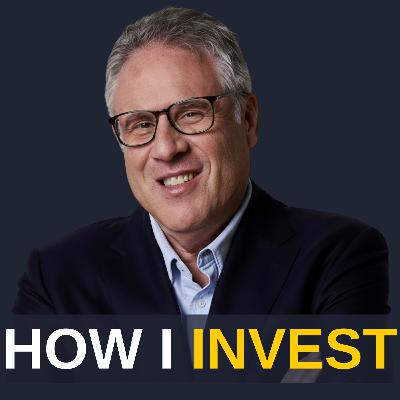
How do the best family offices consistently spot power-law opportunities and avoid the trap of “fake busy” work?
In this episode, I’m joined with William (Bill) Brown, CIO of the Terrace Tower Group, about the lessons he learned working for billionaire Leonard Stern, how he helped evolve a legacy real-estate portfolio into a globally diversified family office, and what pattern recognition looks like across trades like the Big Short, crypto, and private credit. We discuss how Bill thinks about decision-making, mental models, productivity, and the mindset required to survive long enough to capture asymmetric upside.
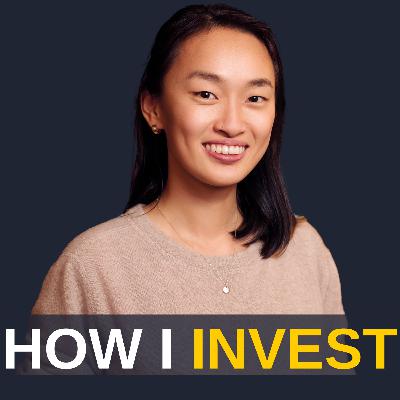
How do you scale from a $10M first fund to managing over $1.5B — all in one of the most capacity-constrained asset classes on earth?
In this episode, I talk with Eva Shang, Co-founder and General Founder of Legalist, about dropping out of Harvard, getting into Y Combinator, pivoting from legal analytics to litigation finance, and raising their first $10M fund long before they had any track record.
We discuss why Legalist chose the fund model over the venture-backed originator model, how they deployed their algorithm to find late-stage cases at scale, why litigation finance is capacity constrained, and how Legalist expanded into adjacent strategies like bankruptcy, mass torts, law-firm lending, and government receivables.


Download from Google Play

Download from App Store
 United States
vby
No two spaces are the same. That’s why Bottom Line Cleaning Services offers personalized cleaning plans based on your property’s needs, size, and schedule. Whether you need service once a month or every day, they’re ready to design the right plan for you. https://bottomlinecleaningservices.com/
I absolutely love tuning into 'The 10X Capital Podcast'! The insights and strategies shared are incredibly valuable for anyone looking to elevate their investment game and business acumen. https://medium.com/@CustomPizzaBoxes Each episode is packed with actionable advice and thought-provoking content that consistently delivers real-world impact. The hosts do a fantastic job of breaking down complex topics into digestible and engaging conversations. Highly recommend for anyone serious about achieving 10X growth in their ventures!
I can barely hear one side and the other is 20x louder
I absolutely love tuning into 'The 10X Capital Podcast'! The insights and strategies shared on this show are incredibly valuable for anyone looking to level up their investing game. The hosts have a knack for breaking down complex concepts into actionable advice that's easy to understand. https://www.thomasnet.com/profile/30982718/sticker-printing-pros.html