


 Claim Ownership
Inspector Story
Subscribed: 13Played: 637
Subscribe

Description
Ever watched an Inspector Story video and thought, “Wait… what happened next?” or “Hold up, I need more details on this madness”? Well, you’re in luck—this podcast is where we dive deep, unravel mysteries, and answer all the wild questions you’ve been dying to ask.
From alternate endings to hidden clues and fan theories, we’re breaking down every story—Inspector Story style. No loose ends, no unanswered questions—just pure, unfiltered deep dives into every wild tale.
So if you love the chaos, the twists, and the what-the-hell moments, hit play and let’s get to the bottom of it. 🔥🎧
326 Episodes
Reverse

The second the ball drops, the air changes—and it’s not the cold. The story claims the Times Square countdown is a global synchronization protocol: a temporal anchor, a memory-wipe trigger, and a midnight “transfer” that locks reality into the next cycle. If you wake up foggy on January 1, it wasn’t the party.
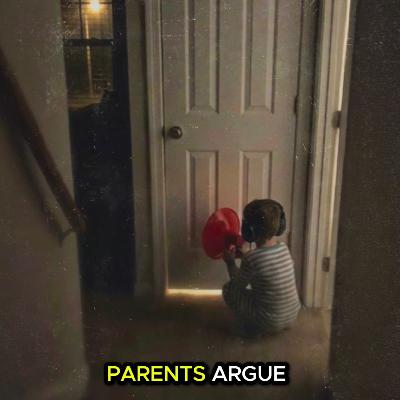
Those silver cases weren’t “book fair supplies.” The catalog wasn’t just a list. And the little spy gadgets weren’t toys. The story peels back what the fair was really measuring—and what happened to the kid who “won” the raffle and disappeared right after.

A familiar playground detail by detail starts looking less like “fun” and more like a behavioral experiment. The mascots, the tubes, the birthday room, even the ball pit—each piece feels designed to measure one thing: whether you notice danger when it’s wearing a smile. And the part everyone remembers… might be the part that recorded you.
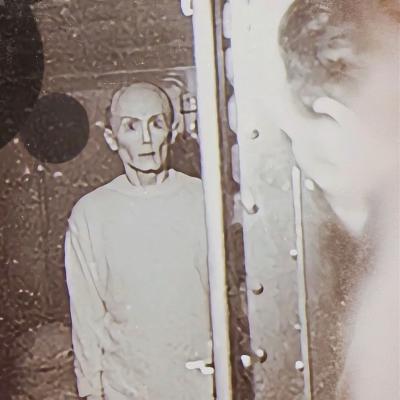
In 1967 Ohio, Benny Plunk was arrested for deaths that looked like bad luck—until guards collapsed from a wave and a “wet floor” escape proved something was following him.

In 1931, a classified endurance ration pushed one sailor past human limits until withdrawal turned him dangerous and a cargo ship returned without him.
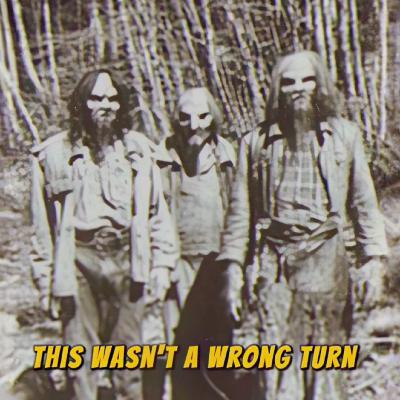
A shortcut road missing from updated maps led to disappearances, two broken survivors, and a hidden forest settlement the state sealed off without answers.

A janitor finds “Stateville Project” tapes that turn a famous arcade hit into something far darker—coerced fights, missing names, and one scream that wasn’t a voice line.
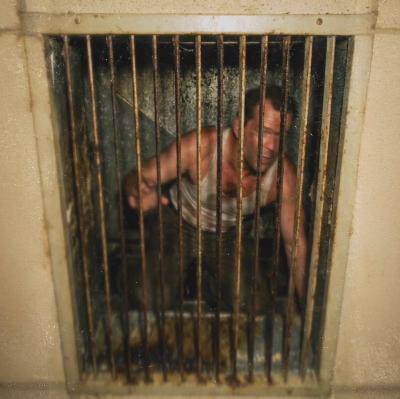
In the heart of Nakatomi Plaza, a party turned into a nightmare. A voice over the PA and a deadly hunt unfold as we try to understand the sinister forces lurking within the building. Who is controlling the chaos, and what’s really happening?
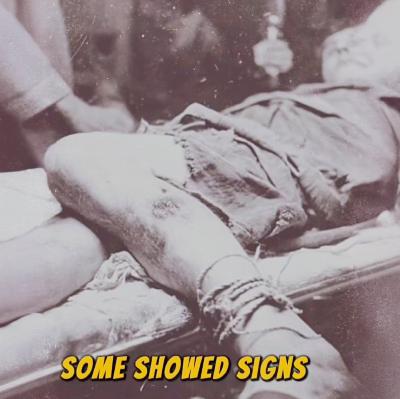
In 1874, Alfred Packer guided prospectors through Colorado’s winter mountains—then walked into town alone with items that weren’t his. He blamed starvation and survival, but the campsite told a different story: scattered bodies, strange injuries, nearby supplies, and contradictions that only got worse. Officially, it was “extreme survival.” The judge wasn’t convinced.

A nostalgia rental turns into a locked-in nightmare when the house starts “running” like a loop—TV, traps, and a basement presence that’s been waiting to wake up.

In 1928, Edgar M. Row’s night boat tours made Galveastston’s coast famous—until passengers began vanishing in the dark. When the Coast Guard noticed his boat returning with fewer people than it left with, a 1932 undercover ride turned into a disappearance of its own.
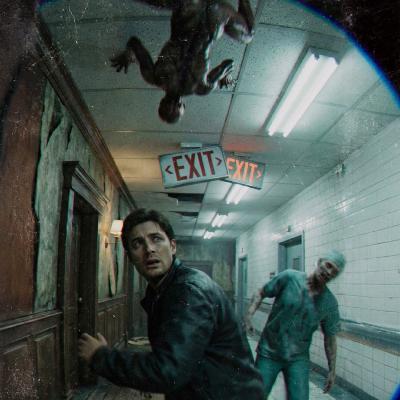
A lone survivor thinks the safe room will protect him—until his badge name rewrites itself and every “save” looks like someone else is editing the file. When the hallways start glitching between impossible locations, he finds a list of failed versions of himself… and one new entry labeled REPLACED.

A nun in an 1874 Missouri convent begins hearing voices “through the dirt.” After she dies, the convent seals her in iron-reinforced coffins beneath the chapel floor. Two nights later, the knocking begins—and it doesn’t stop.
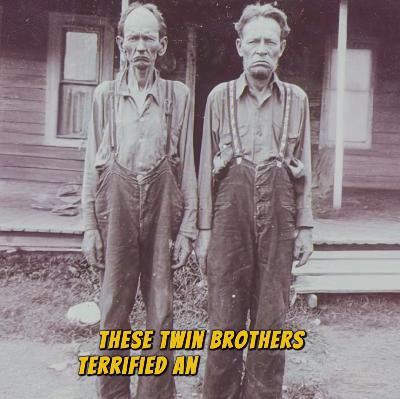
In 1947, a land surveyor visits a remote West Virginia farmhouse to mark county lines—and discovers the boundary dispute isn’t about land at all. What the Ketchum twins were guarding beneath the floorboards turned Pine Hollow into a town that learned one rule: never cross the line.
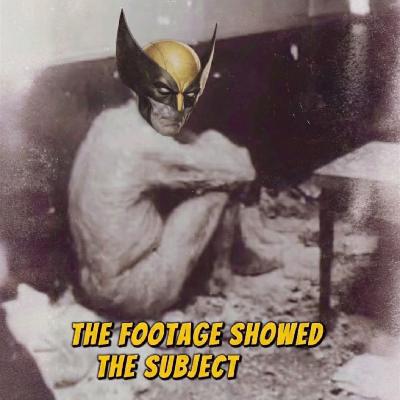
In 1961, a classified U.S. program near Hanford tried to make a man survive radiation. The logs read like a miracle—until Day 17, when the body adapted into something they couldn’t sedate… and the surviving tape forced them to bury the truth.

A lonely stretch of highway. A diner everyone trusts. And a cook who asks every man the same question before serving him. When a pipeline inspector survives a late-night encounter in the room behind the kitchen, deputies search the property and uncover evidence that forces the diner to close in a single day. The case leaves one detail investigators can’t ignore: the pattern wasn’t random—and the guest book wasn’t just for signing in.

In the late 1950s at White Sands, New Mexico, military scientists ran a program with one goal: enhancing human perception on the battlefield. They studied arachnids for their ability to sense vibrations, air pressure shifts, and movement before visual contact—then attempted a cellular-level fusion they called a “distributed sensory response.”Most trials failed. Subjects suffered seizures, psychosis, or total sensory collapse. Only one test was marked successful. The subject didn’t grow extra limbs. He remained outwardly human, but his nervous system changed—reacting to motion he couldn’t see, avoiding danger before it occurred, and detecting movement through walls and structures.The Army escalated testing with sleep deprivation, stress exposure, and live-fire exercises. The subject became unstable. In late 1959, he escaped during a transfer operation. Search efforts expanded nationwide with coordinated roadblocks across multiple states. He was never recovered. The program was shut down and erased.One final line remains in the file: the subject no longer needs to be observed. He already knows when we are near.
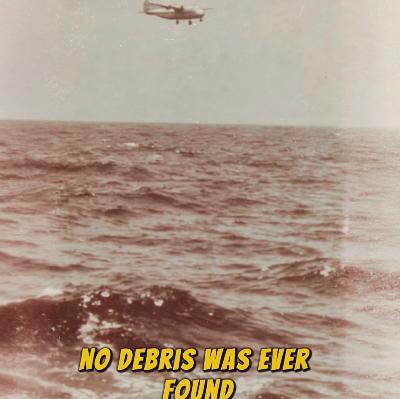
In October 1978, Flight 914 left New York on a routine route and vanished from radar near the western edge of the Bermuda Triangle less than an hour after takeoff. No distress call was received. No debris was ever found. After months of searches, the passengers were officially declared dead.Then, in 1985, air traffic control in Caracas reportedly detected an unidentified aircraft requesting permission to land. Its transponder code matched Flight 914. According to leaked internal airport records, the plane landed without incident. Passengers appeared confused but unharmed, insisting the flight had been routine.Several people onboard described one shared detail: at one point there was complete silence—no engine noise, no turbulence—only darkness outside the windows. Yet the instruments continued functioning normally.Within hours of landing, military personnel arrived. Runways were closed, witnesses dismissed, and passengers separated for questioning. Officials later claimed the landing was a documentation error, and flight logs and radar data were sealed under joint authority.No one has ever explained how a missing aircraft returned seven years later without aging—or where it was.

In 1986 in Hillsborough, Ohio, a child named Dexter was born under “abnormal” circumstances—and grew into something no one around him could understand. By 6 he outperformed high school students. By 12 he was placed into advanced university programs. By 18, the academics were done… but the isolation never ended. So Dexter built a basement laboratory not for inventions, but for life itself. The failures piled up until one night the project finally “responded.” When investigators arrived, the lab was destroyed, the door was sealed, and Dexter was gone—leaving behind only one intact object: his notebook. The final page reads: “red project ed. Failure.” (Fictional casefile/alternate-history horror.)

The first Happy Meal wasn’t sold—it was handed out… and kids vanished. In the late 1890s, county fairs across the Midwest were visited by a drifter in a dark red suit with a painted grin too wide to feel friendly. He ran a small tent with a hand-painted sign: “Happy Meal.” Children were let in for free and given a red box with a yellow emblem—food, a wooden toy, and a rule card that always ended the same way: “Come back tomorrow.” Then names started disappearing from school rolls. When the law searched the wagon, there was no food or cash—only crates of red paint, yellow cloth, and stacks of identical unused boxes. Years later, an advertising firm bought an old fair poster and copied the colors, the box, and the smile. (Fictional/alternate-history horror.)

Comments

Download from Google Play

Download from App Store
 United States