


 Claim Ownership
It's Been a Minute
Subscribed: 26,938Played: 1,032,476
Subscribe


© Copyright 2015-2025 NPR - For Personal Use Only
Description
Want in on a secret? Your likes and dislikes didn't develop by accident. There are subtle and not-so-subtle forces around you, shaping what you think, how you act, and even who you think you are. Brittany Luse is here to break the spell and help you feel wiser in a society that makes things blurry.
THE BEST POP CULTURE PODCAST AWARD WINNER AT THE 2025 SIGNAL AWARDS
It’s Been A Minute with Brittany Luse is the best podcast for understanding what’s going on in culture right now, and helps you consume it smarter. From how politics influences pop culture to how identity influences tech or health, Brittany makes the picture clearer for you every Monday, Wednesday, and Friday.It’s Been A Minute reaches millions of people every week. Join the community and conversation today.
If you can't get enough, try It's Been a Minute Plus. Your subscription supports the show and unlocks a sponsor-free feed. Learn more at plus.npr.org/itsbeenaminute
THE BEST POP CULTURE PODCAST AWARD WINNER AT THE 2025 SIGNAL AWARDS
It’s Been A Minute with Brittany Luse is the best podcast for understanding what’s going on in culture right now, and helps you consume it smarter. From how politics influences pop culture to how identity influences tech or health, Brittany makes the picture clearer for you every Monday, Wednesday, and Friday.It’s Been A Minute reaches millions of people every week. Join the community and conversation today.
If you can't get enough, try It's Been a Minute Plus. Your subscription supports the show and unlocks a sponsor-free feed. Learn more at plus.npr.org/itsbeenaminute
951 Episodes
Reverse

Some say we're entering the Woke 2.0 era. Is that real or imagined? From declining Target sales to Mamdani's election, some folks online are feeling a vibe shift. Is that feeling...woke? And if so, does that mean woke is back in style? To answer those questions - and to dissect whether or not woke ever left - Brittany is joined by Constance Grady, senior correspondent at Vox, and Tyler Austin Harper, staff writer at The Atlantic and co-host of the podcast, Time to Say Goodbye. Vote for It's Been a Minute in the NPR Pod Club Awards!(0:00) When did Woke end? (4:22) Why Woke doesn't work when racism is still on the rise(8:50) Target, Sydney Sweeney, and America's appetite for racism(12:08) The rise of "Dark Woke" & will it work?(13:51) Is Zohran Mamdani a sign of a new kind of Woke?(15:40) How MAGA made the blueprint for Woke 2.0Support Public Media. Join NPR Plus.Follow Brittany Luse on Instagram: @bmluseLearn more about sponsor message choices: podcastchoices.com/adchoicesNPR Privacy Policy

Is location tracking building relationships? Or ruining them?Four in ten U.S. adults share their locations with at least one person. But while it’s convenient – is it a violation of privacy? And who really needs to know where you are? We're getting into how location sharing became a norm, the pros and cons, and how to turn it off without making things weird.Brittany breaks it all down with Gina Cherelus, New York Times styles reporter and writer of their Third Wheel dating column, and Tatum Hunter, internet culture reporter at The Washington Post.(0:00) Who shares their location and why?(3:21) Sharing with your friends vs. your boyfriend(5:27) How location sharing became a social norm(9:30) What are the benefits of sharing your location?(14:21) What do companies get from knowing your location?(15:40) Why it can be damaging to share location with people(17:20) The awkwardness of stopping sharing location(19:29) How location sharing is redefining "privacy"Support Public Media. Join NPR Plus.Follow Brittany Luse on Instagram: @bmluseFor handpicked podcast recommendations every week, subscribe to NPR’s Pod Club newsletter at npr.org/podclub.Learn more about sponsor message choices: podcastchoices.com/adchoicesNPR Privacy Policy

What does it mean to be an independent adult?More young adults live with their parents than in the past, and are also delaying the traditional markers of independent adulthood like marriage and childbirth. Roughly nine-in-ten parents say it’s extremely or very important to them that their children be financially independent when they are adults, but are our cultural notions of financial independence changing? And are today’s young adults prepared to handle the emotional challenges of adult life? To find out, Brittany is joined by Nancy Hill, Professor of Education and Developmental Psychologist at Harvard University, and Kathryn Jezer-Morton, writer for New York Magazine and The Cut.(0:00) What does it mean to be an adult?(4:46) Is Gen-Z "failing to launch" into adulthood?(10:32) The myths of unpaid duesSupport Public Media. Join NPR Plus.Follow Brittany Luse on Instagram: @bmluseFor handpicked podcast recommendations every week, subscribe to NPR’s Pod Club newsletter at npr.org/podclub.Learn more about sponsor message choices: podcastchoices.com/adchoicesNPR Privacy Policy

It's an incredibly painful thing to do, so why are some kids cutting their parents out of their lives?27% of Americans are estranged from at least one family member, and the term "no contact" is increasingly being used to describe estrangement between adult children and their parents. But is estrangement happening more often, or are we just more open to talking about it? And is our culture around family shifting? Brittany sits down with journalist Kui Mwai and Whitney Goodman, licensed marriage and family therapist and the host of the Calling Home podcast, to find out.This episode originally aired on December 17, 2024.Follow Brittany Luse on Instagram: @bmluseFor handpicked podcast recommendations every week, subscribe to NPR’s Pod Club newsletter at npr.org/podclub.Learn more about sponsor message choices: podcastchoices.com/adchoicesNPR Privacy Policy
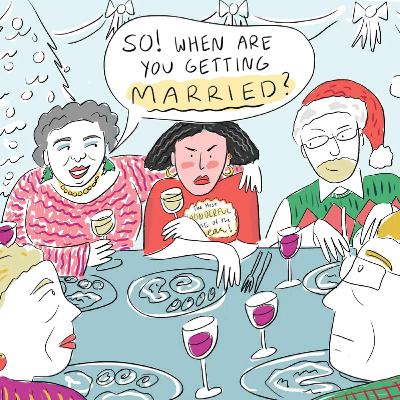
Fighting with your family doesn’t have to be a holiday tradition.The majority of Americans will celebrate Thanksgiving tomorrow. And while it’s meant to be a time of family togetherness… sometimes, this holiday can make you never want to see your family again. To go or not to go? To fight or not to fight? Well, our friends at NPR’s Life Kit have tips for how to answer these questions. Marielle Segarra, host of Life Kit, speaks with experts and identifies 12 strategies to keep your family dinner peaceful this year.Follow Brittany Luse on Instagram: @bmluseFor handpicked podcast recommendations every week, subscribe to NPR’s Pod Club newsletter at npr.org/podclub.Learn more about sponsor message choices: podcastchoices.com/adchoicesNPR Privacy Policy
Can you afford to pay two rents?Families across the country are asking that same question when it comes to childcare, as the yearly costs for daycare are becoming comparable to a year's rent in many places. How did childcare become so expensive, and how might everyone benefit if the government provided more support to parents? Professor of Sociology at the University of Wisconsin-Madison Jessica Calarco, and Senior Fellow at the Think Tank Capita Elliot Haspel are here to help Brittany find out. Follow Brittany Luse on Instagram: @bmluseFor handpicked podcast recommendations every week, subscribe to NPR’s Pod Club newsletter at npr.org/podclub.Learn more about sponsor message choices: podcastchoices.com/adchoicesNPR Privacy Policy
When the dream of buying a home seems unattainable, is it time to find a new dream? Or is there another option on the table?Bill Pulte, the director of the Federal Housing Finance Agency, or the FHFA, said the administration is “working on” a plan to introduce 50 year mortgage terms for homebuyers. But some Americans have already been working on their own plans towards homeownership… and it’s not the ‘nuclear family’ route. Brittany is joined by NPR chief economics correspondent Scott Horsley and NPR producer & author of The Other Significant Others: Reimaging Life with Friendship at the Center, Rhaina Cohen to get into the cult of homeownership in America. Together they search for a new outlook of what ‘adulthood’ looks like.(0:00) Will Millennials and Gen-Zers be able to buy homes?(7:56) Why Trump's mortgage policy probably won't work(10:53) The fundamental reasons housing is so expensive(12:37) Want to buy a home? Consider these options.(20:13) Responding to your commentsFollow Brittany Luse on Instagram: @bmluseFor handpicked podcast recommendations every week, subscribe to NPR’s Pod Club newsletter at npr.org/podclub.Learn more about sponsor message choices: podcastchoices.com/adchoicesNPR Privacy Policy
What’s the difference between feeling unsafe and being unsafe?According to Gallup, about half of Americans see crime as being extremely or very serious. And there are a lot of very real threats out there to people’s safety, but there’s also a lot of fearful rhetoric that’s more unfounded. While immigrants are less likely to commit crimes than U.S.-born citizens, and trans people are unlikely to commit mass shootings, fear of these groups is being weaponized against them. So how can we disentangle being unsafe and feeling unsafe – and better protect ourselves and each other? Brittany gets into it with Nicole Lewis, engagement editor at The Marshall Project, and Lex McMenamin, writer and editor.Follow Brittany Luse on Instagram: @bmluseFor handpicked podcast recommendations every week, subscribe to NPR’s Pod Club newsletter at npr.org/podclub.Learn more about sponsor message choices: podcastchoices.com/adchoicesNPR Privacy Policy
 1
1Have you talked to a parent recently? Are they...okay?From textbook bans to health food trends, there’s a whole culture of fear and political propaganda that preys on new parents, convincing them that just buying this or just voting for that will keep their children safe. But how do you know if something is a moral panic or a legitimate concern?Brittany is joined by Karen Leick, author of Parents, Media and Panic through the Years, and Cynthia Wang, Clinical Professor of Management and Organizations at Northwestern University to sift through the differences.(0:00) The burdensome anxiety of modern parenting(2:01) How parental fear & shame impacts children(4:26) How perceived threats shape parental behavior(10:31) The emotional impact of parental fears on kids(13:13) How to know a real vs. perceived threat in modern lifeFollow Brittany Luse on Instagram: @bmluseFor handpicked podcast recommendations every week, subscribe to NPR’s Pod Club newsletter at npr.org/podclub.Learn more about sponsor message choices: podcastchoices.com/adchoicesNPR Privacy Policy
No disrespect, but...when President Trump threw a Great Gatsby-themed party for Halloween, it kind of missed the point of the book. And, it's not just Trump. A quick search online, and you'll see a lot of people increasingly misinterpreting other famous books. Are people just bad at reading? Are we just laying our own biases on top of classic texts? Or is something else going on?Andrew Limbong, host of NPR's Book of the Day, and writer-critic Princess Weekes join Brittany to dissect novel interpretations of literary fiction. They look at what these re-interpretations say about our current moment: from what we want from a book to how books lose meaning online.(0:00) Why 'The Great Gatsby' gets misread(6:07) How 'Lord of the Rings' became a Christian Nationalist text(12:46) Literary Interpretation vs. Media Literacy(16:34) The rise of BookTok(19:28) The consequence of missing the point of a bookFollow Brittany Luse on Instagram: @bmluseFor handpicked podcast recommendations every week, subscribe to NPR’s Pod Club newsletter at npr.org/podclub.Learn more about sponsor message choices: podcastchoices.com/adchoicesNPR Privacy Policy
Have you picked up a couple weights recently? Started walking, or jogging, or doing pilates? So have a lot of other people. You see the fitness Instagram accounts and gym tips all over TikTok, but how does exercise culture fit into our broader culture? And how does more enthusiasm for exercise square with the focus on fitness in our politics? Brittany gets into it with Jonquilyn Hill, host of Vox’s Explain it to Me podcast, and Shelly McKenzie, author of Getting Physical: the Rise of Fitness Culture in America.(0:00) Americans are obsessed with exercise right now. Why?(2:36) What exercise does for mental and financial health(5:59) How exercise became a status symbol for young people(10:13) Why gyms are seeking women over 65(12:57) Why JFK and Trump both politicized fitness(16:33) What the government and its citizens have in common: body shame?Follow Brittany Luse on Instagram: @bmluseFor handpicked podcast recommendations every week, subscribe to NPR’s Pod Club newsletter at npr.org/podclub.Learn more about sponsor message choices: podcastchoices.com/adchoicesNPR Privacy Policy

The word "fascism" is being thrown around a lot right now. Does it capture our current cultural and political moment?Nearly 50% of Americans have associated President Trump with "fascism." Trump himself has used the word against his own opponents. Others have used the word to denounce skinny-tok as "body fascism." But why are Americans so willing to use the word? And is its ubiquity making it lose its meaning? In this episode, Brittany is joined by Nicholas Ensley Mitchell, a professor of education and policy at the University of Kansas and author of "On Bigotry: Twenty Lessons on How Bigotry Works and What to Do About It." He explains how Black Americans mapped the blueprint for fighting fascism in America, and questions whether the word "fascism" fits our current moment.(0:00) How 'Fascism" solidified 'American' identity(5:32) Why 'Fascist' is a useful word for the right and the left(12:45) Why the civil rights movement is a model for fighting fascism(17:39) Is *this* a better word than 'fascism' for this moment?Follow Brittany Luse on Instagram: @bmluseFor handpicked podcast recommendations every week, subscribe to NPR’s Pod Club newsletter at npr.org/podclub.Learn more about sponsor message choices: podcastchoices.com/adchoicesNPR Privacy Policy
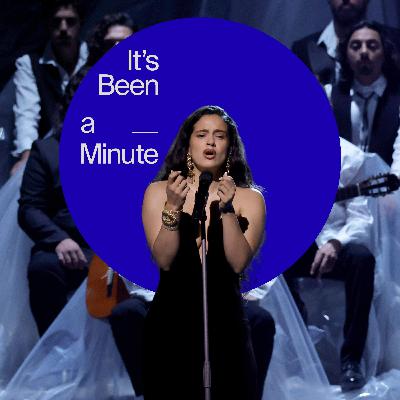
Spanish artist and musical chameleon Rosalía released her latest album, Lux, today. The single, "Berghain," seems like a return to form. Operatic vocals, grand instrumentals, beautiful visuals -- the album is primed for critical praise. But for those who are hyperaware of Rosalia’s transformations -- from flamenco songstress to Afro-Caribbean queen -- they have other questions about this evolution. Brittany is joined by writer-critics Bilal Qureshi and Michelle Santiago Cortés to unpack Rosalía’s “church girl era,” and the complicated nuances of Latinidad in music.Follow Brittany Luse on Instagram: @bmluseFor handpicked podcast recommendations every week, subscribe to NPR’s Pod Club newsletter at npr.org/podclub.Learn more about sponsor message choices: podcastchoices.com/adchoicesNPR Privacy Policy
Does your phone feel like a blessing or a burden? Either way, there's probably a lot you can learn from new phone bans. Many K-12 students are going phone-free - but not by choice. In over half the country, there are now restrictions on cellphone possession and use in class. The goal is to increase student focus and enhance learning...but when you think about school shootings, phones have been a big part of parents' safety plans for their kids. So are phone bans the best solution? And what do these policies teach all of us about the role phones play in our lives?Brittany is joined by David Figlio, professor of economics at the University of Rochester, and Kathy Do, Assistant Project Scientist at University of California Los Angeles to find out.Follow Brittany Luse on Instagram: @bmluseFor handpicked podcast recommendations every week, subscribe to NPR’s Pod Club newsletter at npr.org/podclub.Learn more about sponsor message choices: podcastchoices.com/adchoicesNPR Privacy Policy
What does ‘socialism’ mean to a generation that grew up with COVID… not the Cold War? How have the compounding effects of college protests, financial insecurity, and student loan debt shaped a culture? This is… The ABCs of the Culture Wars. For the next few weeks, Brittany breaks down the history, subtext, and evolving meanings of the buzzwords you hear all over the news and social media. Today we're talking about the S-word: Socialism. And why the word has gained new meaning for a younger generation looking for relief. Brittany is joined by Axios senior politics reporter Holly Otterbein and head of Teen Vogue’s politics section, Lex McMenamin.Follow Brittany Luse on Instagram: @bmluseFor handpicked podcast recommendations every week, subscribe to NPR’s Pod Club newsletter at npr.org/podclub.Learn more about sponsor message choices: podcastchoices.com/adchoicesNPR Privacy Policy
Is hunger in America a choice?This week, over 40 million people worried about losing their SNAP benefits due to the government shutdown. But with Thanksgiving just around the corner, who's hurt most by hunger? And why do some believe that if you’re hungry, it’s your fault? Brittany gets into it with Poonam Gupta, research associate at the Urban Institute, and Maggie Dickinson, associate professor at Queens College and author of Feeding the Crisis: Care and Abandonment and America's Food Safety Net. Learn more about sponsor message choices: podcastchoices.com/adchoicesNPR Privacy Policy
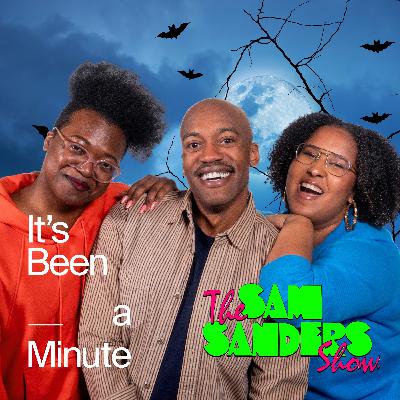
For longtime fans of this show, here's a name you know: Sam Sanders. Before Brittany, Sam was the host of It's Been A Minute, and recently Brittany ran into Sam at an event. The two got to talking and came up with an an idea...what if Brittany came on Sam's new show, KCRW's The Sam Sanders Show? And then...what if they brought all of you longtime IBAM fans the podcast multiverse event of the season to this feed?!That's how we got here. In this special bonus episode, Sam, Brittany, and Tre'vell Anderson rank the best spooky season films of all time and talk through their pop culture hot takes. Follow Brittany Luse on Instagram: @bmluseFor handpicked podcast recommendations every week, subscribe to NPR’s Pod Club newsletter at npr.org/podclub.Learn more about sponsor message choices: podcastchoices.com/adchoicesNPR Privacy Policy

What can we all learn from stories of men trying to find friends...and failing?Men in real life - and in the movies - are trying to figure out how to be friends. There's been a lot of talk alleging lonely men are the cause of cultural tensions, and Hollywood has caught on (despite a similar number of women saying they are lonely, too!). Several films this year depict how society leads men into fraught, messy friendships. So, what can we all learn from toxic (or good!) friendships between men?Brittany is joined by NPR arts and culture reporter Neda Ulaby and IndieWire awards editor Marcus Jones to dig into it.(0:00) We're all obsessed with lonely men...why?(3:12) 'Friendship' and how to deal with being rejected(8:17) 'Twinless' and how friendship is kinda romantic(13:43) 'Lurker' and how real life relationships are parasocial too(17:55) What male friendships can teach us all about being more vulnerableFollow Brittany Luse on Instagram: @bmluseFor handpicked podcast recommendations every week, subscribe to NPR’s Pod Club newsletter at npr.org/podclub. Learn more about sponsor message choices: podcastchoices.com/adchoicesNPR Privacy Policy

Is it a bad thing to be a "capitalist?" Why is the word being used as a diss?And how do Americans' shifting attitudes towards it show up in your discourse and your favorite movies?This is… The ABCs of the Culture Wars. For the next few weeks, Brittany breaks down the history, subtext, and evolving meanings of the buzzwords you hear all over the news and social media. Today we're talking about the C-word: Capitalism. And why the word is increasingly divisive in politics and culture.Brittany is joined by NPR political correspondent Danielle Kurtzleben and writer & editor Morgan Jerkins.(0:00) How pop culture got obsessed with eating the rich(3:11) When did anti-capitalist rhetoric enter our politics?(7:05) Why the rich started looking more evil...(12:46) From 'Clueless' millionaires to bumbling billionaires...(17:26) How anti-capitalism is showing up in American politics nowFollow Brittany Luse on Instagram: @bmluseFor handpicked podcast recommendations every week, subscribe to NPR’s Pod Club newsletter at npr.org/podclub.Learn more about sponsor message choices: podcastchoices.com/adchoicesNPR Privacy Policy

Why is there so much Nazism in the news? And when does a "joke" become hate speech?Politico broke a story last week featuring what it said were leaks from a Telegram group chat that included Young Republican National Federation leaders. These chats made headlines for reportedly racist and pro-Nazi messaging. But this is not the only story in the news about people in politics engaging with Nazi rhetoric. Is it happening more often? And is this kind of thing just a “joke”? Brittany is joined by Odette Yousef, domestic extremism correspondent for NPR, and Gene Demby, co-host of NPR's Code Switch, to get into it.(0:00) Young Republicans group chat screenshots go viral...(3:40) Where's the line between joking and hate speech?(5:56) Is Nazi talk more common, or are we just more aware of it?(10:29) Why white adults are considered "kids" even in their 30s(14:45) Are there consequences for spreading hate? And what you can do about it.(19:41) 'Wait, What?' - a pop culture trivia game(23:29) Responding to listener comments :)Follow Brittany Luse on Instagram: @bmluseFor handpicked podcast recommendations every week, subscribe to NPR’s Pod Club newsletter at npr.org/podclub.Learn more about sponsor message choices: podcastchoices.com/adchoicesNPR Privacy Policy


Download from Google Play

Download from App Store
 United States
Finding a good restaurant today often comes down to discovering places that combine quality, speed, and great atmosphere. That’s why the vibrant experience at https://7brwcoffee.us/classics/house-blend/ stands out — it offers the same satisfaction you seek in a top-rated eatery but through perfectly crafted beverages. Their Cold Brew and friendly service make every visit feel like finding your new favorite spot.
Really interesting points in this episode, it’s true that people care more about the overall dining experience now than just the food itself. The “vibe” factor has become huge, especially with platforms like TikTok shaping where people go to eat. I’ve noticed that restaurant research has shifted too , instead of chasing Michelin ratings, most people look for reliable menus and ambiance online before visiting. For example, you can easily find the updated LongHorn Steakhouse menu here: http://longhornsmenus.com/ Having accurate menus and photos available online makes a big difference when people are choosing where to eat it’s basically part of the experience now.
I really enjoyed this episode — it perfectly captures how restaurants now need to focus on the overall experience rather than just the food. It reminded me of https://deneme-bonus-verenler.com/ where the story behind the menu creates its own kind of “vibe.” Instead of chasing Michelin stars or influencer trends, they showcase authentic Turkish flavors and atmosphere, turning dining into a genuine cultural experience.
Could buy now pay later be a bubble in the making? Probably, especially if it's being used to prey on people who can't afford their daily necessities (spoiler alert: if you have to use BNPL for groceries, you are in this category).
All I know is, I absolutely do not want someone using my voice to produce words as if they originated from my brain. Using a voice map and recordings to fabricate a likeness should never be misconstrued as the actual individual, and this case sets a wild precedent.
The problem with assigning labels like "Liberal" and "Conservative" to Gen-Z--which I remind people STILL has a little less than 1/3 of its population that HASN'T EVEN REACHED VOTING AGE--is that Liberal =/= Progressive in the US even though it is couched as such, and thus when you look at the current state of the Democratic Party it's more Republican-lite than upholding true Liberal values and has shown at least since 2016 that it absolutely DESPISES its Progressive wing.
Newsflash: Industry from a bygone era isn't coming back. It's like thinking we're all going back to typewriters or carrier pigeons on purpose- not.going.to.happen.
🙄
If apps are trafficking in consumers' time, there is a conflict of interest in tech helping users feel less lonely because they will then have motivation to seek real-life connections. Humans are a social species, and we have not evolved to fulfill those needs only virtually.
It's sad but not surprising that people have less attention to read books. We've all been training our brains on short video snippets and content that raises our anxiety and anger.
👀
It's great to process emotions with support of a social circle, but be careful that venting or mudslinging doesn't backfire.
I really enjoy these geographic specific "smackdowns", I learn a lot about fascinating people and historic events. All the guests have been great sports, so very little smackdown attitude is present.
Political memes are merely the evolution of political cartoons, which have existed... for more than 200 years.
We've gotten some bangers this summer, and there is also a wide range of themes and vibes. I'm here for it. 🎶
I’ve been a dedicated listener of “It’s Been a Minute” for a while now, and I’m consistently impressed by how insightful and thought-provoking each episode is. The way the host delves into current events and cultural trends with such depth and clarity is truly commendable. https://castbox.fm/episode/Choosing-the-Right-Parchment-Paper-for-Home-Cooking-id6230173-id721293509?country=us
Way to gloss over the fact that automobile manufacturers are ALSO marketing bigger and bigger SUVs to suburban women, dubbed the "suburban arms race." If you actually pay attention to male US car culture, you'd find most family men would rather drive sport wagons that are only available in Europe because "all big dumb men want big dumb pickups."
Dropout's content is really good, so interesting to hear more about how they operate!
I'm want to hear more about Black Appalachian. I loved this episode.
ALL>FUL>MOVIES>LINK👉https://co.fastmovies.org