


 Claim Ownership
Quest for Success
Subscribed: 5Played: 12
Subscribe

© 2025
Description
**Quest for Success with Dr. Jerry Cunningham**
Are you a leader who feels stuck, overwhelmed, or like you're constantly falling short of your full potential? Welcome to *Quest for Success*, the podcast that will help you break through self-doubt and step into the success you were made for.
I'm **Dr. Jerry Cunningham**, a clinical psychologist with over 20 years of experience helping people overcome mental roadblocks, build resilience, and unlock the life they were meant to live. This podcast is for high achievers, leaders, and everyday people who want to strengthen their **mindset, morals, body, spirit, and finances**—the five pillars of success.
Here's what you can expect from *Quest for Success*:
🔹 **Mental & Social Health** – Understand the psychology behind success, master your emotions, and build unshakable confidence.
🔹 **Morality & Integrity** – Learn how strong ethics and character shape long-term success, using insights from stoicism, research, and common sense.
🔹 **Physical Health & Discipline** – Stay sharp, energized, and driven with practical strategies for optimizing your health.
🔹 **Spiritual Growth** – Find deeper meaning and guidance in your journey using biblical principles, faith, and wisdom from great leaders.
🔹 **Financial Success** – Build wealth with integrity, avoid common financial traps, and create a future that aligns with your values.
Through a mix of psychology, philosophy, faith, and real-world experience, I'll provide **actionable strategies** and **thought-provoking conversations** to help you **push past your limits and live a more fulfilling, successful life**.
This isn't just about motivation—it's about **real transformation**.
So if you're ready to **think deeper, work smarter, and achieve more**, hit *subscribe* and join me on the *Quest for Success*! 🚀
Are you a leader who feels stuck, overwhelmed, or like you're constantly falling short of your full potential? Welcome to *Quest for Success*, the podcast that will help you break through self-doubt and step into the success you were made for.
I'm **Dr. Jerry Cunningham**, a clinical psychologist with over 20 years of experience helping people overcome mental roadblocks, build resilience, and unlock the life they were meant to live. This podcast is for high achievers, leaders, and everyday people who want to strengthen their **mindset, morals, body, spirit, and finances**—the five pillars of success.
Here's what you can expect from *Quest for Success*:
🔹 **Mental & Social Health** – Understand the psychology behind success, master your emotions, and build unshakable confidence.
🔹 **Morality & Integrity** – Learn how strong ethics and character shape long-term success, using insights from stoicism, research, and common sense.
🔹 **Physical Health & Discipline** – Stay sharp, energized, and driven with practical strategies for optimizing your health.
🔹 **Spiritual Growth** – Find deeper meaning and guidance in your journey using biblical principles, faith, and wisdom from great leaders.
🔹 **Financial Success** – Build wealth with integrity, avoid common financial traps, and create a future that aligns with your values.
Through a mix of psychology, philosophy, faith, and real-world experience, I'll provide **actionable strategies** and **thought-provoking conversations** to help you **push past your limits and live a more fulfilling, successful life**.
This isn't just about motivation—it's about **real transformation**.
So if you're ready to **think deeper, work smarter, and achieve more**, hit *subscribe* and join me on the *Quest for Success*! 🚀
86 Episodes
Reverse
This Christmas episode invites you into a journey of wisdom, direction, and growth all wrapped in holiday spirit. If you've ever felt pressure to "know it all," lead perfectly, or figure out life without asking for help, this conversation will feel like a breath of fresh winter air. In this episode, you'll discover why the wisest leaders are the ones who stay teachable, stay humble, and keep seeking guidance, just like the Wise Men who followed The Star. Through psychology, Christmas storytelling, and practical steps you can use today, you'll learn how to recognize your guiding "light," avoid leadership blind spots, and find greater clarity in your decisions, relationships, and faith. If you're ready for direction, encouragement, and a little Christmas joy, hit play because your next step toward wisdom might be waiting. Takeaways Sometimes your star won't look like what you expect. Mentorship can come from unexpected places. Ignoring advice can lead to missed opportunities. Personal growth often involves listening to hard truths. Investment decisions can have long-term consequences. Books like 'Rich Dad Poor Dad' can change perspectives. Friends can provide valuable insights into financial decisions. Being open to new ideas is crucial for success. Regret often comes from not acting on good advice. Learning from past mistakes is essential for growth. Learn more or connect with Dr. Jerry Cunningham at: www.Quest-Success.com Recommended References for Further Learning Dweck, Carol. Mindset: The New Psychology of Success. Goleman, Daniel. "What Makes a Leader?" Harvard Business Review. Kruger, J. & Dunning, D. "Unskilled and Unaware of It." Journal of Personality and Social Psychology. Maxwell, John C. The 21 Irrefutable Laws of Leadership. McKnight, Scot. The Jesus Creed: Loving God, Loving Others.
In this Christmas edition of the Quest for Success podcast, Dr. Jerry Cunningham explores the origins and significance of the Christmas tree, tracing its roots back to Martin Luther and its evolution into a symbol of family, faith, and resilience. He reflects on the transformation of the Christmas tree from a misunderstood tradition to a beloved family centerpiece, drawing parallels to the lessons learned from Charlie Brown's Christmas tree. Ultimately, the podcast emphasizes the enduring light and hope that the Christmas tree represents in our lives. Takeaways The Christmas tree symbolizes beauty, light, and life. Martin Luther introduced the illuminated Christmas tree to share faith with his family. Ancient traditions used greenery to represent eternal life long before Christmas trees. The Christmas tree evolved from a pagan symbol to a Christian celebration. The journey of the Christmas tree reflects transformation and acceptance. The modern Christmas tree stands as a symbol of resilience and hope. Love makes a home warm, not just physical heat. The tree reminds us that light shines even in darkness. Charlie Brown's tree teaches us about potential and purpose. The legacy of the Christmas tree is a story of enduring light and God's love. Chapters 00:00 The Origin of the Christmas Tree 02:56 Transformation of Tradition 05:29 Lessons from Charlie Brown's Tree 07:46 The Modern Christmas Tree's Significance References Encyclopaedia Britannica — "Christmas Tree" Library of Congress — "History of the Christmas Tree" Penne Restad — Christmas in America: A History German Embassy Cultural Resources — "German Christmas Traditions" Charles M. Schulz — A Charlie Brown Christmas (1965)
Everyone says they value honesty, until they actually hear it. In this episode of Quest for Success, Dr. Jerry Cunningham takes you deep into the art of truth-telling: how to be real without being ruthless, how to speak the truth in love without watering it down, and how honesty can transform your relationships, leadership, and self-growth. Drawing lessons from A Few Good Men, Dr. Cunningham explores the psychology of communication, moral philosophy, and practical leadership strategies that help you tell the truth like a leader, not a wrecking ball. If you've ever struggled with being "too blunt" or "too nice," this episode will teach you how to balance courage with compassion and authenticity with wisdom. Learn how to deliver truth that builds trust, not tension. Start your journey to stronger integrity and influence. Listen now and begin mastering the moral art of honesty. Takeaways Honesty is a moral art form that can change leadership. Radical honesty can create stress and fracture relationships. The balance of truth-telling is crucial for trust. Brutal honesty can damage relationships; empathy is key. The golden mean of communication lies between extremes. Honesty should be like a scalpel, precise and healing. Self-honesty is essential for personal growth. Truth delivered with care builds bridges, not walls. Leaders should face the truth while maintaining hope. Communication should uplift and encourage growth. Chapters 00:00The Art of Honesty 02:54Balancing Truth and Empathy 05:45The Golden Mean of Communication 08:38Practical Applications of Honest Communication 11:28The Impact of Honesty in Leadership 14:19Self-Honesty and Personal Growth 17:06The Challenge of Delivering Truth 19:56Conclusion: Embracing Honest Leadership Explore more at www.Quest-Success.com References for further learning: Collins, Jim. Good to Great: Why Some Companies Make the Leap... and Others Don't (2001). Blanton, Brad. Radical Honesty: How to Transform Your Life by Telling the Truth (1996). Aristotle. Nicomachean Ethics, Book II (The Doctrine of the Mean). The Holy Bible, Ephesians 4:15 — "Speak the truth in love." Harvard Business Review. The Feedback Fallacy (2019).
This Thanksgiving, take a moment to slow down, reflect, and refocus on what really matters such as faith, family, and gratitude. In this special holiday episode of Quest for Success, Jerry L. Cunningham sits down with Pastor Stewart-Allen Clark of New Day First General Baptist Church in Malden, Missouri, for a heartwarming conversation about the deeper meaning of Thanksgiving. From Canadian vs. American traditions to the challenges of gratitude in tough times, this episode dives into how faith can anchor us when life feels uncertain. You'll hear personal stories about God's timing, why gratitude should be a lifestyle (not a season), and how to gracefully change the subject when politics start flying across the dinner table. If you've ever struggled to balance gratitude with the grind, this episode will remind you that every blessing, big or small, has purpose. Listen now and renew your spirit of thankfulness at www.Quest-Success.com. Want to explore more? "In Everything Give Thanks" – 1 Thessalonians 5:18 The Purpose Driven Life by Rick Warren Gratitude Works! by Robert Emmons Choosing Gratitude by Nancy Leigh DeMoss Celebration of Discipline by Richard J. Foster

Before the turkey, the football, and the parades… there was a moment of peace that changed the course of history. In this special Thanksgiving episode of The Quest for Success Podcast, we go back to 1621 to the very first feast shared between the Pilgrims and the Wampanoag. It's a story of survival, humility, and the kind of gratitude that bridges impossible divides. In this episode, you'll discover how two worlds, separated by language, culture, and fear, who came together through courage and compassion. You'll learn what true leadership and cooperation look like in the face of hardship and how those same principles can help us build unity, grace, and gratitude in our own modern lives. If you've ever wondered what Thanksgiving really means beyond the dinner table… this is the story worth hearing. Listen now at www.Quest-Success.com — and begin your own journey toward gratitude, growth, and greatness. Further Reading & References: "Of Plymouth Plantation" by William Bradford "Mayflower: A Story of Courage, Community, and War" by Nathaniel Philbrick Smithsonian Magazine – The True Story Behind the First Thanksgiving National Museum of the American Indian – The Wampanoag Perspective on Thanksgiving History.com – The First Thanksgiving: What Really Happened
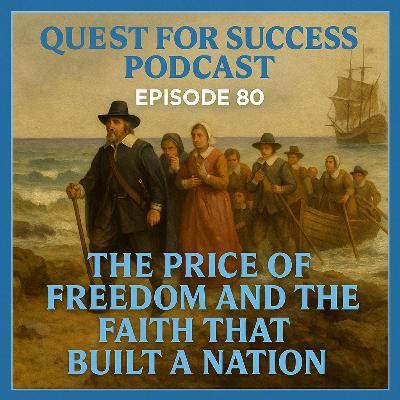
This special Thanksgiving episode of The Legacy Behind the Legend takes you beyond the turkey and trimmings to uncover the true story of the Pilgrims to include their courage, conviction, and unshakable faith. You'll hear how ordinary people, driven by belief and purpose, crossed an ocean to build a new world rooted in freedom and gratitude. Their journey wasn't easy, but it shaped the very principles that still define leadership, perseverance, and faith today. If you've ever wondered what it really means to be thankful in the face of adversity, this story will remind you that gratitude is about what you hold onto. Listen now and rediscover the faith that built a nation. Learn more at www.Quest-Success.com Recommended Resources: Of Plymouth Plantation by William Bradford Mayflower: A Story of Courage, Community, and War by Nathaniel Philbrick The Light and the Glory by Peter Marshall & David Manuel Saints and Strangers by George F. Willison Squanto and the Miracle of Thanksgiving by Eric Metaxas
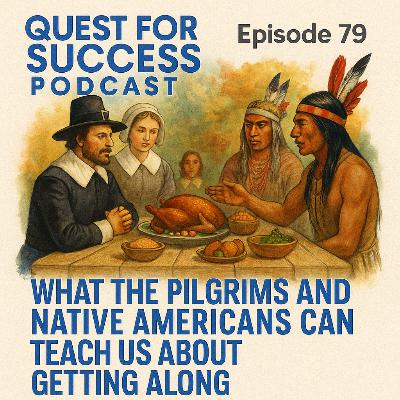
In this Thanksgiving episode of the Quest for Success Podcast, we travel back to 1621 and not for a history lesson, but for a leadership lesson. Discover how two completely different groups, the Pilgrims and the Native Americans, found common ground through humility, respect, and cooperation. You'll learn timeless principles of teamwork, communication, and emotional intelligence that can strengthen your relationships, your leadership, and even your family dinner table. Whether you're leading a team, managing conflict, or just trying to survive another holiday with Uncle Joe's political rants, this episode will give you practical strategies to turn division into unity. You'll walk away inspired to build bridges, not walls, and create a culture of gratitude and collaboration in your own life. Listen now at www.Quest-Success.com and start your journey toward stronger relationships and lasting success. Recommended Resources: John C. Maxwell – The 17 Indisputable Laws of Teamwork Robert Axelrod – The Evolution of Cooperation Stephen R. Covey – The 7 Habits of Highly Effective People Harvard Human Cooperation Lab – Research on trust and collaboration Brené Brown – Dare to Lead
Are you tired of saying yes when every fiber of your being is screaming no? In this episode of Quest for Success, Dr. Jerry Cunningham discusses the art and science of setting healthy boundaries without guilt. You'll discover how emotional boundaries lead to mental peace, how to protect your time and energy like a pro, and why saying no might just be the key to unlocking your best yes. Through psychology, humor, and real-life leadership lessons, you'll learn how to stop people-pleasing, avoid burnout, and communicate your limits with confidence and grace. This episode will leave you equipped to say no without the guilt trip, resentment, or awkwardness and ready to lead your life with clarity and calm. Tune in now at www.Quest-Success.com — your journey toward confident boundaries starts here. Want to learn more? Check out these great reads and studies: Baumeister, R. F., et al. (1998). Ego Depletion: Is the Active Self a Limited Resource? Cialdini, R. B. (2009). Influence: The Psychology of Persuasion. Harvard Business Review (2021). The Power of Saying No at Work. Cloud, H. & Townsend, J. (1992). Boundaries. McKeown, G. (2014). Essentialism: The Disciplined Pursuit of Less.
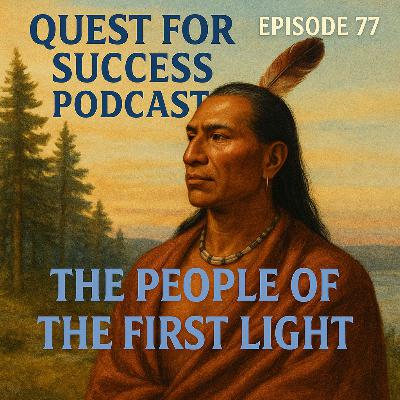
(A Thanksgiving Special from The Legacy Behind the Legend series of the Quest for Success Podcast) This Thanksgiving, travel back to the shores of 1620 and discover the untold story behind America's first feast. In this episode of The Legacy Behind the Legend, Dr. Jerry Cunningham shares the remarkable legacy of the Wampanoag also known as the "People of the First Light." You'll uncover the real history, the heart of their generosity, and the timeless leadership lesson they left us about gratitude, unity, and moral integrity. If you've ever wondered what Thanksgiving really means beyond the table, this story will open your heart and your perspective. Listen now at www.Quest-Success.com and learn the legacy behind the legend. References & Resources: The Mashpee Wampanoag Tribe – Official Website Philbrick, Nathaniel. Mayflower: A Story of Courage, Community, and War Smithsonian National Museum of the American Indian – "The Wampanoag and the First Thanksgiving" Salisbury, Neal. Manitou and Providence: Indians, Europeans, and the Making of New England, 1500–1643 Plimoth Patuxet Museums – "Wampanoag Homesite" Educational Resources

What if your best, strongest, most energized years are still ahead of you? In this powerful episode of Quest for Success, we're cutting through the buzz and jump into what actually works when it comes to getting fit over 40. This episode is for anyone ready to lead themselves with wisdom, strategy, and long-term success. You'll hear real stories, surprising science, and some funny (and painfully honest) insights from my own fitness journey. We'll talk about muscle loss, hormone shifts, the underrated power of sleep and recovery, and how to build a body that supports your leadership at work, at home, and yes, even in the bedroom. Hit play if you want to feel better, think clearer, and move through life with strength and purpose. Learn more & access resources at www.Quest-Success.com Recommended Reading & Research: Peterson, M.D. et al. (2010). Resistance training and lean body mass in aging adults. British Journal of Sports Medicine (2013). Physical activity and executive function. American Heart Association. The impact of exercise on cardiovascular health. National Cancer Institute. Physical activity and cancer prevention. Harvard Health Publishing. What happens to our muscles as we age?
Are you working hard but still feeling like your energy tank runs on empty? In this episode of the Quest for Success Podcast, we uncover how your Basic Metabolic Rate (BMR), which are the calories your body burns just to stay alive, plays a major role in your leadership, focus, and success. Dr. Jerry Cunningham breaks down the science of metabolism in a way that's simple, funny, and surprisingly practical. You'll learn how to calculate your own BMR, why muscle is your best long-term investment, and how habits like sleep, nutrition, and movement can literally rewire your energy levels for success. If you've ever wondered why your body resists progress, or why that coworker who "eats everything" never seems to gain a pound then this episode will finally make it all click. Your energy is your leadership currency. Learn how to protect it, grow it, and spend it wisely. Listen now and start fueling your path to success. Visit www.Quest-Success.com for more resources, coaching, and inspiration. References for Further Learning: Mifflin, M. D., et al. (1990). A new predictive equation for resting energy expenditure. American Journal of Clinical Nutrition. Müller, M. J., et al. (2016). Adaptive thermogenesis and energy balance in humans. American Journal of Clinical Nutrition. Rosenbaum, M., & Leibel, R. L. (2010). Adaptive thermogenesis in humans. International Journal of Obesity. Harvard Health Publishing (2023). Understanding metabolism and weight management. Mayo Clinic Staff (2024). Metabolism and weight loss: How you burn calories.
In this inspiring mini-episode, you'll meet a woman whose quiet determination changed a nation. She wasn't a politician, a preacher, or a president. She was simply someone who believed gratitude could heal a divided people. For nearly two decades, she wrote, pleaded, and persisted until one letter reached Abraham Lincoln's desk… and Thanksgiving became a national holiday. This episode invites you to see how moral leadership is steady, faithful, and fueled by conviction. You'll walk away reminded that one person, armed with purpose and persistence, can make history. Listen now and rediscover how gratitude, perseverance, and faith can still unite and inspire us today. Learn more about the Quest for Success movement at www.Quest-Success.com. Want to learn more? Check out these resources: Sarah Josepha Hale: The Woman Who Lobbied Lincoln to Proclaim Thanksgiving – Smithsonian Magazine A Thankful Nation: How Thanksgiving Became a Holiday – National Archives Mary Had a Little Lamb and the Woman Who Wrote It – New England Historical Society The Power of Persistence – John C. Maxwell Leadership and Gratitude – Harvard Business Review
What if the most powerful motivation tool you'll ever use… is remembering that one day, your time will run out? In this episode of Quest for Success, Dr. Jerry Cunningham takes a straight-talking, deeply practical look at the ancient idea of memento mori—"remember you must die." But this isn't about fear. It's about focus. You'll learn how this mindset sharpens your priorities, strengthens your leadership, and reminds you how to live with real passion and purpose—today. If you've ever felt like life is passing you by, this episode will help you slow down, wake up, and start leading your life intentionally again. You'll leave with powerful tools to build gratitude, courage, and clarity into your everyday choices. Because when you remember your time is limited… you finally start to live unlimited. Learn more at www.Quest-Success.com Want to Dig Deeper? Aurelius, Marcus. Meditations. (Gregory Hays translation, Modern Library, 2002). Becker, Ernest. The Denial of Death. Free Press, 1973. Yalom, Irvin D. Staring at the Sun: Overcoming the Terror of Death. Jossey-Bass, 2008. Pyszczynski, Tom, Greenberg, Jeff, & Solomon, Sheldon. Terror Management Theory: The Quest for Meaning. Academic Press, 2015. Holy Bible, James 4:14 – "You are a mist that appears for a little while and then vanishes."
Are you chasing money or creating value? In this episode of the Quest for Success Podcast, Dr. Jerry Cunningham breaks down how to shift your mindset from scarcity to abundance, because true wealth isn't about stacking cash, it's about building something that lasts. Through lessons from Trading Places, Brewster's Millions, and The Big Short, you'll discover how leadership, adaptability, and purpose can multiply your value far beyond what's in your bank account. You'll learn how to spot hidden opportunities, lead with vision, and build long-term success in your work, family, and community. If you've ever felt stuck chasing the next raise, deal, or dopamine hit of success, this episode will help you break the cycle and start leading from purpose, not pressure. Listen now and start building the kind of success money can't buy. Visit www.Quest-Success.com for more episodes, leadership tools, and success resources. Recommended Resources: The Go-Giver by Bob Burg & John David Mann The 7 Habits of Highly Effective People by Stephen Covey Harvard Business Review – "The Power of an Abundance Mindset" McKinsey & Company – "Strategic Foresight: Seeing Beyond the Horizon" Deloitte Insights – "The Value of Purpose-Driven Leadership"
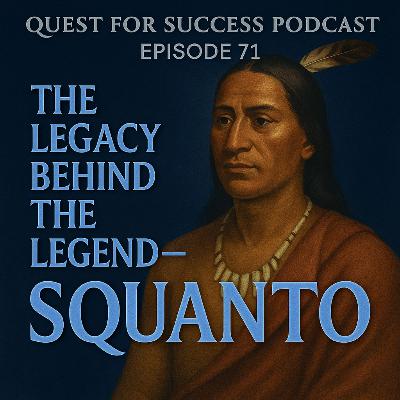
In this episode of The Quest for Success Podcast, we uncover the remarkable story of a man who bridged two worlds and turned tragedy into legacy. Discover how one voice of courage and compassion helped two nations survive, and what his journey can teach you about leadership, integrity, and resilience. This is the untold legacy of Squanto—The Interpreter. Check out more at www.Quest-Success.com and begin your own Quest for Success. Learn More: Bradford, William. Of Plymouth Plantation, 1620–1647. Mann, Charles C. 1491: New Revelations of the Americas Before Columbus. Philbrick, Nathaniel. Mayflower: A Story of Courage, Community, and War. National Museum of the American Indian – "Squanto and the Wampanoag." Smithsonian Magazine – "The Real Story of Squanto."
www.Quest-Success.com Are you constantly saying "yes" when you want to say "no"? Do you find yourself overwhelmed, overlooked, and underappreciated, despite being the "nice one"? In this episode, we dig into the real problem with being too nice and what to do instead. You'll uncover how people-pleasing sabotages your leadership potential and why kindness without boundaries drains your energy, derails your goals, and keeps you stuck in the background. Using the classic 80s film Revenge of the Nerds as a surprisingly perfect illustration, Dr. Jerry Cunningham shares psychological research, leadership strategies, and real-life insights to help you stop being a doormat and start leading with confidence. If you're ready to stop being liked and start being respected—press play. Want to go deeper? Check out these resources: Deci & Ryan (2000) – Self-Determination Theory: The Psychology of Motivation Newman, Susan (2011) – The Book of No Cloud, Henry (2008) – Integrity: The Courage to Meet the Demands of Reality Harvard Business Review (2023) – "Why Too Much Agreeableness Can Hold You Back" Grant, Adam (2013) – Give and Take: Why Helping Others Drives Our Success
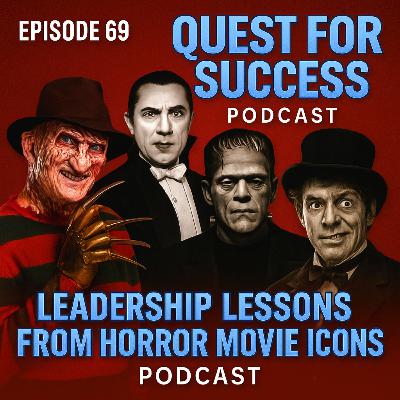
Ready for a leadership lesson with a twist of horror? In this special Halloween edition of the Quest for Success Podcast, we're pulling back the coffin lid on four classic monsters, Freddy Krueger, Count Dracula, Dr. Frankenstein, and Dr. Jekyll & Mr. Hyde, to reveal the surprising leadership insights hiding beneath the blood and shadows. This isn't your typical leadership talk. It's light, a little spooky, and packed with practical takeaways. You'll learn how to: Control the atmosphere like Freddy Lead with presence like Dracula Build responsibly like Frankenstein And master your inner self like Dr. Jekyll Because even monsters have something to teach us… if we're brave enough to look. Hit play and discover what these icons can teach you about influence, resilience, and legacy—just in time for Halloween. Learn more at: www.Quest-Success.com Further Reading / Resources: Monsters You Should Know by Emma SanCartier Leadership in the Shadows by Kyle Lamb Presence: Bringing Your Boldest Self to Your Biggest Challenges by Amy Cuddy The Art of War by Sun Tzu (because even Dracula would've had this on his shelf) Frankenstein by Mary Shelley (the original leadership cautionary tale)

🎃 Halloween Special: "Stingy Jack — The Legacy Behind the Lantern" 🎃 This Halloween, journey with Dr. Jerry Cunningham on The Quest for Success as we uncover the haunting tale of a man whose cleverness outwitted even the Devil, but cost him everything. Known only as Stingy Jack, his story isn't just a ghostly legend, it's a timeless lesson about integrity, greed, and the price of living without light. Discover how one man's choices gave birth to one of the world's most famous Halloween symbols and what his story still teaches us about leadership and legacy today. Tune in, if you dare, and learn how not to lose your way in the dark. Explore more resources at www.Quest-Success.com References for Further Reading: "The Legend of Stingy Jack" – History.com "Why We Carve Pumpkins at Halloween" – Smithsonian Magazine "Irish Folklore and the Origins of Jack O'Lanterns" – National Geographic "The Moral Lessons Behind Folklore" – BBC Culture "Integrity in Leadership" – Harvard Business Review

Your goals right now? They're just like Schrödinger's cat—alive and dead at the same time… until you decide to take action. In this episode of Quest for Success, Dr. Jerry Cunningham breaks down how a physics thought experiment can transform the way you lead, live, and chase success. You'll learn how uncertainty can actually be your greatest advantage, how belief and persistence "collapse" potential into results, and why leaders, who act before they have all the answers and they win more often. If you've ever felt stuck waiting for the "perfect moment" to start, this episode will help you open the box, face the risk, and finally take bold action. You'll walk away with practical steps to strengthen your mindset, build confidence, and lead with clarity in every area of life. Start your journey at www.Quest-Success.com and open the next box on your path to greatness. Learn More: Bandura, A. (1997). Self-Efficacy: The Exercise of Control. W.H. Freeman. Gollwitzer, P. M. (1999). Implementation Intentions: Strong Effects of Simple Plans. American Psychologist. Ericsson, K. A. et al. (1993). The Role of Deliberate Practice in the Acquisition of Expert Performance. Psychological Review. The American College of Sports Medicine (2021). Physical Activity Guidelines and Benefits. The Gottman Institute. Research on Communication and Relationship Health.
Visit: www.Quest-Success.com You've heard it before: "Money is the root of all evil." But what if that's not what the Bible actually says? In this power-packed episode of the Quest for Success podcast, Dr. Jerry Cunningham pulls back the curtain on faith, finances, and leadership and helps you stop feeling guilty about wanting to grow your income, your influence, and your impact. You'll learn what Jesus really taught about money, how to apply the parable of the talents to your business and life, and why being broke doesn't make you holy and being wealthy doesn't make you wicked. We'll also unpack a classic scene from Wall Street, look at the psychology of scarcity vs. stewardship, and explore how "iron sharpens iron" in your financial decisions. This episode is not just about building wealth. It's about building legacy. Hit play to realign your mindset, your money, and your mission—God's way. Want to dive deeper? Here are a few great resources to explore: The Blessed Life by Robert Morris Business Secrets from the Bible by Rabbi Daniel Lapin The Psychology of Money by Morgan Housel Matthew 25:14-30 (Parable of the Talents) Proverbs 13:22, Luke 12:15, and 1 Timothy 6:10 – Key Bible verses on wealth & stewardship

Comments

Download from Google Play

Download from App Store
 United States