


The Jazz Real Book
Subscribed: 17Played: 182
Subscribe

© Jay Sweet
Description
In this podcast, Jazz History professor, biographer, musician, and popular podcaster Jay Sweet will help guide you through the tunes included in the Jazz Real Book. For decades, this book (often called "The Jazz Bible") has been a resource for jazz musicians looking to learn jazz standards and repertoire. This podcast will discuss essential recordings and details associated with the songs in the Jazz Real Book, the musicians who created the material, and the recordings that inspire jazz musicians and fans worldwide.
135 Episodes
Reverse
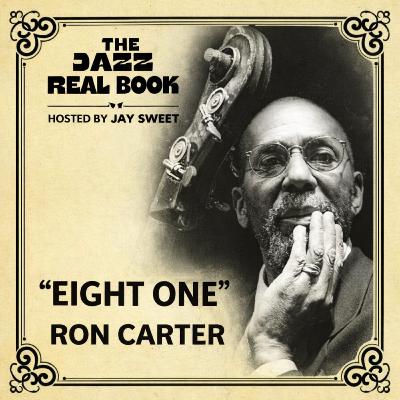
“Eighty-One” and Ron Carter (105) Standards Rating 5: Difficulty Rating : 6“Eighty-One” is a 24-bar tune with a 12-bar A section and a 12-bar bridge, written in F and first recorded on E.S.P. (1965). Though credited in The Real Book to Miles Davis/Ron Carter, the piece is widely regarded as Carter’s, and it reflects his expanding role in the Second Great Quintet. Carter’s concept—shaped by intervallic thinking, pedal points, and harmonic ambiguity—defines the tune’s character. The chart’s instruction to play even eighth notes places it firmly in a post-bop context, prioritizing articulation and interaction over swing’s triplet lilt.The melody is spare and rhythmically precise, using quarter-note triplets, unexpected pickups, and extended rests to make space a compositional element. Harmonically, the near-constant use of 9sus4 voicings—avoiding the third—creates an open, floating soundscape.. “Eighty-One” stands as a concise statement of Carter’s modern jazz language: economical, flexible, and deeply interactive.Ron Carter Bill FrisellJazz Real Book Playlist Vol. 2
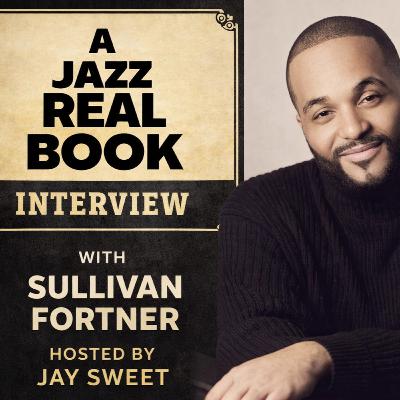
Sullivan Fortner’s 2025 stands as a defining chapter in an already remarkable career. The year brought a Grammy nomination for Southern Nights, a live-in-the-moment trio recording born from a spontaneous Village Vanguard engagement, captured in a single four-hour studio session. Alongside it came high-profile collaborations with Theo Croker, Kurt Elling, and Lauren Henderson, each revealing different facets of Fortner’s musical identity—from free-form duo exploration to intimate vocal-piano dialogue. The year’s biggest surprise was his selection as the first-ever jazz recipient of the Larry J. Bell Jazz Artist Award, a historic honor accompanied by a $300,000 prize. Grounded in gospel roots, shaped at NOCA and Oberlin, and refined through formative years with Roy Hargrove, Fortner embodies a lineage-driven approach that values listening, intuition, and trust. Despite the accolades, his perspective remains modest and forward-looking, focused on the music itself—and on what comes next.

“Ecclusiastics” and Charles Mingus (104) Standards Rating 2, Difficulty Rating 7 “Ecclusiastics” offers a concentrated portrait of Charles Mingus’s artistic personality: volatile, spiritual, blues-soaked, and uncompromising. Drawing its title from the Jewish wisdom text attributed to Ben Sira, the piece reflects Mingus’s lifelong engagement with moral struggle, Black church traditions, and personal prophecy. Marked at an extremely slow ♩ = 52, the tune demands patience and emotional control, qualities Mingus valued deeply in his musicians. Its unusual ABC form, shifting meters, and harmonically restless language mirror his resistance to standardized jazz structures. On Oh Yeah (1962), Mingus performs on piano and vocalizes freely, calling out and humming like a preacher mid-sermon. This blurring of composition, improvisation, and embodied expression exemplifies his belief that jazz should confront, instruct, and testify. “Ecclusiastics” ultimately functions as both composition and sermon—an extension of Mingus’s artistic will.Charles Mingus Mingus Big Band Spotify Playlist #2
“Easy To Love and Gene Ammons” (103)Standards Rating 7, Difficulty Rating 5 “Easy to Love” is a model of Cole Porter’s understated brilliance: a 32-bar form with a spacious, lyrical melody and harmonies that move fluidly through ii–V progressions and subtle chromatic color. Its clarity and emotional openness have made it a durable jazz standard, adaptable to ballad, swing, or groove-based treatments without losing its essential elegance. On Jug (1961), Gene Ammons reshapes the tune through a relaxed boogaloo feel, grounding Porter’s refinement in blues and rhythm. Ammons’ massive tenor sound, shaped by his Chicago roots and early work with Billy Eckstine’s band, favors melody, warmth, and direct communication. Despite career interruptions caused by incarceration, he remained one of Prestige Records’ most influential voices, bridging bebop sophistication and soul-jazz accessibility. His “Easy to Love” reflects that legacy perfectly—honoring the song’s structure while infusing it with groove, humanity, and unmistakable personal voice.Gene Ammons Ella Fitzgerald Spotify Playlist #2

John Goldsby (b. December 10, 1958) is an American jazz bassist, composer, author, and educator, best known for his long tenure with the Grammy-winning WDR Big Band in Cologne, Germany, which he joined in 1994. Raised in Louisville, Kentucky, the son of a Baptist minister, he played several instruments before committing to the double bass at age 18. Early professional work with visiting jazz greats led him to New York City in 1980, where he spent 14 years performing and recording with artists including Michael Brecker, Mel Lewis, Toshiko Akiyoshi, and the American Jazz Orchestra. Goldsby has released numerous recordings as a leader and sideman, spanning small-group jazz to large-scale big band projects. A highly respected educator, he teaches at the Maastricht Conservatory and has presented masterclasses worldwide. He is the author of The Jazz Bass Book and other influential texts, and is widely regarded as a leading authority on jazz bass tradition and technique. Big Band Bass, released November 7, 2025 on Bass Lion Publishing, marks his 30th anniversary with the WDR Big Band, featuring eight original compositions and arrangements by Bob Mintzer, Michael Abene, Dave Horler, and Vince Mendoza. Through his extensive writings and, of course, his bass playing, Goldsby personally helped introduce me to the lineage of great bass players and the enduring tradition of jazz bass performance.
“Easy Living” & Paul Desmond (102) Standards Rating 7, Difficulty Rating 6“Easy Living” is a model of songwriting elegance: a 32-bar AABA form whose beauty lies in balance—lyricism paired with subtle harmonic motion. The A sections unfold in F with graceful chromatic touches and flowing ii–V movement, while the bridge’s unexpected shift to Db major adds color without disrupting the tune’s calm, unhurried mood. Its melody favors long, singing lines and spacious phrasing, making it ideal for players who value tone and nuance over display.Paul Desmond was uniquely suited to this song. His alto saxophone sound—light, pure, and almost weightless—mirrors the tune’s sense of emotional ease. On his mid-1960s recording with Jim Hall, Desmond states the melody with restraint and warmth, letting the harmony breathe. His improvisation remains close to the song’s contours, emphasizing melodic continuity rather than technical flash. In Desmond’s hands, “Easy Living” becomes exactly what its title suggests: relaxed, lyrical, and quietly profound.Paul Desmond Billie Holiday Spotify Playlist #2

Mauricio Morales & Adam Hersh Between Dreams & Twilight, released November 14, 2025, is a modern-jazz collaboration between bassist-composer Mauricio Morales and pianist-composer Adam Hersh. The album features nine pieces—blending intricate composition with cinematic atmosphere. Their writing moves between dreamy lyricism, modernism, craftsmanship, rhythmic inventiveness and layered textures. The project is supported by a standout ensemble that brings depth and color to every track. Guitarist Mike Moreno, vibraphonist Warren Wolf, drummer Gary Novak, and the Rogue Lemon String Quartet all play essential roles. The youthful Hersh and Morales will undoubtedly continue to impress and further their popularity as their careers continue to develop both as a collaborative unit and as impactful individual voices.
“Easter Parade”- Roy Eldridge (102)Standards Rating 5 Difficulty Rating 5 Irving Berlin’s “Easter Parade,” first drafted in 1917 and introduced in As Thousands Cheer (1933), remains one of the most graceful standards of the American songbook. Its balanced 32-bar AABA design, gentle chromatic inflections, and elegant melodic lift evoke the optimism of springtime in New York, making it a natural vehicle for improvisers who appreciate Berlin’s clean, song-focused craft.Roy Eldridge’s 1944 Decca recording with his sextet is one of the tune’s most distinguished small-group treatments. Eldridge approaches the melody with poised lyricism, allowing his trumpet to float over Eddie Heywood’s polished rhythm section. But beyond the beauty of this performance lies the depth of Eldridge’s influence: he was the crucial bridge between Louis Armstrong’s foundational swing style and the harmonic daring of modern jazz. His command of upper-register trumpet playing, his rhythmic fire, and especially his use of substitute harmonies laid essential groundwork for Dizzy Gillespie and the bebop generation. On “Easter Parade,” Eldridge tempers his trademark intensity, revealing a master melodist whose innovations shaped the direction of jazz trumpet for decades to comeRoy Eldridge Sextet Sarah Vaughan and Billy EckstineSpotify Playlist #2
Alan Broadbent has built a remarkable career as a pianist, composer, arranger, and educator, blending deep jazz tradition with classical sophistication. Now in his late seventies, he continues to perform and compose with undiminished vitality, including appearances at the Deer Head Inn 12/12 alongside longtime collaborators Harvie S. and Billy Mintz. Broadbent’s newest album, Threads of Time (Savant Records), features original compositions spanning five decades, scored for a sextet he had long envisioned.Raised in New Zealand on Chopin before discovering jazz through Dave Brubeck’s “Take Five,” Broadbent left for Boston at nineteen to study at Berklee. Mentored by the influential teacher Lennie Tristano, he learned that emotional truth mattered more than technique. A stint with Woody Herman launched his professional life, followed by major arranging work for pop icons Barbra Streisand, Linda Ronstadt, and Rod Stewart, as well as orchestral study inspired by Mahler.Career-defining collaborations with Natalie Cole, Charlie Haden (Quartet West), and Diana Krall helped shape his enduring voice. Today, Broadbent also mentors rising talent such as Stella Cole, proving that curiosity and creativity continue to drive his music.
“Always” — Irving Berlin (101)Standards Rating 5 Difficulty Rating 4 “Always” stands as Irving Berlin’s most intimate composition, a love song written not for the public but for one woman—his wife, Ellin Mackay. While Berlin built a career on anthems, showstoppers, and holiday standards, this song reveals his quiet emotional core. There is no theatrical flourish here, no novelty or comedy—only devotion stated with rare simplicity. The lyric unfolds like a spoken promise rather than a performance, with its legendary closing line, “Not for just an hour… but always,” reducing love to a single, unforgettable assurance.Berlin’s life gives the song added weight. A Jewish immigrant who rose from poverty on New York’s Lower East Side to become the defining American songwriter, he understood instability and loss. By assigning all royalties from “Always” to Ellin, he did something radical: he turned romance into contract, melody into lifelong security. The result is not merely a standard, but a private vow made public—one of the purest love songs ever written.
Steve Smith Interview (Part 2 ) Steve Smith has long stood as one of the most technically accomplished and musically versatile drummers of his generation. Known globally for his work with Journey, Vital Information, and an array of jazz legends, Smith combines precision, historic knowledge, and a deep respect for the lineage of drumming. His approach marries power with nuance, always serving the music while expanding its rhythmic possibilities. Beyond performance, Smith has become an influential educator, preserving and advancing drum traditions through masterclasses, clinics, and detailed historical studies. His commitment to understanding the roots of American drumming—from jazz to early R&B—continues to shape his artistic voice and teaching philosophy. Vital Information -New Perspective on YouTube New Perspective on Spotify
Steve Smith on Jack DeJohnetteSteve Smith has long stood as one of the most technically accomplished and musically versatile drummers of his generation. Known globally for his work with Journey, Vital Information, and an array of jazz legends, Smith combines precision, historic knowledge, and a deep respect for the lineage of drumming. His approach marries power with nuance, always serving the music while expanding its rhythmic possibilities. Beyond performance, Smith has become an influential educator, preserving and advancing drum traditions through masterclasses, clinics, and detailed historical studies. His commitment to understanding the roots of American drumming—from jazz to early R&B—continues to shape his artistic voice and teaching philosophy.Jack DeJohnette’s impact on modern drumming is immeasurable—his blend of jazz tradition, avant-garde freedom, and groove-based intuition reshaped what it means to be a contemporary drummer. His work with Miles Davis, the Keith Jarrett Trio, and his own ensembles introduced a fluid, open style that erased the boundaries between timekeeping and melodic improvisation. For Steve Smith, DeJohnette became a foundational influence, a model of musical fearlessness whose touch, phrasing, and sense of space helped shape Smith’s own evolution. That influence is central to the documentary Smith created, which not only honors DeJohnette’s legacy but also analyzes the innovations that changed the trajectory of drum performance. Smith further explored these ideas in his acclaimed Sonor YouTube series, where he breaks down drum concepts, demonstrates advanced techniques, and reflects on the lineage of great drummers. The series stands as both an educational resource and a continuation of DeJohnette’s spirit and legacy. Sonor Presents: Jack DeJonette and Steve Smith Talk Drums (Part 1) Sonor Presents: Jack DeJonette and Steve Smith Talk Drums (Part 2) Sonor Presents Jack DeJonette and Steve Smith : Talk Drums (Part 3)
100- “Dreamsville” and Henry Mancini Standards Rating 6, Difficulty Rating 6 Henry Mancini (1924–1994) was one of America’s most versatile and influential composers, and his lifelong connection to jazz shaped his signature sound. After early musical studies and service in the Army Air Corps, he worked with the Glenn Miller Orchestra, grounding his writing in big-band swing. Moving to Hollywood in 1952, Mancini contributed to more than a hundred films, but his breakthrough came with the 1958 television series Peter Gunn, whose sleek, modern jazz scores—performed by top West Coast players—brought jazz into the mainstream and earned multiple Grammy Awards. Among its standout pieces is “Dreamsville,” a tender, harmonically rich jazz ballad in AABA form that became a standard recorded by artists from Julie London to Hank Jones. Mancini’s later work, including the iconic “Pink Panther Theme” and “Moon River,” reflects his mastery of melody, orchestration, and jazz-inflected harmony, securing his legacy as a defining voice of American music.Henry ManciniWes Montgomery Spotify Playlist
Anthony Stanco is a jazz trumpet virtuoso and composer from Southeast Michigan, deeply rooted in the Detroit tradition, having studied under luminaries like Marcus Belgrave and Rodney Whitaker. He is recognized for his technique and love for hard bop, also serving as an educator and cultural ambassador through the US State Department's "American Music Abroad" program.His latest album is In the Groove: Live at The Alluvion, released on October 17, 2025, on OA2 Records. This project is a continuation of his 2024 album, Stanco's Time. In the Groove was captured live at The Alluvion, a gorgeous and intimate jazz club in downtown Traverse City, Michigan that has in a short time gathered around itself a dedicated and passionate community of listeners. Stanco is joined by an all-star band, including guitarist Randy Napoleon, pianist Xavier Davis, bassist John Webber, and drummer Joe Farnsworth, to deliver a bold and joyful voice in 21st-century bop, blending tradition with modern fire.
99- “Dream a Little Dream of Me” and Diana Krall Standards Rating 9, Difficulty Rating 5 “Dream a Little Dream of Me” remains one of the most enduring standards because of its gentle melody, romantic lyric, and the effortless way it creates a feeling of warmth and nostalgia. The tune has a natural, lullaby-like flow, moving gracefully between its dreamy A section and the more open, hopeful lift of the bridge. Its charm lies in its simplicity — nothing feels forced or overly ornate, yet every phrase is memorable. This timeless quality is what makes the song so appealing to artists across generations, including Diana Krall. In her intimate trio performance, she leans into the song’s built-in softness, letting the melody unfold with quiet ease. Her understated vocals, paired with the light touch of guitar and bass, keep the focus on the song’s natural beauty rather than embellishment. The result is a version that feels both classic and personal, capturing the tune’s enduring tenderness.Diana Krall Ella Fitzgerald and Louis Armstrong Spotify Playlist
French-born tenor saxophonist Jerome Sabbagh has long been a fixture on the New York jazz scene, known for his warm tone, lyrical phrasing, and commitment to musical honesty. A Paris native who moved to the U.S. in the mid-1990s to study at the Berklee College of Music, Sabbagh then moved to New York and quickly immersed himself in the city’s vibrant improvisational community, collaborating with artists like the late Paul Motian. His latest release, Stand Up! (Analog Tone Factory, 2025), featuring guitarist Ben Monder, bassist Joe Martin, and drummer Nasheet Waits. Recorded live to ½-inch analog tape, weaving through original compositions that blend post-bop sophistication with subtle touches of blues, rock, and modal jazz. Each piece is dedicated to a musical influence—from Ray Charles to Stevie Wonder to Trent Reznor (NIN)—showcasing Sabbagh’s wide-ranging curiosity and respect for the jazz and rock lineage. The title Stand Up! reflects both artistic conviction and a quiet social statement against the current political climate, reaffirming Sabbagh’s belief in integrity, collaboration, and the power of real-time, analog musicianship in an increasingly digital world.
(98) “Donna Lee” an Claude Thornhill Standards Ratings 7 Difficulty Rating 8 “Donna Lee” is a cornerstone of the bebop repertoire, composed by Miles Davis (though often attributed to Charlie Parker) and first recorded in 1947 by the Charlie Parker Quintet featuring Parker on alto sax and Davis on trumpet. The tune is a whirlwind of rapid-fire eighth notes, angular leaps, and constant harmonic motion over the chord changes of “(Back Home Again in) Indiana.” Its technical demands and unpredictable phrasing make it both a rite of passage and a challenge for jazz musicians. The tune’s spirit can be heard in the influence of Gil Evans and Claude Thornhill’s orchestra and their reworking of the tune. Thornhill’s group, with its cool, impressionistic voicings and advanced harmonies, deeply influenced both Parker and Davis. Evans, who arranged for Thornhill, later became Davis’s collaborator on Birth of the Cool. The contrast between Parker’s version and Thornhills, both recorded in 1947 makes for a cool contrast. Charlie Parker Claude Thornhill Spotify Playlist
Cuban-American saxophonist, clarinetist, and composer Paquito D’Rivera — a towering figure whose joyful spirit matches his musical brilliance — will be honored as the newest recipient of the Giants of Jazz Award on November 29, 2025 at the South Orange Performing Arts Center. The event will feature an all-star lineup including Eric Alexander, Don Braden, Roberta Gambarini, Jeb Patton, Rufus Reid, Steve Davis, Freddie Hendrix, and Yotam Silberstein. At 77, D’Rivera remains a symbol of artistic excellence and personal courage. Raised in Havana by a classical saxophonist father, he absorbed everything from Mozart to Benny Goodman and began performing professionally as a child. After co-founding the groundbreaking Cuban ensembles Orquesta Cubana de Música Moderna and Irakere, he famously defected during a European tour, seeking creative freedom away from Cuba’s political restrictions. His leap of faith came at great personal cost — years without seeing his family — yet it launched an extraordinary international career supported by legends like Dizzy Gillespie.Still fiercely active, D’Rivera continues to blend classical, jazz, and Latin traditions. His latest album, La Fleur de Cayenne, recorded with the Madrid-New York Connection, showcases his lifelong spirit of innovation. Giants of Jazz Concert https://www.sopacnow.org/events/giants-of-jazz-2025/New Album La Fleur de Cayenne, https://open.spotify.com/album/43hycGOSuAa3LkQwDBHelv?si=JnZGFm5-R22vt2TWx6k3vgJay Sweet's Cover Article on Paquito D'Rivera https://njjs.org/magazine/
Nat King Cole’s interpretation of “Don’t Get Around Much Anymore” marries the song’s refined Ellington roots with Cole’s signature warmth and polish. The tune, originally an instrumental titled “Never No Lament” before lyrics were added, is built on a classic 32-bar AABA structure that balances elegant chromatic motion with a memorable melodic hook. Cole keeps the melody’s graceful contour intact while subtly shaping phrases to enhance the lyric’s quiet humor and bittersweet nostalgia—avoiding emotional excess in favor of poised understatement. His relaxed swing feel, conversational timing, and velvet tone soften the song’s theme of social withdrawal and lost romance, making the sentiment tender rather than bitter. Billy May’s buoyant arrangement surrounds Cole with bright brass punctuation and smooth sax textures, reinforcing the tune’s sophisticated charm. For Cole, the performance represents both his jazz roots—seen in his phrasing and rhythmic ease—and his mastery of popular songcraft, demonstrating why he remains one of the most enduring interpreters of the American songbook
Wolfgang Muthspiel InterviewAustrian guitarist and composer Wolfgang Muthspiel’s new album Tokyo, released on ECM Records in September 2025, captures the refined interplay of his long-standing trio with bassist Scott Colley and drummer Brian Blade. Recorded in Tokyo in October 2024 and produced by ECM founder Manfred Eicher, the record highlights Muthspiel’s composition skills and prowess as a guitarist. His music is a true balance of lyricism and expressionism. Each track demonstrates the trio’s remarkable equality — a conversation of three master musicians rather than a leader and accompanists. Critics have praised Tokyo for its clarity, warmth, and understated virtuosity, noting how it extends Muthspiel’s exploration of space, tone, and subtle rhythmic dialogue. The result is a brilliant statement from one of contemporary jazz’s most distinctive voices.Check Out The Album: Tokyo https://open.spotify.com/album/3NFQljNO1NEBEw8qMSGVWY?si=xhfMaeu0T4ePEIOgGjKajA

Comments

Download from Google Play

Download from App Store
 United States