


 Claim Ownership
The John Batchelor Show
Subscribed: 4,358Played: 2,542,308
Subscribe


Description
The John Batchelor Show is a hard news-analysis radio program on current events, world history, global politics and natural sciences. Based in New York City for two decades, the show has travelled widely to report, from the Middle East to the South Caucasus to the Arabian Peninsula and East Asia.
5000 Episodes
Reverse

TRADE SEMINARS, HEALTH INSPECTIONS, AND A PROPER DESK Colleague Oliver Darkshire. The guest describes attending a trade seminar in York, noting that booksellers are typically reclusive rather than social. He recounts a health and safety inspection that left the official in a "fugue state" due to the shop's conditions. Finally, Oliver celebrates eventually receiving a desk he fits under. NUMBER 4
1896 iIRELAND

SMOGS, DRACULAS, AND THE SHOP'S RESIDENT GHOST Colleague Oliver Darkshire. Oliver categorizes customers, such as "Smogs" seeking treasures and "Draculas" obsessed with specific themes. He discusses book runners, discovering moldy copies of Edwin Drood, and surviving government apprenticeship inspections. Additionally, he recounts shadowing thieves and the shop's ghost, a former owner killed by a tram. NUMBER 3
1890
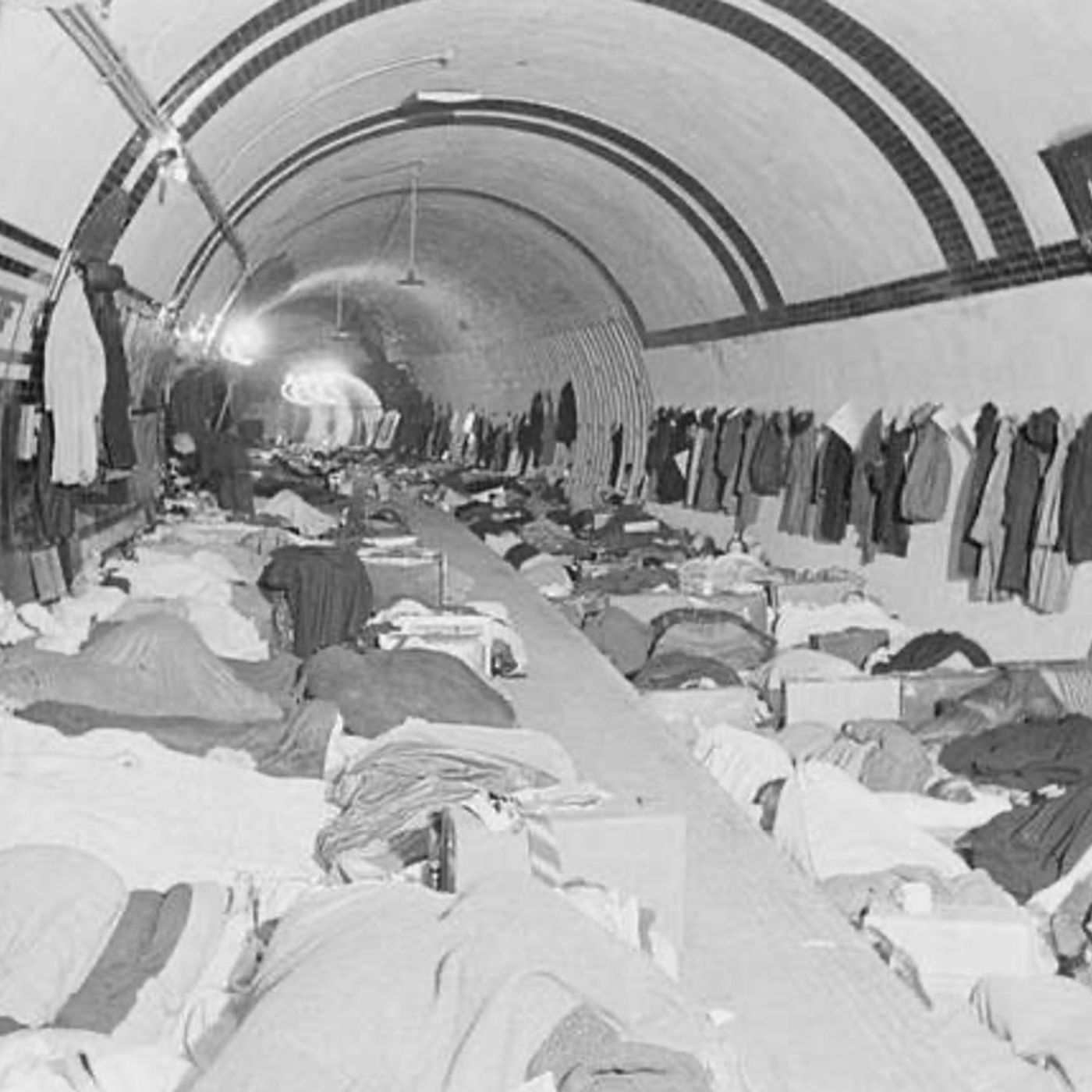
APPRENTICESHIP AT HENRY SOTHERAN'S ANTIQUARIAN BOOKSHOP Colleague Oliver Darkshire. Darkshire describes his apprenticeship at Henry Sotheran's, noting the shop's silent atmosphere and his odd interview regarding trombone playing. He details the "higgledy-piggledy" layout where buildings merge and his assignment to a tiny desk, suitable for a "Victorian gentle woman," positioned as the "first line of defense." NUMBER 2
1940 london tube

ONCE UPON A TOME: A MISSION TO EVALUATE A REMOTE LIBRARY Colleague Oliver Darkshire. Guest Oliver Darkshire discusses his memoir, Once Upon a Tome, recounting a "mission" to a remote house to evaluate a library. After a difficult trek through woods, he discovered moldy French texts he couldn't read and sinister spiritual works on exorcism. He also introduces Sotheran's hidden London location. NUMBER 1
1913 Cotswolds
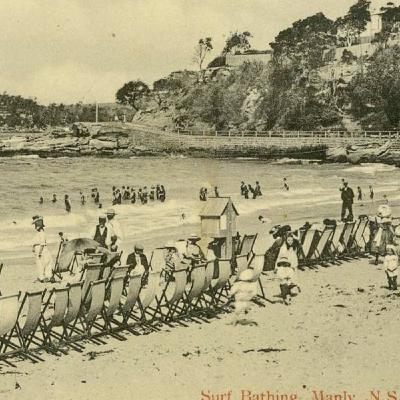
AUSTRALIA'S SUMMER WEATHER FORECAST AND CHRISTMAS TRADITIONS Colleague Jeremy Zakis. Jeremy Zakis reports that while New South Wales is currently experiencing stormy weather, the Bureau of Meteorology predicts a catastrophically hot summer influenced by stratospheric warming over Antarctica. Despite the heat, Australians maintain Christmas traditions involving outdoor barbecues, street cricket, and visiting Santa Claus, who wears shorts for outdoor events.
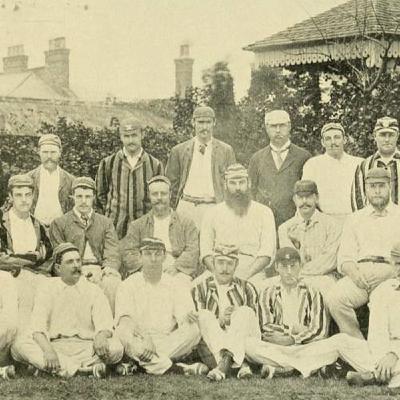
AUSTRALIA DOMINATES ENGLAND IN THE ASHES CRICKET SERIES Colleague Jeremy Zakis. Zakisanalyzes the Ashes series, noting England's poor performance and failure to execute their aggressive "Bazball" strategy effectively. Conversely, Australia's consistent, conservative playing style has fatigued the English team, leading to early victories. Captain Pat Cummins has returned to the field as the final matches proceed in Sydney and Melbourne.
1884

DALLAS MEETS A SLEEPY LIZARD; DESTRUCTIVE COCKATOOS RETURN Colleague Jeremy Zakis. Zakis describes a surprisingly friendly encounter between his dog, Dallas, and a "sleepy lizard," a reptile known to bite hard when threatened. Meanwhile, flocks of cockatoos have returned to the neighborhood, causing significant damage by stripping pine trees and destroying a neighbor's roof, earning a reputation as local villains.
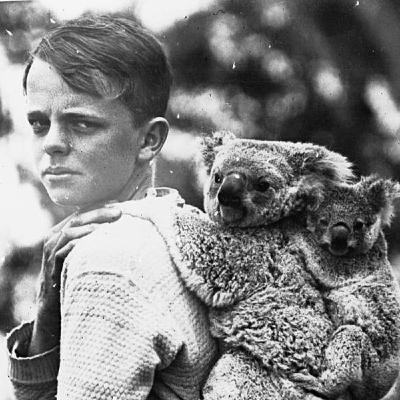
VENOMOUS SNAKES ON BEACHES AND A KOALA RESCUE Colleague Jeremy Zakis. Due to extreme heat and population growth, Eastern Brown snakes are appearing in unusual locations, such as inside surfers' bags on sandy beaches. Zakis also recounts a heartwarming story from Brisbane where a bus driver rescued a distressed koala from heavy traffic, transporting it to safety.
ELECTION NIGHT LANDSLIDE AND POLITICAL REALIGNMENT Colleague David Pietrusza. On election night, early returns from Connecticut signaled a massive victory for Roosevelt, contradicting the predictions of the Literary Digest straw poll. Roosevelt won a historic landslide, capturing 46 states and sweeping huge Democraticmajorities into Congress. This victory marked a permanent political realignment, as the children of immigrants in major cities overwhelmingly voted for Roosevelt. While Landon's campaign was decimated, the election solidified the Democratic Party's shift from a Southern-dominated organization to a national coalition powered by urban centers and the working class, cementing the triumph of the liberal ideal. NUMBER 8
THE CAMPAIGN TRAIL: CLASS WARFARE AND THE BLACK VOTE Colleague David Pietrusza. Alf Landonproved a poor campaigner, taking long vacations and delivering ineffective radio speeches. Conversely, Eleanor Roosevelt became a powerful surrogate, campaigning for the black vote in the North, even as Franklin refused to support anti-lynching laws to appease Southern Democrats. The campaign climaxed with Roosevelt's Madison Square Garden speech, where he utilized "class warfare" rhetoric, welcoming the hatred of "economic royalists." Although polls suggested a tightening race and the administration worried about the ongoing Depression, Roosevelt's "naked demagoguery" and energetic campaigning energized his base against the wealthy interests opposing him. NUMBER 7
THE REPUBLICAN FIELD AND THE SELECTION OF ALF LANDON Colleague David Pietrusza. The Republican Party sought a candidate to challenge Roosevelt, dismissing a return of Herbert Hoover and bypassing isolationist William Borah. They settled on Kansas Governor Alf Landon, known as the "Kansas Coolidge," a progressive Republican who had balanced his state's budget. Despite Landon being a lackluster speaker and a "dark horse," he secured the nomination because William Randolph Hearst threw his massive media support behind him. Hearst's papers published relentless positive coverage of Landon, making the nomination his to lose despite the candidate's lack of charisma and national profile. NUMBER 6
THE POWER AND DECLINE OF WILLIAM RANDOLPH HEARST Colleague David Pietrusza. Media magnate William Randolph Hearst, who controlled a vast empire of newspapers and radio stations, shifted from a Rooseveltsupporter in 1932 to a fierce critic by 1936. Hearst's reputation suffered after a controversial meeting with Adolf Hitler, which he attempted to downplay, but which accelerated his decline in popularity. Roosevelt, concerned about "crackpot ideas" and opposition from the wealthy, attempted to neutralize Hearst through intermediaries. However, the President's "soak the rich" tax policies deeply angered Hearst, leading the publisher to order his income reduced to avoid taxes and solidifying his break with FDR. NUMBER 5
MANAGING THE LEFT: SOCIALISTS, COMMUNISTS, AND THE POPULAR FRONT Colleague David Pietrusza. Roosevelt contended with established leftist parties, including the Socialists led by Norman Thomas and the Communist Party USA under Earl Browder. While the Socialists appealed to urban intellectuals, the Communists, following Stalin's "popular front" strategy against Hitler, tacitly supported Roosevelt. Browder ran for president to avoid being a "kiss of death" endorsement for FDR, while focusing his party's attacks on the Republicans. This era also saw violent political instability in the upper Midwest, where radical agrarian figures like Minnesota Governor Floyd Olson maneuvered between supporting Roosevelt and harboring their own presidential ambitions. NUMBER 4
THE TOWNSEND PLAN, FATHER COUGHLIN, AND THE THIRD PARTY THREAT Colleague David Pietrusza. Dr. Francis Townsend's popular plan for old-age pensions pressured Roosevelt, who disliked "the dole," into creating Social Security. Concurrently, Father Charles Coughlin, the influential "Radio Priest," turned against Roosevelt after feeling used and ignored, specifically following a meeting at Hyde Park arranged by Joe Kennedy. Coughlin allied with Townsend and Huey Long's successor, Gerald L.K. Smith, to form a third party aimed at throwing the election to the House of Representatives. Despite their massive radio audiences, these political amateurs failed to get on the ballot in key states like New York and California. NUMBER 3
POPULIST THREATS FROM THE SOUTH: HUEY LONG AND THE TALMADGES Colleague David Pietrusza. Roosevelt faced significant challenges from Southern populists who threatened to split his support in the solid South. The most dangerous was Huey Long of Louisiana, whose left-wing "Share Our Wealth" program promised massive redistribution of assets. Long planned to siphon votes in 1936 to ensure a Republican victory, hoping to win the presidency himself in 1940, but his assassination in 1935 removed this threat. Meanwhile, Georgia's Eugene Talmadge, a conservative populist who engaged in race-baiting and opposed welfare, rallied radical elements and Confederatesympathizers against the New Deal, complicating Roosevelt's strategy. NUMBER 2
THE INAUGURATION RELEASE AND A PATTERN OF TREASON Colleague Craig Unger. Unger highlights the suspicious timing of the hostage release minutes after Reagan's inauguration, arguing a secret deal was undeniable. He connects this to a pattern of Republican interference in foreign policy for electoral gain, linking the "October Surprise" to Nixon's Vietnam sabotage and recent allegations involving Trump and Russia. NUMBER 8
INSIDE IRAN: CONFESSIONS FROM THE REVOLUTIONARIES Colleague Craig Unger. Traveling to Tehran, Unger visits the former US embassy and interviews Mohsen Rafighdoost, a Revolutionary Guard founder. Ungercaptured video where Rafighdoost seemingly admits to meeting Republicans. Former Iranian President Banisadr also confirmed the plot, describing the collision as a "double coup" targeting both Jimmy Carter and his own presidency. NUMBER 7
CONFIRMING MADRID AND THE PARIS MEETING MYSTERY Colleague Craig Unger. Unger asserts the Madrid meeting between Casey and Iranian cleric Karrubi definitely occurred to sketch the deal. While less certain about George H.W. Bush's presence at the subsequent Paris meeting, Unger argues Bush's alibis were debunked, suggesting he likely attended to provide the high-level guarantee Iran demanded for the agreement. NUMBER 6
THE SECRET NETWORK: SAFARI CLUB AND ISRAELI INTELLIGENCE Colleague Craig Unger. The discussion examines the "Safari Club," an off-the-books network used by Casey to bypass oversight. Unger explains how Casey utilized John Shaheen as a cutout to communicate with Iranian arms dealers and confirms through Israelimilitary intelligence officials that Israel facilitated secret arms shipments to Iran to support the scheme. NUMBER 5
MEDIA COVER-UPS AND THE LADIES' ROOM DISCOVERY Colleague Craig Unger. Unger recounts how Newsweek and a Congressional investigation suppressed the story, dismissing the "October Surprise" as a myth. Despite warnings from Seymour Hersh, Unger and reporter Bob Parry persisted, eventually discovering a massive cache of discarded evidence hidden inside a House office building restroom, reigniting the investigation into the alleged treason. NUMBER 4


Download from Google Play

Download from App Store
 United States
The antisemitic police commercial is a huge insult to commonsense. Enforcing the law drops crime. It worked during the 90's. Why not now.
vvpljl6ooo 9jy656uyyyyyy7
The John Batchelor Show offers insightful analysis on global events and history. Highly recommended for anyone interested in in-depth news coverage! Check it out: スプランキー https://play-sprunki.org
The title has nothing to do with the actual podcast. This is sadly an annoying habit that has somehow been taken up. This happens quite often.
hqr1
has nothing g to do with Ukraine. this is a retelling of the Cuban missle crisis.
what impact they will have on international space endeavors. If relevant resources or documentation are intended to accompany the commit, you might want to include a reference like https://mywguportal.com/ to direct users to a related portal or resource. Would you like help editing the commit message or improving documentation next?
The subject matter dosen't match the title. This seems to happen with many episodes.
have you seen the movie "The Castle". it's a great movie about exactly this legal issues.
I love how you incorporate https://misidegameonline.com examples and real-life situations to make your points. This article is a great blend of information and approachability, and I’m sure many will benefit from the knowledge you’re sharing.
there’s a cultural aspect at play; traditional https://mapquestrouteplanner.org values often emphasize saving over spending, particularly in uncertain times.
It would be interesting to see how these plans evolve https://polytrack.org/ and what impact they will have on international space endeavors.
Chang's insights suggest that Xi's leadership https://papaspizzeria2.org/ prioritizes a strict adherence to party doctrine and control over public discourse, contrasting sharply with Gorbachev's attempts at political openness and reform.
In a bold leap of innovation, Test Group engineers embarked on a daring venture: crafting a Frankenstein commercial airplane. Incorporating cutting-edge technologies and components sourced globally, this aviation marvel promises unparalleled efficiency and safety. From the fuselage to the avionics, each element synergizes seamlessly to redefine flight standards. Visit https://www.testgroup.com/ to witness the evolution of air travel, where pioneering meets reliability. Embodying resilience and ingenuity, this Frankenstein creation signifies a new era in aerospace engineering, bridging dreams with reality. Experience the future of flight with Test Group's visionary aircraft, where every journey begins with boundless imagination and precision engineering.
Thecepisodevhad nothing to do with WW2 but Italy's covid response from 2022. Someone is not checking.
ehelp
Who pays this woman?
⦁ This article contains very valuable information for beginners. This is a very informative blog for me, thank you for sharing this blog. . PDS International is also Best Digital Freight Forwarder PDS INTERNATIONAL PVT. LTD
like the news is not control in usa
john you keep pushing the war . Nazy state of Ukraine you're in the wrong side of history.