



 Claim Ownership
The John Batchelor Show
Subscribed: 4,360Played: 2,550,044
Subscribe


Description
The John Batchelor Show is a hard news-analysis radio program on current events, world history, global politics and natural sciences. Based in New York City for two decades, the show has travelled widely to report, from the Middle East to the South Caucasus to the Arabian Peninsula and East Asia.
5000 Episodes
Reverse
PREVIEW FOR LATER TONIGHT THE FAILED OSTER CONSPIRACY OF 1938 Colleague Charles Spicer. Charles Spicer discusses the 1938 Oster Conspiracy, a plot by Hitler's opponents to utilize police and army units to arrest him. This coup depended on Hitler attacking Czechoslovakia, but Neville Chamberlain's arrival and appeasement policy destroyed the conspirators' necessary casus belli, ruining a vital chance to stop the coming war.
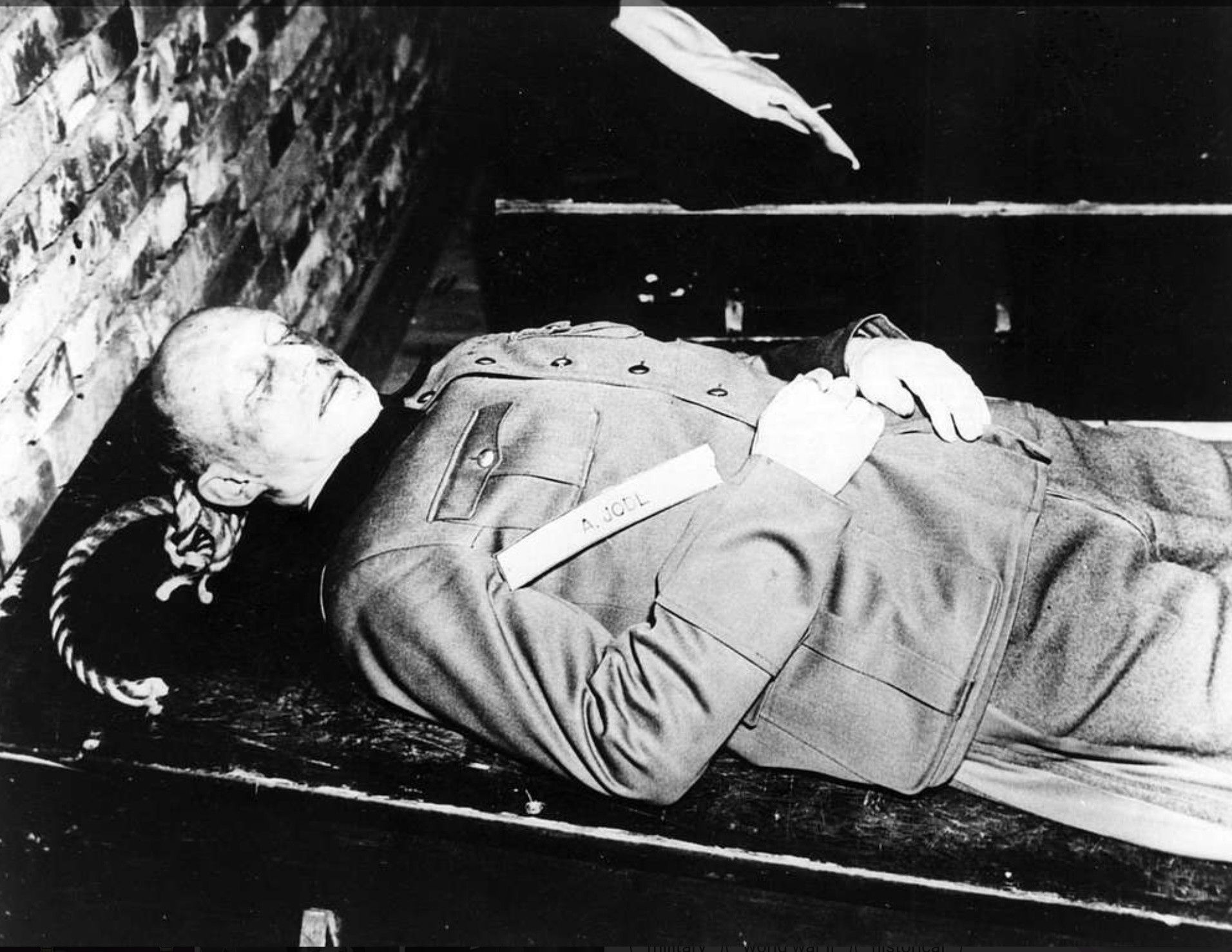
0CT0BER 16, 1946. NUREMBERG WAR CRIMES CONVICTION HANGED ALFRED JODL. LAST WORDS, "I GREET MY FUHRER."
PREVIEW FOR LATER TONIGHT THE MISSED OPPORTUNITY IN THE RHINELAND Colleague Charles Spicer. In 1936, Hitler violated treaties by moving troops into the Rhineland. Despite prior warnings, London and Parisfailed to react due to prevailing pacifist sentiment. Spicer explains that because Hitler's soldiers lacked live ammunition, standing up to this aggression could have easily prevented the tragedy of World War II.
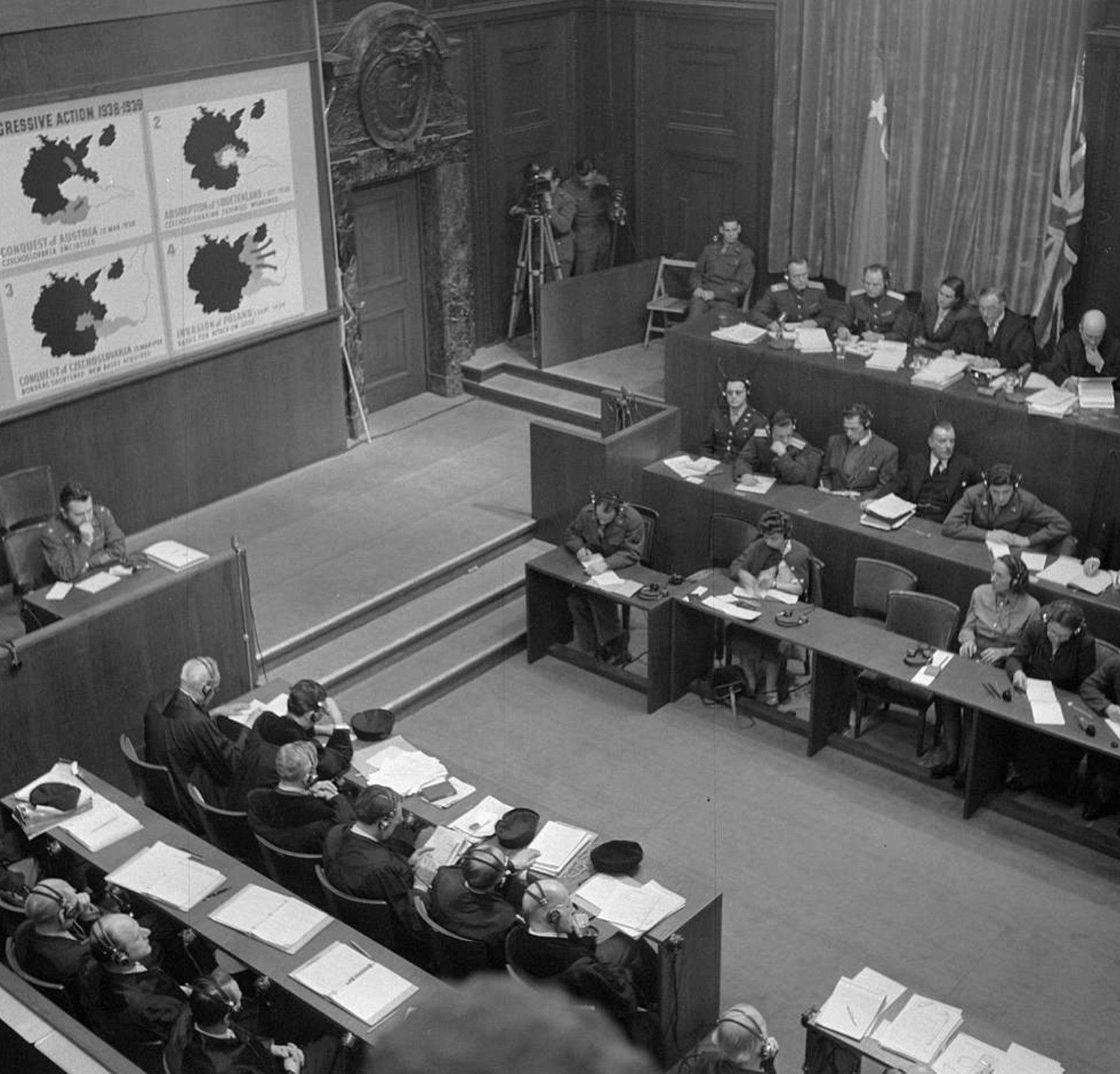
1945-46 NUREMBERG TRIBUNAL.

PREVIEW FOR LATER TONIGHT RIBBENTROP'S DESCENT FROM ANGLOPHILE TO ENEMY Colleague Charles Spicer. Joachim von Ribbentrop served as Hitler's ambassador to Britain, initially acting as a sophisticated Anglophile. However, after social gaffes and influence from his wife, his admiration turned to vitriolic hatred. Spicerdetails how this irrational shift influenced decisions leading up to the war and Ribbentrop's eventual hanging.
1945-46 DEFENSE ATTORNEYS NUREMBERG
PREVIEW FOR LATER TONIGHT UNILEVER AND THE ANGLO-GERMAN FELLOWSHIP Colleague Charles Spicer. Corporations like Unilever, fearing war and seeking to protect massive profits, formed the Anglo-German Fellowship to maintain dialogue with Berlin. Spicer explains how business leaders, hoping to "civilize" the Nazis, misinterpreted events like the Night of the Long Knives as signs of a stabilizing, less brutal regime.
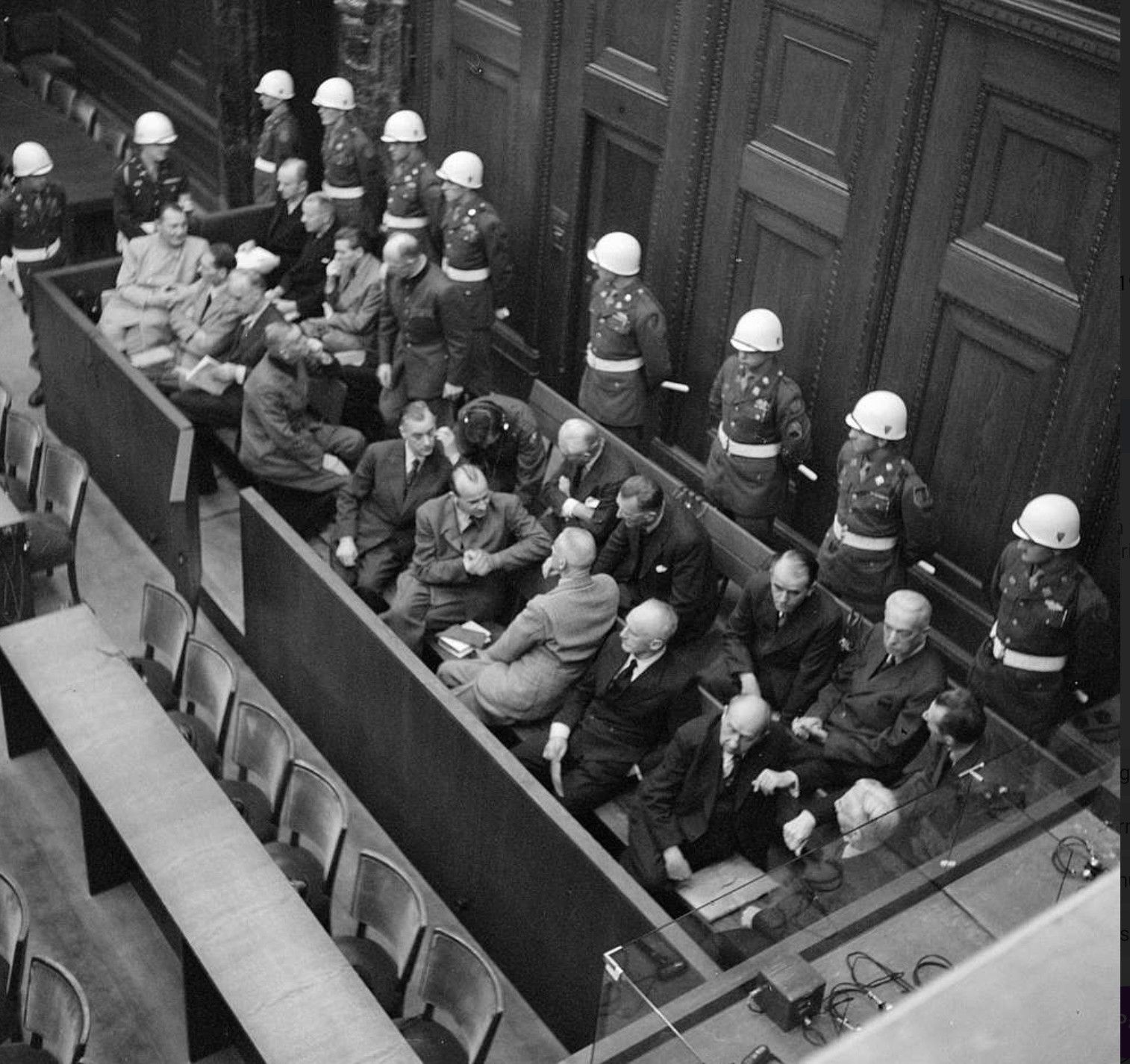
DECEMBER 1945 WAR CRIMES TRIBUNAL NUREMBERG GERMANY: THE ACCUSED PRIDONERS

SHOW
12-30-25
CBS EYE ON THE WORLD WITH JOHN BATCHELOR
THESDHOW BEGINS WITH DOUBTS ABOUT THE PURPOSE OF WAR-MAKING AS EXPRESSED MOURNFULLY BY HECTOR'S WIFE ANDROMACHE...
SHOW
12-30-25
CBS EYE ON THE WORLD WITH JOHN BATCHELOR
TRANSLATION AND THE SEARCH FOR TROY Colleague Professor Emily Wilson. John Batchelor interviews Professor Emily Wilson about her new iambic pentameter translation of the Iliad. They discuss the historical location of Troy in modern Turkey and the archaeological layers discovered by Schliemann, who wrongly believed he found Agamemnon's mask. Wilson explains that while the Greeks viewed the Iliad as partly historical, it is a poetic imagining composed centuries after the events, designed for oral performance and rhythmic reading. NUMBER 1
HOMER'S NARRATIVE CHOICES AND ORAL TRADITION Colleague Professor Emily Wilson. Wilsondiscusses the "Homeric Question," noting that oral stories existed for centuries before the alphabet arrived in the 8th century BCE. She highlights the Iliad's sophisticated narrative structure, which omits famous events like the Apple of Discord and the Trojan Horse to focus intensely on a specific period of the war. The conversation compares the Iliad'sfocus on Greek infighting with Virgil's Aeneid, noting the distinct goals of each epic tradition. NUMBER 2
TRAGIC COUPLES AND DIVINE INTERVENTION Colleague Professor Emily Wilson. The segment explores key character pairings, starting with Helen's complex view of Paris and her weaving as a metaphor for the story. Wilsonanalyzes the tragic relationship between Hector and Andromache, emphasizing Hector's choice of duty over family. They discuss the gods' roles, particularly Thetis's prayer to Zeus which seals Achilles' fate, and Hera's bargaining with Zeus to ensure Troy's destruction, highlighting the interplay of divine will and mortal suffering. NUMBER 3
TRANSLATION AND THE SEARCH FOR TROY Colleague Professor Emily Wilson. John Batchelor interviews Professor Emily Wilson about her new iambic pentameter translation of the Iliad. They discuss the historical location of Troy in modern Turkey and the archaeological layers discovered by Schliemann, who wrongly believed he found Agamemnon's mask. Wilson explains that while the Greeks viewed the Iliad as partly historical, it is a poetic imagining composed centuries after the events, designed for oral performance and rhythmic reading. NUMBER 1
HOMER'S NARRATIVE CHOICES AND ORAL TRADITION Colleague Professor Emily Wilson. Wilsondiscusses the "Homeric Question," noting that oral stories existed for centuries before the alphabet arrived in the 8th century BCE. She highlights the Iliad's sophisticated narrative structure, which omits famous events like the Apple of Discord and the Trojan Horse to focus intensely on a specific period of the war. The conversation compares the Iliad'sfocus on Greek infighting with Virgil's Aeneid, noting the distinct goals of each epic tradition. NUMBER 2
TRAGIC COUPLES AND DIVINE INTERVENTION Colleague Professor Emily Wilson. The segment explores key character pairings, starting with Helen's complex view of Paris and her weaving as a metaphor for the story. Wilsonanalyzes the tragic relationship between Hector and Andromache, emphasizing Hector's choice of duty over family. They discuss the gods' roles, particularly Thetis's prayer to Zeus which seals Achilles' fate, and Hera's bargaining with Zeus to ensure Troy's destruction, highlighting the interplay of divine will and mortal suffering. NUMBER 3
APHRODITE, PATROCLUS, AND TROPHY WOMEN Colleague Professor Emily Wilson. Wilson examines Aphrodite's intervention on the battlefield and her representation of baser instincts like lust. The discussion shifts to Briseis, a "trophy" of war, and her relationship with Patroclus, whom Wilson refuses to classify as a "beta male" despite his kindness. Patroclus is described as a brutal killer and Achilles' closest companion. The segment highlights the emotional depth of Achilles, who displays immense vulnerability alongside his capacity for violence. NUMBER 4
AGAMEMNON'S FAILURE AND DIVINE POLITICS Colleague Professor Emily Wilson. This segment details the plot's catalyst: Agamemnon seizing Briseis from Achilles, causing the hero to withdraw from battle. Wilson explains the divine politics, including Hera trading three Greek cities to Zeus to ensure Troy's destruction. They analyze Agamemnon's flawed leadership; while he blames Zeus for his bad decisions, the poem portrays the immense difficulty of holding a disparate army together, leading to disastrous choices that necessitate Achilles' eventual return. NUMBER 5
THE GORE AND GLORY OF BATTLE Colleague Professor Emily Wilson. Wilson discusses translating the Iliad'svivid violence, drawing on insights from combat veterans regarding the trauma of battlefield death. A central theme is the treatment of corpses; possessing and stripping a dead enemy's armor is the ultimate sign of dominance. The conversation touches on the physical nature of the gods, who bleed "ichor" when wounded, and Poseidon's support for the Greeks in contrast to his brother Zeus. NUMBER 6
THE DEATH OF PATROCLUS AND HECTOR Colleague Professor Emily Wilson. The tragedy culminates with Patroclus ignoring Achilles' warning, leading to his death by Hector and the loss of Achilles' armor. Wilson describes Achilles' terrifying return to battle, equipped with new armor from Hephaestus, and his slaughter of Trojans. The segment covers the final confrontation where Achilles kills Hector and, driven by vengeance, drags his body behind a chariot, denying him burial rights and intending to mutilate him forever. NUMBER 7
GRIEF, GAMES, AND ACCEPTANCE Colleague Professor Emily Wilson. After Hector's death, Achilles finds a form of healing through funeral games, which offer a non-lethal model of competition. He even awards Agamemnon a prize without a contest, possibly as a slight. The poem concludes not with victory, but with a "humanitarian pause" for Hector's funeral. Wilson notes the ending focuses on women's lamentations, emphasizing the Iliad's enduring lesson on the struggle to accept human mortality. NUMBER 8
FEMALE AUTHORSHIP AND THE TROJAN WOMEN Colleague Daisy Dunn. Daisy Dunn discusses the legend of Phantasia, a rumored female source for Homer, and the myth of Leda and the Swan. She argues that the Trojan Warlikely reflects real historical conflicts at the site of Hisarlik. The segment highlights key female figures: Andromache, who offers military advice to Hector, and Briseis, the enslaved woman central to the dispute between Agamemnon and Achilles, illustrating the centrality of women to the epic. NUMBER 9
SAPPHO OF LESBOS Colleague Daisy Dunn. Dunn explores the life of Sappho, debunking myths about her appearance and suicide. She explains that Sappho was exiled due to her family's aristocratic background during a time of political revolution. The conversation covers Sappho's disapproval of her brother's relationship with the courtesan Doricha and her professional jealousy when students left her school for rivals. Weaving is presented as a metaphor for women shaping fate. NUMBER 10
ETRUSCANS AND THE WOMEN OF EARLY ROME Colleague Daisy Dunn. Dunn discusses the Etruscans, noting their advanced dentistry and the shock Greeks felt at Etruscan men and women dining together openly. Transitioning to Rome, they recount the violent founding myth of the Rape of the Sabine Women. The segment details the tragedy of Lucretia, whose rape and subsequent suicide led Brutus to overthrow the monarchy and establish the Roman Republic, making her a paragon of virtue. NUMBER 11
DIDO AND THE FOUNDING OF CARTHAGE Colleague Daisy Dunn. Dunn recounts the story of Dido, the clever founder of Carthage who tricked a local king to secure land. When Aeneas abandons her to fulfill his destiny, Didocurses him, foreshadowing the Punic Wars between Rome and Carthage. The segment explores her tragic suicide on a pyre, noting the societal judgment against her for breaking vows of celibacy, while acknowledging her capacity as a talented ruler and builder of cities. NUMBER 12
CORNELIA AND SERVILIA: MOTHERS OF ROME Colleague Daisy Dunn. This segment focuses on Cornelia, the educated "one-man woman" who raised the reforming Gracchi brothers to challenge the Roman elite. Dunn notes Cornelia's heartbreak as she tried to dissuade her second son from following his assassinated brother's path. The discussion shifts to Servilia, Caesar's long-term mistress and mother of Brutus. Servilia is depicted as a politically astute woman caught between her lover and her son, the future assassin. NUMBER 13
CLEOPATRA AND CAESAR Colleague Daisy Dunn. Dunn describes Cleopatra's dramatic entrance from a rug to meet Caesar and secure her rule in Egypt. Despite her intelligence and linguistic skills, the Romans viewed her with suspicion and distaste, labeling her a "whore queen." Dunn challenges the Hollywood image of Cleopatra's beauty, noting coin portraits show a hooked nose, and argues her power lay in her charisma and voice. She remains a figure of admiration today. NUMBER 14
ANTONY, FULVIA, AND CLEOPATRA'S END Colleague Daisy Dunn. The conversation turns to Mark Antony'sunpopular affair with Cleopatra and his wife Fulvia, who instigated a war in Italy to counter Octavian. Dunn highlights the Roman propensity for public emotion and early marriage. Following Antony's botched suicide, Cleopatra takes her own life to avoid being paraded as a trophy by Octavian. Dunn suggests the "asp" story might be a myth covering a lethal injection or poison. NUMBER 15
THE WOMEN OF THE JULIO-CLAUDIAN DYNASTY Colleague Daisy Dunn. Dunn profiles the powerful women of the Julio-Claudian dynasty. Livia is portrayed as Augustus's essential political partner and diplomat. The segment covers the tragic life of Julia, the lechery of Caligula, and the notorious reputation of Messalina. Finally, Agrippina the Young
THE WOMEN OF THE JULIO-CLAUDIAN DYNASTY Colleague Daisy Dunn. Dunn profiles the powerful women of the Julio-Claudian dynasty. Livia is portrayed as Augustus's essential political partner and diplomat. The segment covers the tragic life of Julia, the lechery of Caligula, and the notorious reputation of Messalina. Finally, Agrippina the Younger is described as a co-emperor to her son Nero before he turned against her. Dunn concludes that Roman politics were bloodier but more politically savvy than the Greeks. NUMBER 16
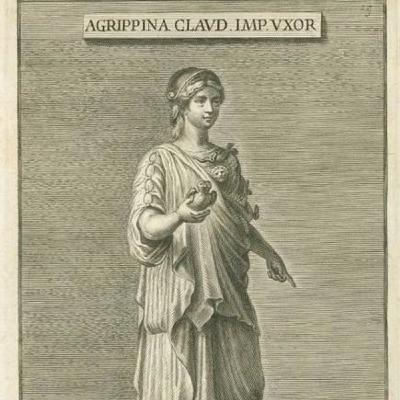
AGRIPPINA MINOR, NERO'S MOTHER, CLAUDIUS'S WIDOW AND MURDER, NERO'S VICTIM
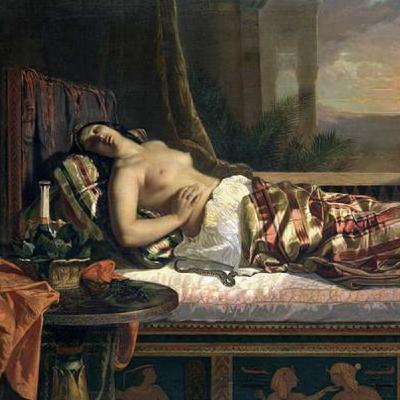
ANTONY, FULVIA, AND CLEOPATRA'S END Colleague Daisy Dunn. The conversation turns to Mark Antony'sunpopular affair with Cleopatra and his wife Fulvia, who instigated a war in Italy to counter Octavian. Dunn highlights the Roman propensity for public emotion and early marriage. Following Antony's botched suicide, Cleopatra takes her own life to avoid being paraded as a trophy by Octavian. Dunn suggests the "asp" story might be a myth covering a lethal injection or poison. NUMBER 15
1841 DEATH OF CLEOPATRA
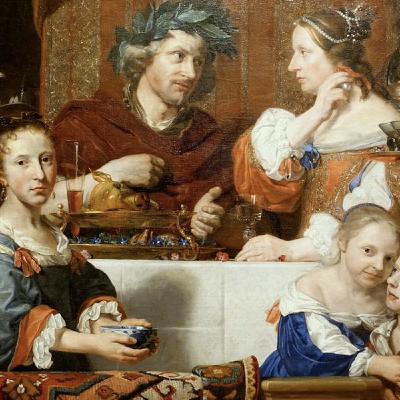
CLEOPATRA AND CAESAR Colleague Daisy Dunn. Dunn describes Cleopatra's dramatic entrance from a rug to meet Caesar and secure her rule in Egypt. Despite her intelligence and linguistic skills, the Romans viewed her with suspicion and distaste, labeling her a "whore queen." Dunn challenges the Hollywood image of Cleopatra's beauty, noting coin portraits show a hooked nose, and argues her power lay in her charisma and voice. She remains a figure of admiration today. NUMBER 14
1700 CLEOPATRA AND MARC ANTONY
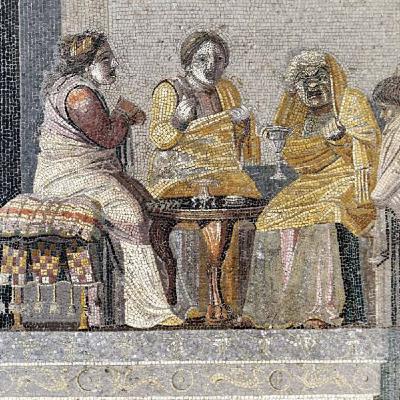
CORNELIA AND SERVILIA: MOTHERS OF ROME Colleague Daisy Dunn. This segment focuses on Cornelia, the educated "one-man woman" who raised the reforming Gracchi brothers to challenge the Roman elite. Dunn notes Cornelia's heartbreak as she tried to dissuade her second son from following his assassinated brother's path. The discussion shifts to Servilia, Caesar's long-term mistress and mother of Brutus. Servilia is depicted as a politically astute woman caught between her lover and her son, the future assassin. NUMBER 13
79 AD WOMEN OF POMPEII AND HERCULANEUM
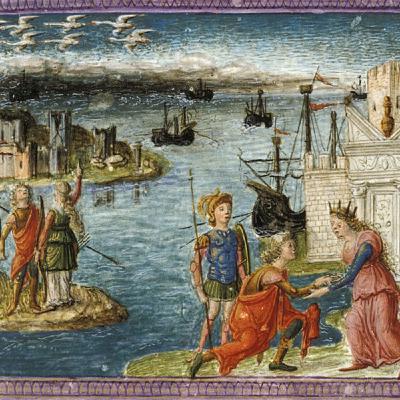
DIDO AND THE FOUNDING OF CARTHAGE Colleague Daisy Dunn. Dunn recounts the story of Dido, the clever founder of Carthage who tricked a local king to secure land. When Aeneas abandons her to fulfill his destiny, Didocurses him, foreshadowing the Punic Wars between Rome and Carthage. The segment explores her tragic suicide on a pyre, noting the societal judgment against her for breaking vows of celibacy, while acknowledging her capacity as a talented ruler and builder of cities. NUMBER 12
1450 DIDO WELCOMES AENEAS TO CARTHAGE
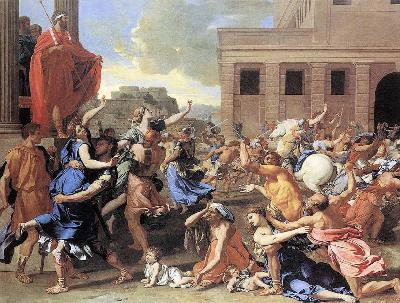
ETRUSCANS AND THE WOMEN OF EARLY ROME Colleague Daisy Dunn. Dunn discusses the Etruscans, noting their advanced dentistry and the shock Greeks felt at Etruscan men and women dining together openly. Transitioning to Rome, they recount the violent founding myth of the Rape of the Sabine Women. The segment details the tragedy of Lucretia, whose rape and subsequent suicide led Brutus to overthrow the monarchy and establish the Roman Republic, making her a paragon of virtue. NUMBER 11
1600 RAPE OF THE SABINE WOMEN
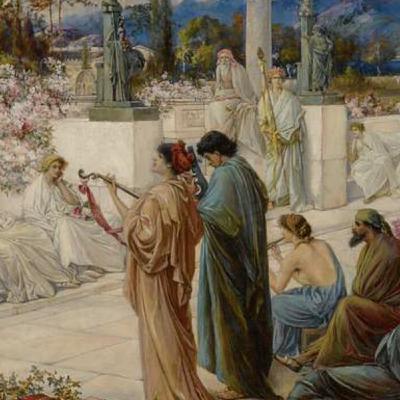
SAPPHO OF LESBOS Colleague Daisy Dunn. Dunn explores the life of Sappho, debunking myths about her appearance and suicide. She explains that Sappho was exiled due to her family's aristocratic background during a time of political revolution. The conversation covers Sappho's disapproval of her brother's relationship with the courtesan Doricha and her professional jealousy when students left her school for rivals. Weaving is presented as a metaphor for women shaping fate. NUMBER 10
896 SAPPHO AND HER SCHOOL

FEMALE AUTHORSHIP AND THE TROJAN WOMEN Colleague Daisy Dunn. Daisy Dunn discusses the legend of Phantasia, a rumored female source for Homer, and the myth of Leda and the Swan. She argues that the Trojan Warlikely reflects real historical conflicts at the site of Hisarlik. The segment highlights key female figures: Andromache, who offers military advice to Hector, and Briseis, the enslaved woman central to the dispute between Agamemnon and Achilles, illustrating the centrality of women to the epic. NUMBER 9
1450 VIRGIL READING AENEID TO AUGUSTUS, OCTAVIA AND LIVIA.
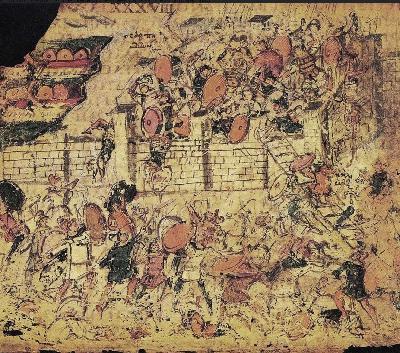
GRIEF, GAMES, AND ACCEPTANCE Colleague Professor Emily Wilson. After Hector's death, Achilles finds a form of healing through funeral games, which offer a non-lethal model of competition. He even awards Agamemnon a prize without a contest, possibly as a slight. The poem concludes not with victory, but with a "humanitarian pause" for Hector's funeral. Wilson notes the ending focuses on women's lamentations, emphasizing the Iliad's enduring lesson on the struggle to accept human mortality. NUMBER 8
500 AD AMBROSIAN ILIAD. WALL BREACHED.
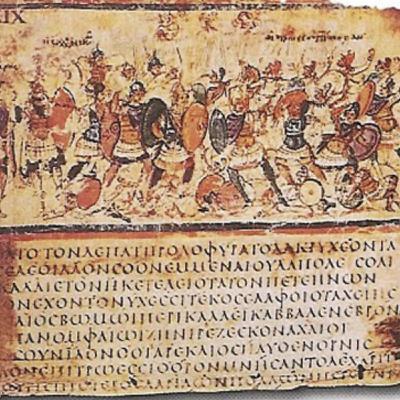
THE DEATH OF PATROCLUS AND HECTOR Colleague Professor Emily Wilson. The tragedy culminates with Patroclus ignoring Achilles' warning, leading to his death by Hector and the loss of Achilles' armor. Wilson describes Achilles' terrifying return to battle, equipped with new armor from Hephaestus, and his slaughter of Trojans. The segment covers the final confrontation where Achilles kills Hector and, driven by vengeance, drags his body behind a chariot, denying him burial rights and intending to mutilate him forever. NUMBER 7
500 AD. MELEE.
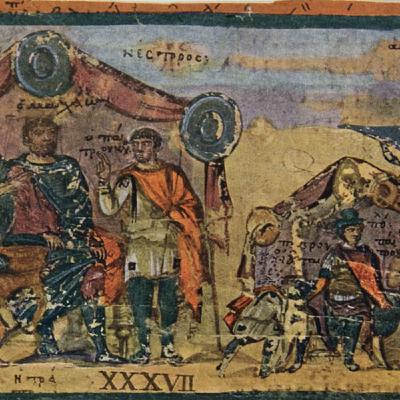
THE GORE AND GLORY OF BATTLE Colleague Professor Emily Wilson. Wilson discusses translating the Iliad'svivid violence, drawing on insights from combat veterans regarding the trauma of battlefield death. A central theme is the treatment of corpses; possessing and stripping a dead enemy's armor is the ultimate sign of dominance. The conversation touches on the physical nature of the gods, who bleed "ichor" when wounded, and Poseidon's support for the Greeks in contrast to his brother Zeus. NUMBER 6
500 AD. ACHILLES TENT. ALEXANDRIA ORIGIN

AGAMEMNON'S FAILURE AND DIVINE POLITICS Colleague Professor Emily Wilson. This segment details the plot's catalyst: Agamemnon seizing Briseis from Achilles, causing the hero to withdraw from battle. Wilson explains the divine politics, including Hera trading three Greek cities to Zeus to ensure Troy's destruction. They analyze Agamemnon's flawed leadership; while he blames Zeus for his bad decisions, the poem portrays the immense difficulty of holding a disparate army together, leading to disastrous choices that necessitate Achilles' eventual return. NUMBER 5
500 AD AMBROSIAN ILIAD

APHRODITE, PATROCLUS, AND TROPHY WOMEN Colleague Professor Emily Wilson. Wilson examines Aphrodite's intervention on the battlefield and her representation of baser instincts like lust. The discussion shifts to Briseis, a "trophy" of war, and her relationship with Patroclus, whom Wilson refuses to classify as a "beta male" despite his kindness. Patroclus is described as a brutal killer and Achilles' closest companion. The segment highlights the emotional depth of Achilles, who displays immense vulnerability alongside his capacity for violence. NUMBER 4
500 AD AMBROSI
AN ILIAD
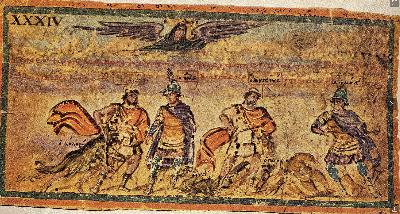
TRAGIC COUPLES AND DIVINE INTERVENTION Colleague Professor Emily Wilson. The segment explores key character pairings, starting with Helen's complex view of Paris and her weaving as a metaphor for the story. Wilsonanalyzes the tragic relationship between Hector and Andromache, emphasizing Hector's choice of duty over family. They discuss the gods' roles, particularly Thetis's prayer to Zeus which seals Achilles' fate, and Hera's bargaining with Zeus to ensure Troy's destruction, highlighting the interplay of divine will and mortal suffering. NUMBER 3
500 AD ALEXANDRIA AMBROSIAN ILIAD
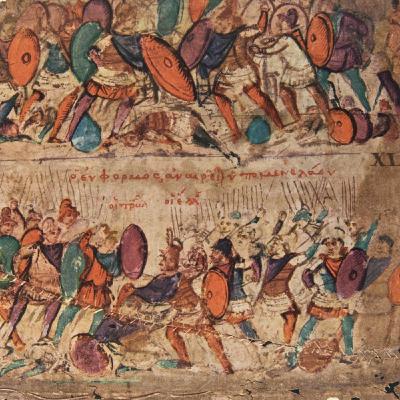
HOMER'S NARRATIVE CHOICES AND ORAL TRADITION Colleague Professor Emily Wilson. Wilsondiscusses the "Homeric Question," noting that oral stories existed for centuries before the alphabet arrived in the 8th century BCE. She highlights the Iliad's sophisticated narrative structure, which omits famous events like the Apple of Discord and the Trojan Horse to focus intensely on a specific period of the war. The conversation compares the Iliad'sfocus on Greek infighting with Virgil's Aeneid, noting the distinct goals of each epic tradition. NUMBER 2
500 AD ALEXANDRIA


Download from Google Play

Download from App Store
 United States
The antisemitic police commercial is a huge insult to commonsense. Enforcing the law drops crime. It worked during the 90's. Why not now.
vvpljl6ooo 9jy656uyyyyyy7
The John Batchelor Show offers insightful analysis on global events and history. Highly recommended for anyone interested in in-depth news coverage! Check it out: スプランキー https://play-sprunki.org
The title has nothing to do with the actual podcast. This is sadly an annoying habit that has somehow been taken up. This happens quite often.
hqr1
has nothing g to do with Ukraine. this is a retelling of the Cuban missle crisis.
what impact they will have on international space endeavors. If relevant resources or documentation are intended to accompany the commit, you might want to include a reference like https://mywguportal.com/ to direct users to a related portal or resource. Would you like help editing the commit message or improving documentation next?
The subject matter dosen't match the title. This seems to happen with many episodes.
have you seen the movie "The Castle". it's a great movie about exactly this legal issues.
I love how you incorporate https://misidegameonline.com examples and real-life situations to make your points. This article is a great blend of information and approachability, and I’m sure many will benefit from the knowledge you’re sharing.
there’s a cultural aspect at play; traditional https://mapquestrouteplanner.org values often emphasize saving over spending, particularly in uncertain times.
It would be interesting to see how these plans evolve https://polytrack.org/ and what impact they will have on international space endeavors.
Chang's insights suggest that Xi's leadership https://papaspizzeria2.org/ prioritizes a strict adherence to party doctrine and control over public discourse, contrasting sharply with Gorbachev's attempts at political openness and reform.
In a bold leap of innovation, Test Group engineers embarked on a daring venture: crafting a Frankenstein commercial airplane. Incorporating cutting-edge technologies and components sourced globally, this aviation marvel promises unparalleled efficiency and safety. From the fuselage to the avionics, each element synergizes seamlessly to redefine flight standards. Visit https://www.testgroup.com/ to witness the evolution of air travel, where pioneering meets reliability. Embodying resilience and ingenuity, this Frankenstein creation signifies a new era in aerospace engineering, bridging dreams with reality. Experience the future of flight with Test Group's visionary aircraft, where every journey begins with boundless imagination and precision engineering.
Thecepisodevhad nothing to do with WW2 but Italy's covid response from 2022. Someone is not checking.
ehelp
Who pays this woman?
⦁ This article contains very valuable information for beginners. This is a very informative blog for me, thank you for sharing this blog. . PDS International is also Best Digital Freight Forwarder PDS INTERNATIONAL PVT. LTD
like the news is not control in usa
john you keep pushing the war . Nazy state of Ukraine you're in the wrong side of history.