


 Claim Ownership
The Science Show
Subscribed: 8,711Played: 177,729
Subscribe

© Copyright 2025, Australian Broadcasting Corporation. All right reserved.
Description
The Science Show gives Australians unique insights into the latest scientific research and debate, from the physics of cricket to prime ministerial biorhythms.
490 Episodes
Reverse

Norman Swan, Fiona Stanley and Lorin Clarke describe their involvement with Robyn Williams and The Science Show with MC Richard Glover at a party celebrating 50 years of broadcasting.
It's impossible to escape microplastics. They're in our food and water, and the air around us is teeming with them. So considering they're all around us, how can we minimise our exposure to tiny plastic fragments without resorting to living in a cave? This episode was first broadcast in August 2025. You can binge more episodes of the Lab Notes podcast with science journalist and presenter Belinda Smith on the ABC Listen app (Australia). You'll find episodes on animal behaviour, human health, space exploration and so much more. Get in touch with us: labnotes@abc.net.auFeaturing:Cassandra Rauert, microplastics researcher at the University of Queensland More information:Microplastics are in our food, water and air. How can we minimise our exposure to them?Human exposure to PM10 microplastics in indoor airAverage household dishwasher releases 33 million nano and microplastic particles per year, research findsLaundry is a top source of microplastic pollution — but you can clean your clothes more sustainablyThis episode of Lab Notes was produced on the lands of the Wurundjeri and Menang Noongar people.

She battled rigidities of 18th century Europe. But with writer and philosopher Voltaire, Émilie du Châtelet led the Enlightenment.
Australia's known for having some of the world's toughest sunscreen standards, but in June, that reputation was rocked.Independent testing of 20 sunscreens found 16 did not meet their advertised SPF50 rating, including three children's sunscreens and three sold by the Cancer Council.So how are sunscreens tested, and what can we learn from these recent SPF revelations?This episode was first broadcast in September 2025.You can binge more episodes of the Lab Notes podcast with science journalist and presenter Belinda Smith on the ABC Listen app (Australia). You'll find episodes on animal behaviour, human health, space exploration and so much more. Get in touch with us: labnotes@abc.net.auFeaturing:John Staton, scientific director at SciPharmMore information:What is SPF, and how is sunscreen's sun protection factor tested in the laboratory?Choice report finds popular Australian sunscreens fail to meet SPF claims on labelThis episode of Lab Notes was produced on the lands of the Wurundjeri and Menang Noongar people.
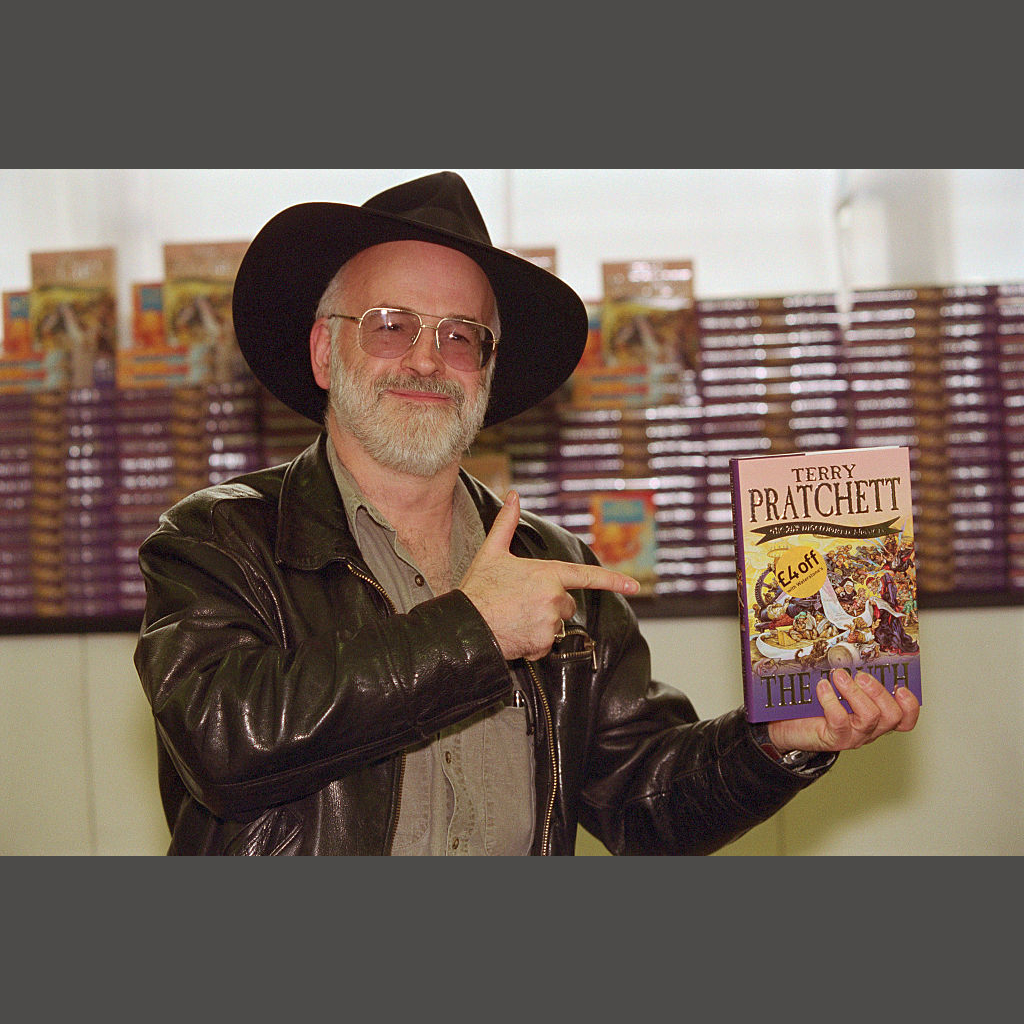
Retiring Vice Chancellor of the University of South Australia David Lloyd awarded Pratchett two honorary degrees. In exchange, the author honoured the university with a special scholarship – to be offered every year forever. This week David Lloyd explains his enthusiasms for the Discworld author in front of a packed audience at the Hawke Centre in Adelaide.
A huge cold blob of air above Antarctica and bushfires spreading along ridgelines don't appear to have anything in common, yet the strange behaviour of these natural phenomena — and many others — can be understood and explained by mathematics. You can binge more episodes of the Lab Notes podcast with science journalist and presenter Belinda Smith on the ABC Listen app (Australia). You'll find episodes on animal behaviour, human health, space exploration and so much more.Get in touch with us: labnotes@abc.net.auFeaturing:Chantelle Blachut, mathematician at UNSW Canberra
In her book Prove It! Elizabeth Finkel presents the evidence showing no link between pain relief drugs and autism
Step into the supermarket and there's plastic around just about everything, even mangoes — and not all that packaging will be properly disposed of.So with around 20 million tonnes of plastic polluting the environment each year, not to mention the potential health effects of microplastics, is there a better, more environmentally friendly alternative?You can binge more episodes of the Lab Notes podcast with science journalist and presenter Belinda Smith on the ABC Listen app (Australia). You'll find episodes on animal behaviour, human health, space exploration and so much more.Get in touch with us: labnotes@abc.net.auFeaturing:Edward Attenborough, chemical engineer and chemist at Monash UniversityMore information:Bacterial species-structure-property relationships of polyhydroxyalkanoate biopolymers produced on simple sugars for thin film applicationsThis episode of Lab Notes was produced on the lands of the Wurundjeri and Taungurung people.
The International Astronautical Congress held in Sydney showed how space science is vital to our modern world.
Astrophotographers have had another great month, with the aurora australis lighting up night skies as far north as southern Queensland.And while you might've heard that the best of this bunch of auroras is behind us, don't put your camera away just yet. There's good reason to think the southern lights will illuminate the sky well into 2026.It all depends on what the Sun shoots in our direction … and we might find ourselves in the firing line more often over the next few months.You can binge more episodes of the Lab Notes podcast with science journalist and presenter Belinda Smith on the ABC Listen app (Australia). You'll find episodes on animal behaviour, human health, space exploration and so much more.Get in touch with us: labnotes@abc.net.auFeaturing:Brett Carter, space weather researcher at RMIT UniversityMore information:The Sun Reversed Its Decades-long Weakening Trend in 2008When the southern lights are seen further northThis episode of Lab Notes was produced on the lands of the Wurundjeri and Taungurung people.
University departments of geology and geophysics are getting smaller or closing. So how will we find new mineral deposits?
It looks like most of Australia is in for a warmer-than-usual summer this year.That's according to the Bureau of Meteorology's long-range forecast, which was released in October.So — without a crystal ball — how do meteorologists make weather predictions so far out, how accurate are they, and how is climate change affecting them?You can binge more episodes of the Lab Notes podcast with science journalist and presenter Belinda Smith on the ABC Listen app (Australia). You'll find episodes on animal behaviour, human health, space exploration and so much more.Get in touch with us: labnotes@abc.net.auFeaturing:Karl Braganza, National Manager of Climate Services at the Bureau of MeteorologyMore information:BOM's first long-range summer forecast shows increased chance of extreme heatThis episode of Lab Notes was produced on the lands of the Wurundjeri and Taungurung people.
In just 75 years the Earth’s average temperature is predicted to be close to 3 degrees above pre-industrial levels. We are in the fast lane to a different world, one that will not be friendly to the current range of plants and animals, including humans. The race is on to cool our overheating planet.
Thanks in part to 18th-century nuns, we now know that having children and breastfeeding reduces a mum's risk of developing breast cancer for years, even until her kid is well into primary school.Now Australian scientists have discovered how breastfeeding specifically enlists the immune system to protect against an aggressive and hard-to-treat type of breast cancer.You can binge more episodes of the Lab Notes podcast with science journalist and presenter Belinda Smith on the ABC Listen app (Australia). You'll find episodes on animal behaviour, human health, space exploration and so much more.Get in touch with us: labnotes@abc.net.auFeaturing:Sherene Loi, medical oncologist at the Peter MacCallum Cancer Centre Extra information:Parity and lactation induce T cell mediated breast cancer protectionHaving children and breastfeeding reduces breast cancer risk by triggering immune system, study findsThis episode of Lab Notes was produced on the lands of the Wurundjeri and Menang Noongar people.
Robyn Williams reports from the 2025 Prime Minister's Prizes for Science ceremony in Parliament House Canberra.
It's mid-afternoon and time for a treat! Do you choose a healthy piece of fruit, or do you head straight for the chocolate? It turns out that well before we consciously decide what we're going to eat, our brain has already weighed up our choices — and in a fraction of a second. Now a new study shows which food attributes are processed by our brain faster than others, and how this might influence our dietary decisions. You can binge more episodes of the Lab Notes podcast with science journalist and presenter Belinda Smith on the ABC Listen app (Australia). You'll find episodes on animal behaviour, human health, space exploration and so much more.Get in touch with us: labnotes@abc.net.auFeaturing:Violet Chae, PhD student at the University of Melbourne More information:Characterising the neural time-courses of food attribute representationsThis episode of Lab Notes was produced on the lands of the Wurundjeri and Menang Noongar people.
We’ve built a picture of the evolution of biodiversity based on a few accessible fossils. But the real story may be very different.
We have a mysterious visitor to our little patch of the cosmos this week: A comet called 3I/ATLAS. This icy, rocky ball is only the third interstellar object we've discovered zooming past our Sun. There are scientists who think the comet may be alien technology sent from another solar system to invade Earth, but space agencies poured cold water on this idea. So how will we know if we truly find evidence of extraterrestrial life? You can binge more episodes of the Lab Notes podcast with science journalist and presenter Belinda Smith on the ABC Listen app (Australia). You'll find episodes on animal behaviour, human health, space exploration and so much more.Get in touch with us: labnotes@abc.net.auFeaturing:Laura Driessen, radio astronomer at the University of Sydney Astronomers discover 3I/ATLAS — third interstellar object to visit our Solar SystemThis episode of Lab Notes was produced on the lands of the Wurundjeri and Menang Noongar people.
An additive in paint converts ultraviolet light into red light allowing plants to grow more producing higher yields, a boon for greenhouse agriculture.
Around 1.5 million years ago, in what's now Kenya, a human-like figure walked across the savannah. He was probably quite short by our standards, no taller than Danny DeVito. But unlike Danny DeVito, this ancient figure was not human. He was a long-extinct relative of ours called Paranthropus boisei. And now his fossilised hand bones are giving us never-before-seen insights into how he and his species lived. You can binge more episodes of the Lab Notes podcast with science journalist and presenter Belinda Smith on the ABC Listen app (Australia). You'll find episodes on animal behaviour, human health, space exploration and so much more.Get in touch with us: labnotes@abc.net.auFeaturing: Carrie Mongle, palaeoanthropologist at Stony Brook University and the Turkana Basin Institute More information: New fossils reveal the hand of Paranthropus boiseiFossil hand bones hint that ancient human relative Paranthropus made tools 1.5 million years agoThis episode of Lab Notes was produced on the lands of the Wurundjeri and Menang Noongar people.


Download from Google Play

Download from App Store
 United States
Doesn't download. Someone needs to check the settings.
🖐️
What gives? Eight mins and then cut off mid sentence. This is the second pod that has been cut off half way.