



Wharton FinTech Podcast
Subscribed: 1,600Played: 27,495
Subscribe

© All rights reserved
Description
Connecting you with the people, companies, and ideas revolutionizing global financial services. Our guests are the leading fintech founders, investors, and thinkers in the world.
Subscribe and follow us for more FinTech content by searching @whartonfintech on your preferred platform!
Subscribe and follow us for more FinTech content by searching @whartonfintech on your preferred platform!
536 Episodes
Reverse
In this episode of the Wharton FinTech Podcast, host Vaibhav speaks with Riya Grover, co-founder and CEO of Sequence, an AI native revenue platform that unifies quoting, billing automation, and receivables so finance can finally run at the speed of sales.
Riya shares her journey from investment banking and Harvard Business School to exiting her first startup and then launching Sequence to fix one of the most neglected parts of the CFO stack, quote to cash and accounts receivable. She goes deep on what it really takes to find product market fit in a saturated software world, why AI native entrants can out execute incumbents, and how Sequence is using agents to automate complex finance workflows.
They also unpack Riya’s recent Series A fundraise, the story that resonated with investors, and her candid advice for founders building in a noisy, AI heavy, but more competitive than ever venture environment.
In this episode, we learn about:
- Why quote to cash and revenue operations have lagged behind AP and spend in automation
- How Sequence uses AI agents to read contracts, generate invoices, and support finance teams
- What investors really cared about in Sequence’s Series A, from logo quality to 190 % NRR
- How Riya stays close to customers while scaling a fast growing infra company
- Her advice for aspiring founders on standing out in today’s crowded AI landscape

In this episode of the Wharton FinTech Podcast, host Vaibhav sits down with Sarah Levy, CEO of Betterment and former executive at Disney, Viacom, and Nickelodeon. Sarah shares her insights on the evolution of financial services, why trust is the cornerstone of financial decision-making, how Betterment balances simplicity with expanding investor choice, and how AI is shaping the future of wealth management. Sarah emphasizes the significance of fiduciary responsibility and the role of simplicity in financial tools, while also providing advice for aspiring entrepreneurs in the wealth management space. She also shares key insights from Betterment’s latest Retirement Readiness Report, including why Gen Z is both confident and deeply anxious about the future. A wide-ranging conversation that blends behavioral finance, product strategy, and the future of wealth tech.

In this episode of the Wharton FinTech Podcast, host Meaghan McGowan sits down with Mike Yu, CEO and Co-founder of Vesta, to explore the modernization of the mortgage technology stack. Mike shares Vesta’s origin story and how he and his team are rebuilding the loan origination system to be flexible, automated, and API-first. The episode explores:
- How modern workflows, partner integrations, and recent developments, including Vesta’s partnership with Pennymac, are reshaping lender operations
- Macro trends, the growing role of AI, and how lenders are rethinking their technology stacks
- The future of “self-driving” origination, and
- Advice for founders building in regulated financial infrastructure

In this episode, Jackson sits down with Jimena, Co-Founder and Co-CEO of Prometeo, to discuss the future of financial infrastructure in Latin America. Jimena shares her journey from tech journalism to entrepreneurship, the inspiration behind building Prometeo, and how the company is creating a unified API layer across the Americas to power open banking, real-time payments, and next-generation financial innovation.
In this episode, you’ll learn:
- How Prometeo became one of LatAm’s leading open banking infrastructure platforms
- The challenges of building across highly fragmented regulatory and technical environments
- Why true financial inclusion requires more than just account access
- How real-time payments, cross-border rails, and agentic financial services are reshaping the region
- Prometeo’s philosophy on trust, cybersecurity, and building long-term infrastructure “legacy”

In this episode of the Wharton FinTech Podcast, host Ruhi Jain sits down with Aaron Kaplan, Co-CEO of Prometheum, Inc., for a deep dive into the digitization of capital markets and the future of fully regulated digital assets. Aaron shares his journey from securities attorney to fintech founder, why he believes U.S. federal securities laws offer the most resilient pathway for blockchain innovation and how Prometheum’s end-to-end infrastructure aims to reshape how digital assets are issued, traded, custodied, and settled.
Together, Ruhi and Aaron explore:
- Why the regulatory lens is essential in building blockchain-based financial infrastructure
- Efficiency gains blockchain can unlock across settlement, transparency, capital usage and market structure - and what this means for both institutions and retail investors
- A forward-looking view into the future of capital markets, the evolving role of intermediaries and the “wild-card” risks Aaron believes the industry is overlooking
A must-listen for anyone interested in the intersection of blockchain, securities regulation and the next decade of digital market infrastructure.
In this episode, Wharton FinTech’s Abhi Chadha sits down with Michele Alt, Co-Founder of The Klaros Group and former OCC regulator, to unpack the evolving relationship between fintechs and the U.S. banking system. Michele shares her insights from two decades at the Office of the Comptroller of the Currency (OCC) and her current work helping non-banks pursue bank charters. They discuss the shifting regulatory climate across administrations - from the OCC’s early fintech charter attempts, to the Biden-era freeze, and now a renewed openness under Trump 2.0. Michele explains the nuances of charter types like industrial loan companies (ILCs) and national trust banks.
The conversation explores:
- The history and future of fintech chartering
- Differences among OCC, FDIC, and Fed oversight
- How U.S. fintech regulation compares to Europe and the U.K.
- Challenges foreign fintechs face when entering the U.S. market
- How Michele’s OCC experience helps startups navigate complex regulatory processes
Michele also shares her perspective on the cyclical nature of financial regulation - from deregulatory “sugar highs” to inevitable crackdowns - and offers advice for those eager to build a career in fintech regulation and compliance.
In this episode of the Wharton Fintech Podcast, Jackson Ellis sits down with Sid Jayakumar, founder and CEO of FinsterAI. Sid shares his journey from a background in engineering to founding FinsterAI, a company redefining how financial professionals interact with data. The conversation dives into:
- The vision behind Finster: an intelligent platform that leverages AI to streamline financial analysis, automate research, and improve decision-making
- What differentiates Finster in a crowded AI and fintech landscape
- How Finster enhances workflows for analysts and investors
- The strategic challenges of scaling an AI-driven financial product
- How Finster navigates the evolving regulatory environment for AI in finance and what the future holds for intelligent financial systems
In this episode of the Wharton FinTech Podcast, Bobby Ma sits down with Brian Kaas, President and Managing Director of TruStage Ventures, the corporate venture capital arm of TruStage.
Brian shares his experience founding TruStage Ventures and the work he and his team have done in the past decade bridging the gap between FinTech founders, credit unions, and the broader financial services industry culminating in $400 million in investments since 2016.
We discuss:
- The 140+ million member-strong credit union movement and services they provide to the community
- The partnership and value add TruStage Ventures brings in working with its FinTech investments
- Investment criteria and role the group plays in the broader TruStage organization
- Outlook on how stablecoins and other emerging technologies are poised to disrupt the financial services industry
- The success they have had investing in early-stage FinTechs through their Discovery Fund
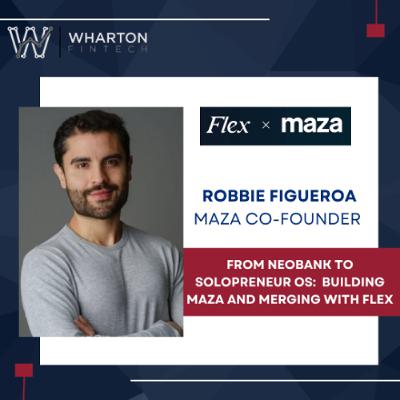
In this episode of the Wharton Fintech podcast, Djavaneh sits down with Robbie Figueroa, co-founder and former COO of Maza, now Chief Business Officer at Flex following Maza and Flex’s merger in late 2024.
Robbie shares how growing up in Queens with immigrant parents from Brazil and Ecuador inspired him to tackle financial exclusion. What started as a Spanish-first neobank for underbanked consumers evolved into a platform tailored to solopreneurs operating in the informal economy. From onboarding thousands of users to building ITIN application tools and automating entity formation, Maza met customers where they were, and grew alongside them.
We discuss:
How Maza identified and served Spanish-speaking solopreneurs
Why distribution often beats product innovation in fintech
The strategic fit between Maza and Flex and what’s next
Robbie also shares hard-won advice for early-stage founders and reflects on what it takes to build products that truly resonate with underserved users.
Whether you’re passionate about inclusive fintech, curious about startup pivots, or exploring founder-to-operator transitions, this episode is full of insight.
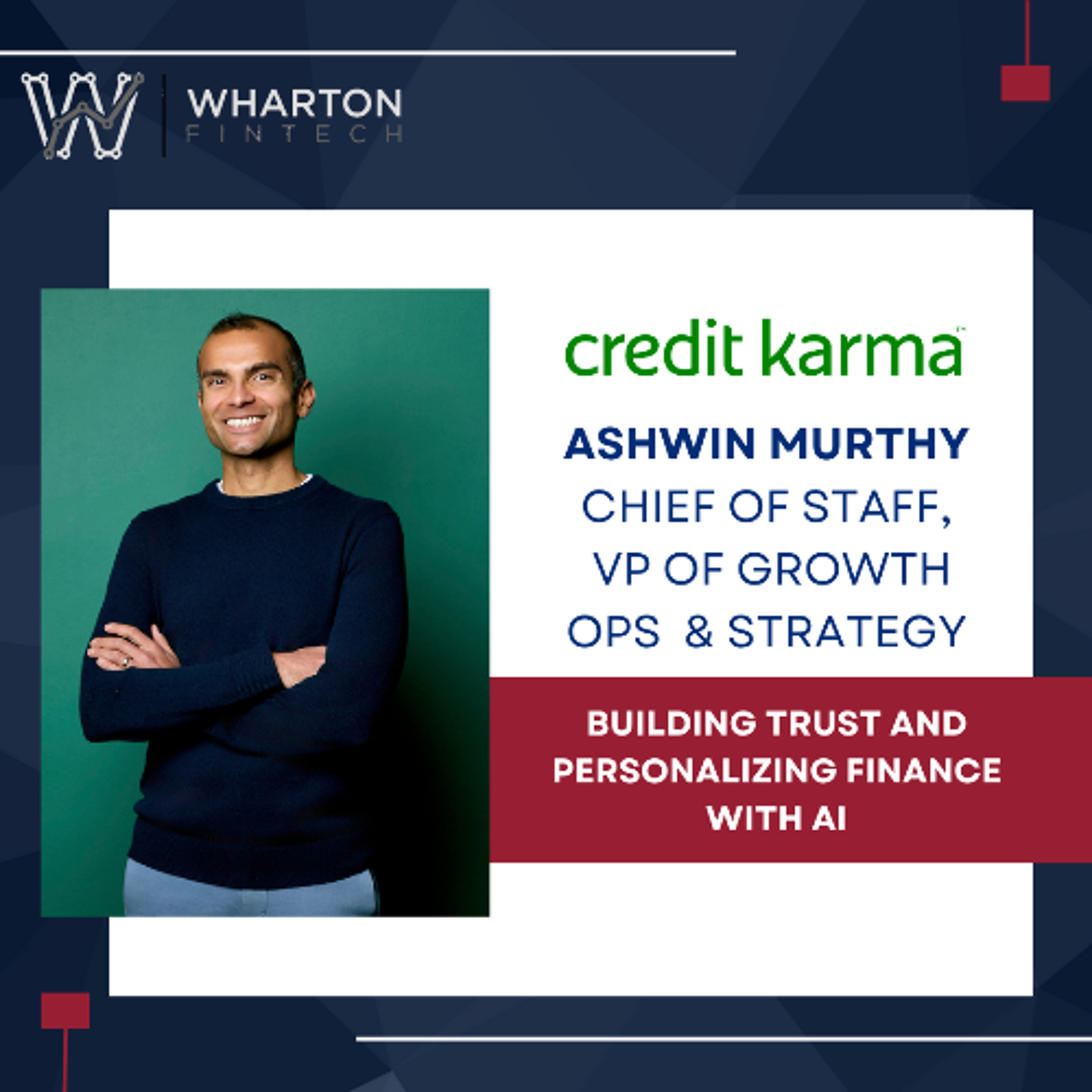
In this episode of the Wharton Fintech Podcast, host Sabrina Fathi speaks with Ashwin Murthy, Chief of Staff and VP of Growth Operations and Strategy at Credit Karma, about how one of the most recognizable names in consumer fintech continues to evolve.
Ashwin shares his journey from investment banking and consulting to leading strategy at Credit Karma. He discusses the company’s expansion from free credit scores to taxes, savings, and more, and how data, trust, and personalization have been critical to that journey. The conversation also dives deep into GenAI’s role in financial decision-making, Credit Karma’s evolving partnership with Intuit, and the future of financial access.
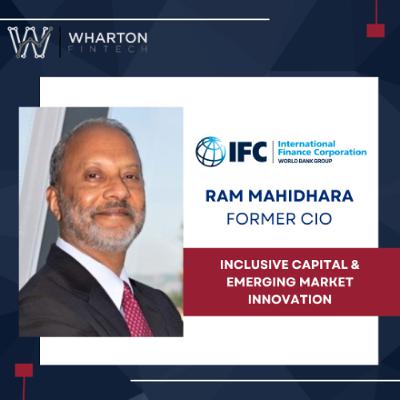
In today’s episode, Kimberly Zhang sits down with Ram Mahidhara, former Chief Investment Officer at the International Finance Corporation (IFC), part of the World Bank Group. Ram reflects on his decades of experience investing across emerging markets, driving inclusive growth through private capital, and championing the role of fintech in global development.
Tune in to hear about:
• How technology and private investment are reshaping financial inclusion in emerging economies
• Lessons from leading cross-border investment strategies at scale
• Ram’s perspective on the role of fintech in sustainable development and what’s next for innovation in underserved markets
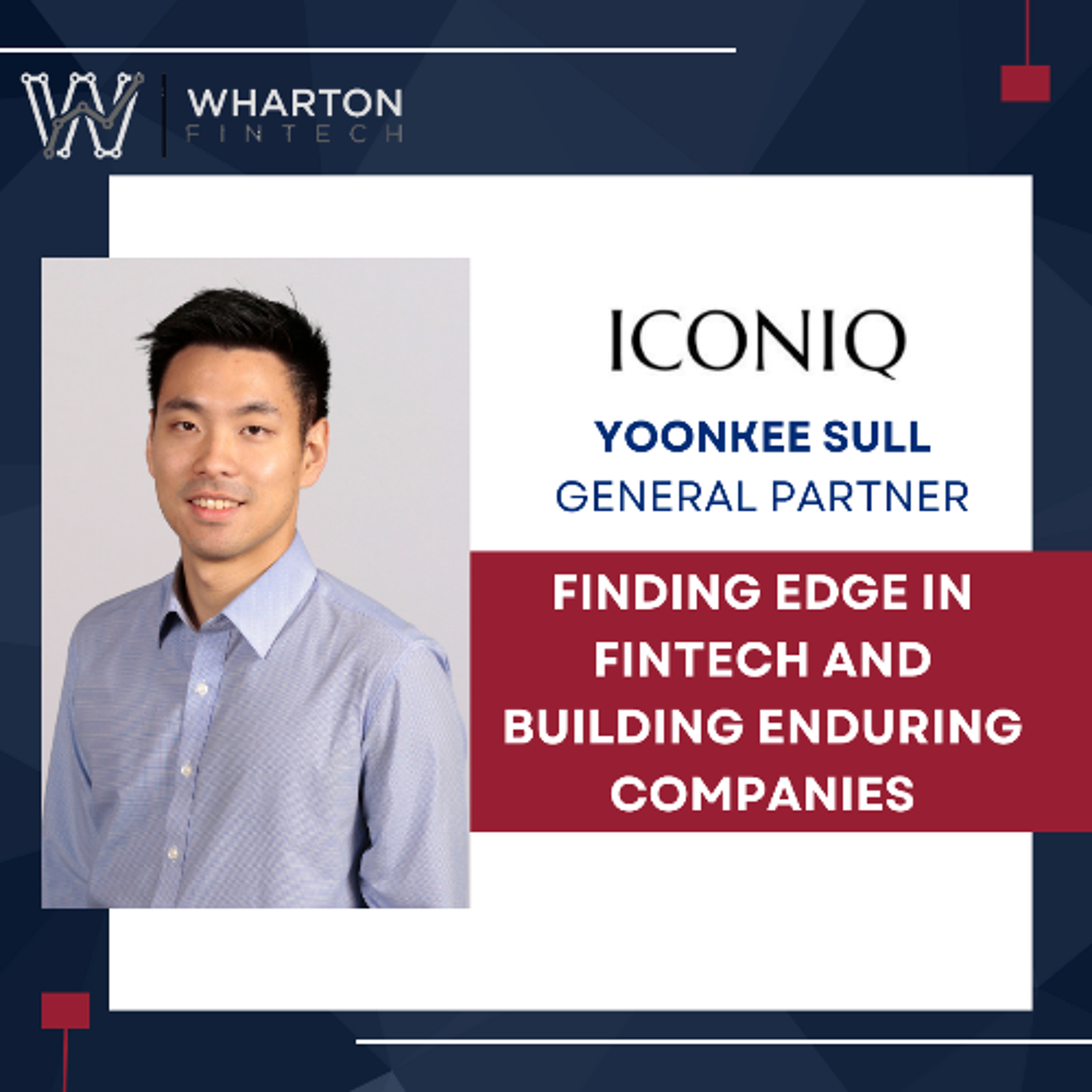
In this episode of the Wharton Fintech Podcast, hosts Sabrina Fathi and Wesley Aster speak with Yoonkee Sull, General Partner at ICONIQ, about building category-defining fintech companies through every market cycle. Yoonkee reflects on his journey from early ICONIQ associate to GP, lessons from backing leaders like Chime, Groww, Adyen, Wealthsimple, and Ramp, and what it takes to earn trust with founders over the long term.
They unpack how startups can differentiate in a crowded space, how embedded finance is reshaping distribution, and why knowing your customer better than anyone else is the ultimate moat. With thoughtful takes on unit economics, financial inclusion, and the real use cases for AI and blockchain, this conversation is a must-listen for founders, operators, and investors navigating the next chapter of fintech.
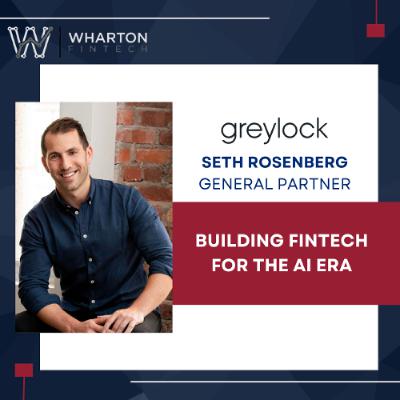
In this episode of the Wharton Fintech Podcast, host Sabrina Fathi chats with Seth Rosenberg, General Partner at Greylock, about what it takes to build and back enduring companies at the intersection of fintech and AI. Seth shares lessons from launching Facebook Messenger, insights on founder-market fit, and how great early-stage companies validate ideas, build defensibility, and navigate market shifts. With deep takes on AI, blockchain, and the future of financial services, this episode is packed with practical wisdom for builders and investors alike.
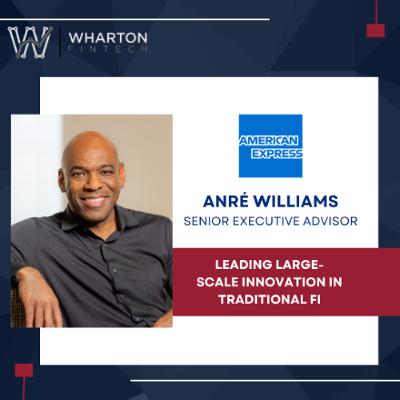
In today’s episode, Kimberly Zhang sits down with Anré Williams, Senior Executive Advisor at American Express and former CEO of American Express National Bank. Anré reflects on his 35-year journey at American Express—leading global merchant services, digital innovation, and banking operations—while offering an inside look at how to drive transformation in a legacy financial institution.
Tune in to hear about:
• Key lessons from leading large-scale digital initiatives in highly regulated environments
• How to balance innovation with compliance and customer trust in a changing financial landscape
• Anré’s perspective on the future of AI, embedded finance, and what it takes to build resilient, forward-looking financial services
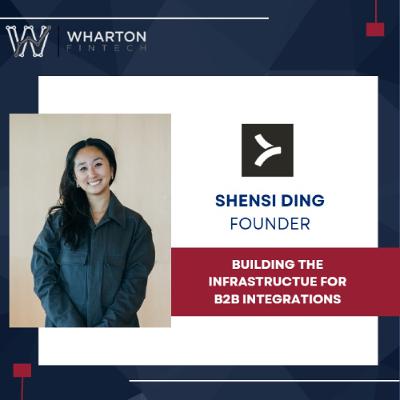
In today’s episode, Jackson Ellis hosts Shensi Ding, the co-founder of Merge, a unified API platform that simplifies B2B integrations across categories like HR, accounting, and CRM. Shensi shares her journey, the playbook behind scaling a developer-first GTM motion, and how the best founders balance product intensity with storytelling.
Tune in to hear about:
- How Merge built a category-defining product by focusing on the "plumbing" behind software
- Why developer empathy and real documentation became their biggest competitive moat
- The challenges and wins of fundraising while scaling in a crowded API ecosystem
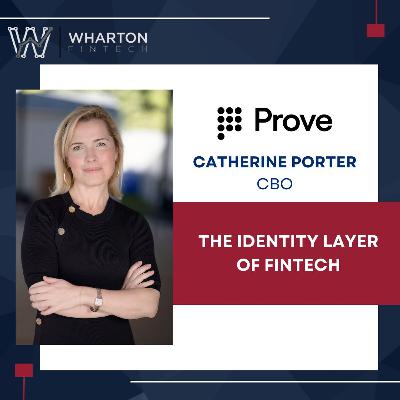
In this episode of the Wharton Fintech Podcast, host Sabrina Fathi speaks with Catherine Porter, Chief Business Officer at Prove, a leading platform in digital identity verification and authentication. Catherine shares her journey from Silicon Valley to spearheading innovation in identity security. They explore how AI is reshaping fraud prevention, the future of portable identity, and how Prove is helping companies build trust in an increasingly digital world.
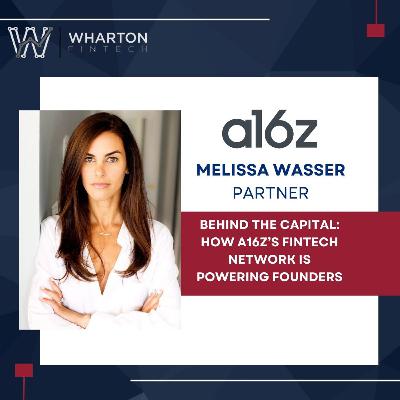
In today’s episode, Jackson Ellis hosts Melissa Wasser, the Partner and Head of the Fintech Capital Network at Andreessen Horowitz (a16z), a leading venture capital firm backing bold entrepreneurs building the future through technology.
Tune in to hear about:
- Melissa’s career journey from Goldman Sachs to FT Partners to leading fintech support at a16z
- How the Fintech Capital Network helps founders navigate fundraising, M&A, and strategic partnerships
- The tradeoffs between equity and debt financing, and how fintech founders can structure smarter capital strategies

In today’s episode, Zoey Tang speaks with Marc Andrusko, Partner at Andreessen Horowitz (a16z), where he focuses on fintech and B2B software investments. Marc’s current investment interests span capital markets, AI applications, payments infrastructure, and companies operating at the intersection of fintech and other sectors.
Marc shares how his journey—from working in interest rate sales and trading at Goldman Sachs to leading personal financial management at Plaid—influenced his perspective on fintech and broader B2B applications. In addition to his work at a16z, Marc is known for hosting what some may call "the Met Ball of finance"—a gathering that bridges executives and startups within New York City’s vibrant financial services ecosystem.
Tune in to hear about:
-Marc’s path from Goldman Sachs to Plaid and eventually a16z
-Opportunities in Capital Markets
-AI and Finance
-AI x Accounting (read more about Marc's latest perspectives here: https://a16z.com/generative-ai-in-accounting/)
For more FinTech insights, follow us on:
Medium: medium.com/wharton-fintech
Twitter: twitter.com/whartonfintech
Instagram: instagram.com/whartonfintech
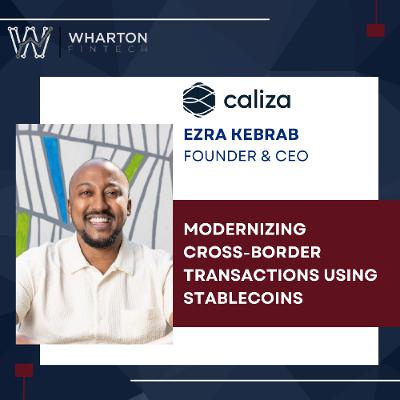
In today's episode, Wesley Aster speaks with Ezra Kebrab, Founder and CEO of Caliza, a cross-border payments platform leveraging stablecoins to eliminate geographic barriers by allowing companies around the world to open digital dollar accounts for their users to save and transact. Ezra shares how is personal journey - from his childhood to his experience at Visa and Intuit - inspired him to build infrastructure for the next generation of global payments.
Tune in to hear about:
- Ezra's path from Intuit and Visa to launching Caliza
- The problems Caliza solves for businesses in Brazil and the company's recent expansion to Mexico and Asia
- The advantages of using stablecoins over traditional cross-border systems like SWIFT
- Caliza's 2024 raise with Initialized, Quona, Abstract Ventures, Digital Currency Group, and others
For more FinTech insights, follow us on:
- Medium: medium.com/wharton-fintech
- Twitter: twitter.com/whartonfintech
- Instagram: instagram.com/whartonfintech
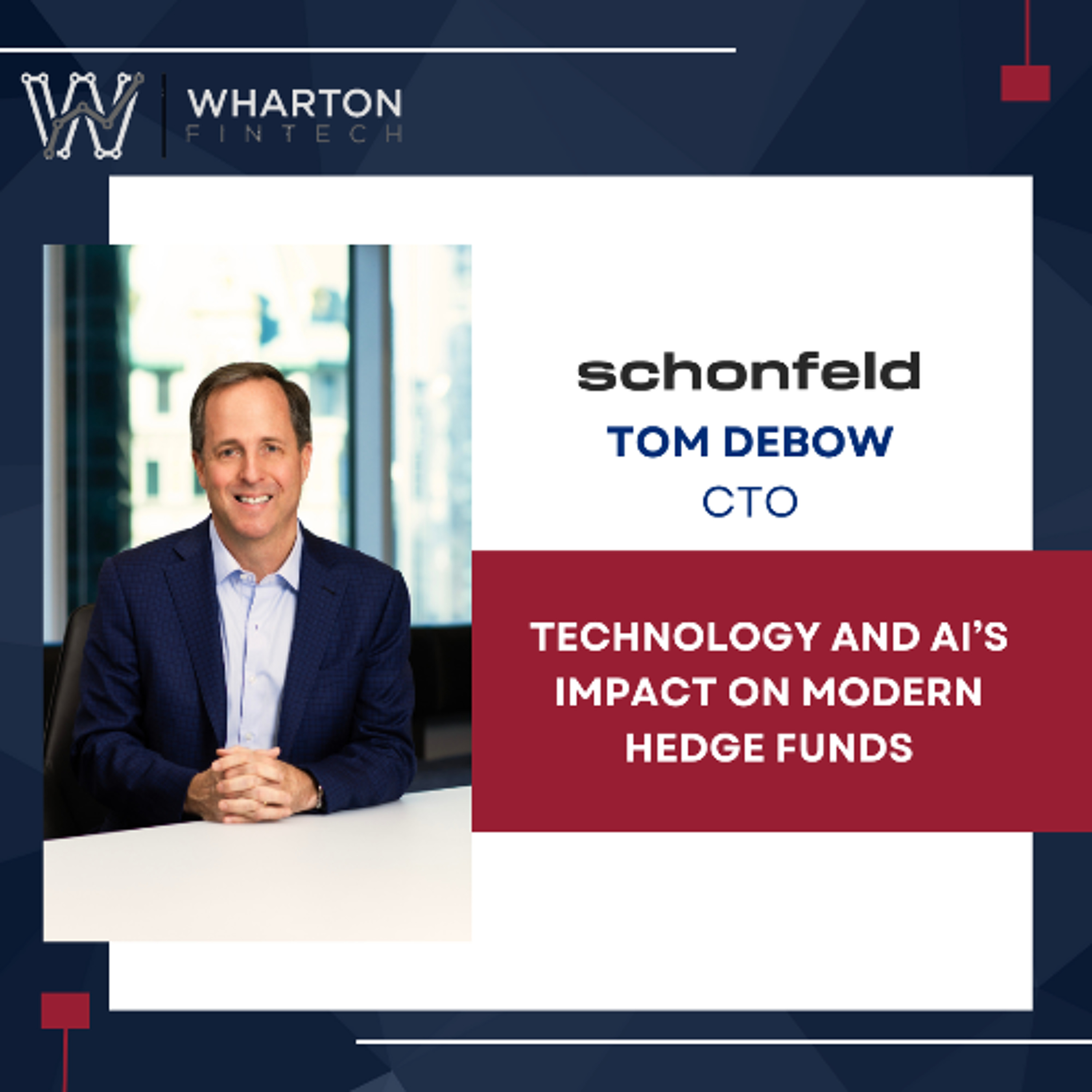
In this episode of the Wharton Fintech Podcast, Sabrina Fathi sits down with Tom DeBow, CTO of Schonfeld Strategic Advisors, to explore how AI and advanced technology are reshaping modern hedge funds. Tom shares insights from his journey through top-tier firms like SAC Capital and Alphadyne, and dives into Schonfeld’s pragmatic yet forward-thinking approach to AI adoption. From developing the firm’s in-house AI tool to enhancing talent workflows and unifying data systems, Tom discusses how AI is driving smarter, faster decision-making across the organization without replacing the human edge.

Comments

Download from Google Play

Download from App Store
 United States