


 Claim Ownership
On The Pen With Dave Knapp
Subscribed: 134Played: 5,125
Subscribe

© 2025 On The Pen With Dave Knapp
Description
Dave Knapp brings you your weekly dose of everything in the news about incretin mimetic, diabetes and obesity therapies, like Zepbound and Mounjaro, Ozempic and Wegovy, and even investigational treatments like CagriSema and Retatrutide!
164 Episodes
Reverse
https://www.OTPLinks.com Hosted by Simplecast, an AdsWizz company. See pcm.adswizz.com for information about our collection and use of personal data for advertising.

Pharma Influence & Why Patient Voices Matter
Lobbying Power: Eli Lilly, Novo Nordisk, and Government Access
Why GLP-1 Medication Access Is at Risk
Introducing Sabina Hemi & the Mission of GLP Winner
Why Compounded GLP-1s Matter for Real Patients
The Federal “Safe Drugs” Bill: What It Claims vs What It Does
Why This Bill Raises Red Flags for Patients
What Real Compounding Safety Reform Would Look Like
How Compounding Pharmacies Are Actually Regulated Today
Prescription Reporting vs Patient Safety
Is This Bill About Safety or Litigation Data?
Dose Flexibility, Personalized Medicine, and Compounding
Florida SB 860: A Direct Threat to Compounded GLP-1s
Why Florida Compounding Impacts the Entire Country
Why Obesity Medications Are Being Singled Out
Active Pharmaceutical Ingredients (API): What Patients Should Know
FDA Oversight, the “Green List,” and State Overreach
Why Florida’s API & COA Requirements Don’t Add Up
FDA Inspection Backlogs & Impossible Compliance Standards
Branded Drug Safety Issues vs Compounding Scrutiny
Catalent, Novo Nordisk, and Manufacturing Concerns
Counterfeit Ozempic: The Overlooked Safety Crisis
Why Supply Chain Integrity Should Be the Priority
What Patients Can Do Right Now
Petitions, Advocacy, and Making Your Voice Heard
Florida Residents: Why Local Action Matters
Final Thoughts on Access, Power, and Patient Advocacy Hosted by Simplecast, an AdsWizz company. See pcm.adswizz.com for information about our collection and use of personal data for advertising.

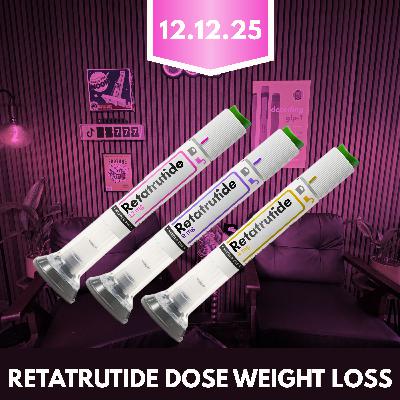
Retatrutide is years away from FDA approval and yet the fight over access, price, control of this medication is already well underway. That's what this podcast is going to be about today. There's well over a hundred thousand people by my estimates who are already on some form of this medication today. And that should tell you enough about how disruptive this molecule is and will be. It is a game changer among game changer. We've been talking about it for three years here at On The Pen, well before any of your favorite gym bros were talking about Retatrutide. We were talking about Reta, who tried Retatrutide here at On The Pen. And that's because we identified this triple agonist as a game changer among game changers. So This is going to be a very Retatrutide heavy episode, and so I hope you'll join us and stick with us if this is a topic you enjoy, because I think this is really going to effectively lay the groundwork for what accessibility to this medication will look like. So let's get into it.
Welcome to the On The Pen Podcast with your host, Dave Knapp. Welcome to the On The Pen, the weekly dose podcast. This is our weekly roundup in incretin memetic news. And frankly, there's no news that is bigger than Reta-Trutide news. Just find me any news that is bigger than the data that we got on Reta-Trutide. Now, we already did a video about the Triumph Phase II clinical trials that we got in osteoarthritis of the knee. You can go back and check out that video if you'd like more data. So we're not gonna super... rehash the data. We'll go over at a high level what the data showed us. We're not going to go over how the medicine works, because by now we all know that it's the triple agonist, right? If terzapatide was a dual agonist, GLP-GIP, Retatrutide is the triple agonist that adds to it a glucagon component, which is absolutely just shredding, shredding liver fat. It is absolutely revving up people's metabolism and showing a tremendous amount of weight loss.
So let's get into what the weight loss looked like in this first trial, because there are longer obesity trials where, where the primary outcome is the weight loss this was again a specific trial in measuring pain reduction in folks with osteoarthritis of the knee but check out these numbers these are placebo adjusted meaning it's taking the two percent out that people lost on placebo but looking at these numbers Folks on one milligram over forty eight weeks lost seventeen percent. They bumped up to four milligrams. Those folks lost twenty two percent. So right there at the lowest dose, you're already reaching the efficacy of today's drugs that are on the market, like triseptide and semaglutide in their various forms. If you bumped up to eight milligrams, you saw twenty four percent placebo adjusted weight loss and at twelve milligrams, twenty six point four percent weight loss. Adding back in that two percent of the placebo that those on placebo loss, that's twenty eight point four percent weight loss in these forty eight weeks at the highest dose.
When you adjust for some of the more real world outcomes, you kind of ding the numbers a little bit based upon people who quit the drug, et cetera. Those numbers look more like a twenty percent weight loss and twenty three point seven percent weight loss at the highest dose. But even then, you're still seeing a drug that is better than the current drugs that are on the market. around forty eight percent of patients on Retatrutide lost greater than twenty five percent. And then if you were at that twelve twelve milligram dose, that highest dose patients lost fifty nine percent of patients lost more than twenty five percent of their body weight. There was a subset that lost thirty percent of their body weight and some even over thirty five percent of their body weight on Retatrutide.
So the lower doses compete with today's best drugs and the upper doses are entering into bariatric surgery level weight loss. And that's putting the whole obesity system on notice and probably a lot of surgeons nervous because typical body weight loss was something like the street sleeve gastrectomy. For example, it's about eighteen to twenty five percent body weight. The Roux-en-Y gastric bypass twenty five to thirty five percent weight loss or the duodenal switch thirty to forty percent weight loss. So the upper doses of Ritutrutide overlap with sleeve and bypass outcomes without any surgery. It's incredible. It is a game changer among game changer. It is the new benchmark in obesity medicine. And there's actually more data, like I said, landing in later twenty twenty six. The longer duration will historically, if history is a marker, equal more weight loss than we even see here at this forty eight weeks.
We have an interview that will be airing later this week on our channel and on our podcast with our friend Mimi from Australia who just wrapped up her clinical trial on Retatrutide. They ended it like ten weeks early on her, which was a huge bummer to her. So we're going to hear from her because she had to end abruptly. We're going to hear her story, an incredible story. She's one of those folks that got up that thirty five percent body weight loss in the time that she was on Retatrutide. So, this is just showing you that these drugs are not simply an alternative to bariatric surgery. We are approaching a point in time where these are on par with bariatric surgery, and as people are on this Reta-Trutide trial, you see that these numbers aren't plateauing either. So we will see stronger weight loss numbers the longer that these folks are on this trial. And I think you'll see some of those numbers in that population of folks on the higher doses eclipse maybe even some of what we see with some of these bariatric surgeries.
the real story that i think is taking shape here is not in how powerful Retatrutide is because we've literally been expecting or anticipating this kind of data for more than three years at on the pin we've been talking about this and i think that's sort of reflected in the fact that you didn't see this massive spike in eli lilly stock wall street was expecting this as well Um, so it was on par, I think with expectations, but the expectations are astronomical compared to previous options that were available to patients and all the innovation in the world. All of these drugs, we talked at last week about WV, E double Oh seven, the James Bond of weight loss that targets fat, not only targets fat loss, but it also targets the promotion of building of, of lean muscle mass. We're talking about an insane future in obesity medicine. But none of it means anything if people can't access it.
And that's really where we are today in terms of ensuring that there's going to be an option for everyone. And that's sort of what I want to get into today, because Lilly wants Retatrutide to be classified as a biologic, so not a traditional small molecule drug like you've seen every other incretin and nutrient-stimulated hormone-treating obesity on the market to date. They're trying to get this classified as a biologic. Now, we talked about this before on the podcast. That matters in three major ways. It affects the exclusivity length of time that a pharmaceutical company has on a drug. That goes from, I believe, five years of market exclusivity to twelve. It affects compounding rules because biologics cannot be compounded. And then that gives the pharmaceutical companies a tremendous amount of pricing power in the marketplace, because essentially there's no competition and there's no competition for a long time.
But this whole argument about getting this classified as a biologic is not about safety. It's about protection and we're going to get into it. So let's explain this here. This is why Retatrutide really is not a biologic arguably. So biologics are large proteins. There are hundreds of or even thousands of amino acids grown in living cells that are sensitive to tiny manufacturing changes. Retatrutide is a short chain peptide. It's chemically synthesized and it is below the traditional biological size thresholds when it comes to how those things are defined. We'll just leave it at that. So even though it acts like a biologic in the body, it's made like a drug. It's made like a small molecule drug. And if it's treated as a drug, they get, like I said, five years of market exclusivity.
Now, really a lot of confusion around what this means, but essentially the first five years of the life of a drug, the patent can be challenged for a number of reasons. We've seen patent challenges right now are going on in the courts for both semaglutide and terzepatide. But these companies are guaranteed that five years of market exclusivity, no matter how those patent lawsuits shake out. That five years jumps to twelve years with the biologic. So ultimately, there's no biosimilars that are allowed during that twelve year window. Again, with terzapatidin and semaglutide, it's five years. They could lose their market exclusivity within five years of the release of the patent. twelve years with a biologic. So if they lose their patent challenges on Trezabitide, they still have some time left with market exclusivity for the drug. They likely will not lose those, but that jumps to twelve years.
And I think the most important thing to understand about the reclassification of Reta-Trutide to a biologic would mean that, 503A and 503B pharmacies are effectively locked out of compounding this medication, 503Bs would have some latitude arguably, but they would face extreme barriers. Routine compounding becomes legally and technically restricted because biological status doesn't slow compounding down. It actually shuts the door or almost completely shuts the door. Biologics not only would allow Lilly to have longer market exclusivity, no compounding, but it would allow them to command a higher price in the marketplace because A, they get this designation and the
https://www.otplinks.com
0:00 Welcome & today’s focus: Retatrutide and “chasing the biggest number”
1:11 On The Pen intro, live schedule (Mon/Wed/Fri) & housekeeping
2:10 How Dave first heard about retatrutide (work trip, early phase 1 data)
3:35 Flashback clip: early excitement about retatrutide phase 3 trials
4:40 Why this new retatrutide data feels different for obesity medicine
5:32 TRIUMPH-4 trial overview: obesity + knee osteoarthritis population
7:00 Headline results: 28.7% average weight loss, surgery-level efficacy
8:47 Breaking down weight loss by dose (9 mg vs 12 mg; 25–35% loss rates)
11:05 What “efficacy estimate” really means (race-track analogy)
13:28 Real-world view: treatment-regimen estimate (20–23.7%) vs trial ideal
15:40 Mechanism refresher: GIP, GLP-1, glucagon and why RETA differs from TIRZ
18:05 Side effects, dysesthesia/allodynia & who stopped treatment (BMI differences)
21:02 Why the lower doses matter & who actually needs 30% weight loss
24:15 From “just make the scale go down” to quality of weight loss & body composition
28:05 Future focus: health, longevity, and peptides beyond hitting goal weight
30:40 Viewer Q&A: combining RETA + TIRZ, amylin (eloralintide) combos & “talk to your doctor”
34:38 How retatrutide changes the next decade of obesity treatment conversations
37:22 News update: high-dose Wegovy 7.2 mg approval in the EU & US outlook
40:55 Orforglipron oral GLP-1: liver-signal concerns & fast-track FDA review
45:20 Why small-molecule oral GLP-1s aren’t the same as injectable peptides
48:40 New topic: Indiana “Safe Drug Act of 2025” and why Dave is concerned
51:02 Production caps, “essentially a copy” language & shifting power from prescribers to FDA
54:28 How the bill undermines personalization while ignoring real safety tools
57:05 Safety theater vs real safeguards: API sourcing, sterility & adverse-event reporting
59:45 Who actually gets hit: compliant 503A/503B compounders vs existing bad actors
1:02:05 Call to action: petition at otplinks.com & why patient voices matter
1:05:10 Change.org impact, media attention & centering the patient perspective
1:07:30 Final Q&A, subscribe, obesity.news email list & closing thanks Hosted by Simplecast, an AdsWizz company. See pcm.adswizz.com for information about our collection and use of personal data for advertising.

Episode Timeline & Main Topics
00:00 — Opening & Community Update
• First week doing the podcast fully live thanks to the On The Pen community
• Overview of why this week’s news is a major turning point in obesity medicine
02:30 — Introducing the “One-and-Done” Obesity Drug (Wave Life Sciences)
• WVE-007 early data drops
• Why this therapy is unlike GLP-1s or any nutrient-stimulated hormone
• Fat loss results and lean-mass increase
06:30 — How Wave-007 Works: INHBE Gene Silencing
• Mechanism behind visceral fat reduction
• Why this shifts the field toward “quality of weight loss”
09:15 — Why Lean-Mass Preservation Matters
• Current GLP-1 medications and muscle loss
• Why women dominate trial enrollment and the larger implications
• Medicare patients and the coming wave of GLP-1 coverage
13:45 — The Future of Maintenance Therapies
• Fractyl Health Revita results
• Lilly’s orforglipron maintenance design
• Why “holding the line” after GLP-1 therapy is the next major category
17:30 — Amylin Agonists: Cagrelintide vs. Eloralintide
• Novo’s delays and the strategy behind them
• Lilly’s surprising phase 2 results (up to 20% weight loss)
• Combination therapies with tirzepatide or retatrutide
22:30 — FDA Pipeline Acceleration
• Potential removal of traditional phase 3 trials
• How this speeds up the arrival of next-generation therapies
24:15 — Oral GLP-1 Small Molecules (Structure Therapeutics)
• Alaniglipron data and the stock surge
• Comparisons to orforglipron and past failures like denuglipron
• Why Dave remains skeptical
28:40 — Sponsor Break: Shed & Shapa
• Access, coaching, and patient support
• Using a numberless scale to build a healthier relationship with weight tracking
31:10 — Counterfeit Ozempic Warning
• New fake lot discovered in U.S. pharmacies
• How to identify counterfeit pens
• Why this should be a national headline
• The broader question of drug supply-chain vulnerability
36:00 — Closing Thoughts on the Future of Obesity Medicine
• Moving from “more weight loss” to “better weight loss”
• Why the field is closer than ever to reshaping obesity as a disease
• Gratitude for the community making full-time coverage possible Hosted by Simplecast, an AdsWizz company. See pcm.adswizz.com for information about our collection and use of personal data for advertising.
Topics We Cover:
00:00 – New data from Harvard/Mass General may classify nearly 70% of adults as having obesity
03:00 – A new oral triple agonist shows record-setting absorption rates
07:00 – Fractal Health’s Revita procedure: weight maintenance after stopping GLP-1s
12:00 – Zepbound vial prices drop (full breakdown by dose)
16:00 – Dave’s personal experience switching off Mounjaro and intense hunger return
22:00 – Novo Nordisk’s EVOKE/EVOKE+ Alzheimer’s trial: what the data really means
29:00 – Why GLP-1 neurological research is just getting started
33:00 – Updates on access, partners, and major news coming soon for Medicare patients
If you’re on Wegovy, Mounjaro, Zepbound, Saxenda, Trulicity, or compounded versions, this episode gives you the insight and context you need to have more competent and confident conversations with your doctor.
Bullet Point Summary of the Podcast Episode
New Obesity Measurement Data (Harvard/Mass General Study)
Harvard and Mass General propose adding waist circumference to BMI to better diagnose obesity.
Traditional BMI misses key factors like muscle mass and body composition.
Using the updated measure, Americans classified as obese jumps from ~43% to almost 69%.
This means 7 out of 10 U.S. adults would now qualify as having the disease of obesity.
Dave notes this validates many people who “feel” metabolically unwell despite a “normal” BMI.
Reinforces his claim that “most people should be talking to their doctors about GLP-1s.”
New Oral Triple Agonist (Ascletis – ASC41/ASC? Molecule)
From Ascletis (A-S-C-L-E-T-I-S), developing an oral triple agonist targeting:
GLP-1
GIP
Glucagon
Similar in mechanism to retatrutide, expected around 2027.
Preclinical (animal) data show stunning results:
Oral bioavailability of 4.2%
9× higher than tirzepatide
30× higher than oral semaglutide
6× higher than oral retatrutide
57× greater drug exposure than oral retatrutide
Half-life ~56 hours
Stronger receptor activation than retatrutide in vitro
Suggests potential for the first powerful oral triple agonist—worth watching.
️ 3. Discussion of the Gray Market / TikTok Experience
Dave briefly recounts losing his TikTok account and landing in an algorithm filled with teenagers promoting gray-market “retatrutide.”
Expresses concern over unregulated peptide sales, especially to minors.
Fractal Health’s New Data – Weight Maintenance After Stopping GLP-1s
New results from the Reveal One study (Fractal Health).
Participants: lost 24% of body weight on GLP-1s → stopped injections → got one Revita procedure.
At 6 months post-GLP-1 discontinuation:
Weight changed only 1.5% (vs. ~10% regain in typical off-drug trials)
HbA1c barely shifted
Safety profile clean
Suggests possible long-term weight maintenance without injections through gut mucosal re-lining.
Dave describes his own recent attempt to switch drugs and significant hunger return.
Food Noise & Biologic Hunger
Dave discusses how stopping Mounjaro caused terrifying, primal hunger.
Describes the distinction between:
Food noise (brain-based thoughts)
Hunger signals (biological/animalistic)
Reinforces why many patients cannot maintain weight loss without support.
Zepbound (Tirzepatide) Cash-Pay Price Reductions
Eli Lilly drops cash-pay vial pricing:
2.5 mg: $349 → $299
5 mg: $499 → $399
7.5–15 mg: $499 → $449
Community feedback (informal poll):
Most say still too high to leave compounded versions.
Many would switch to branded if price hit $200–$300.
Dave notes the Most Favored Nations agreement will push GLP-1 prices toward $250/month within 24 months.
Alzheimer’s Study (Novo Nordisk – EVOKE & EVOKE+)
Oral semaglutide (Rybelsus, 14 mg) did not slow Alzheimer's clinical progression.
Biomarkers improved but daily function and cognitive decline did not improve vs placebo.
Important context:
Oral Rybelsus is a weak form of semaglutide; stronger versions (like Wegovy 2.4 mg or upcoming high-dose oral Wegovy) not tested.
Weight loss is not desirable in Alzheimer’s patients, influencing drug selection.
Dave emphasizes:
This was a nearly $700M trial and an act of scientific courage.
This is NOT the end of GLP-1 Alzheimer’s research.
Future molecules may target neurological pathways without suppressing appetite.
Mentions Lilly’s brenipatide, a GIP receptor agonist being developed for:
Addiction
Opioid dependency
Possibly asthma
️ 8. Access, Cost, and Patient Empowerment
Highlights Shed as a partner offering telehealth GLP-1 access.
Notes many patients hide GLP-1 use from their primary care doctors.
Reinforces OTP’s mission: better, more honest conversations with clinicians.
Shapa (Numberless Scale) & Dave’s Personal Update
Dave explains how the Shapa numberless scale helped him stay engaged during weight fluctuations.
Finds stepping on “zones” (green/gray/blue) less emotionally damaging than numbers.
Closing Notes
Promises upcoming Eli Lilly savings card update.
Encourages subscribing, liking, and enabling notifications for algorithm visibility.
Thanks OTP community for amplifying patient-centric obesity medicine news. Hosted by Simplecast, an AdsWizz company. See pcm.adswizz.com for information about our collection and use of personal data for advertising.
Follow Us Everywhere:
https://www.otplinks.com
Sign up for Emails:
https://www.obesity.news Hosted by Simplecast, an AdsWizz company. See pcm.adswizz.com for information about our collection and use of personal data for advertising.
Het Exclusive OTP Discounts! Hosted by Simplecast, an AdsWizz company. See pcm.adswizz.com for information about our collection and use of personal data for advertising.

Get Exclusive OTP Savings!
Https://www.otplinks.com Hosted by Simplecast, an AdsWizz company. See pcm.adswizz.com for information about our collection and use of personal data for advertising.

Exclusive OTP Savings
HTTPS://www.otplinks.com Hosted by Simplecast, an AdsWizz company. See pcm.adswizz.com for information about our collection and use of personal data for advertising.

EXCLUSIVE SAVINGS FOR YOU!
www.OTPLinks.com Hosted by Simplecast, an AdsWizz company. See pcm.adswizz.com for information about our collection and use of personal data for advertising.

GET EXCLUSIVE OTP SAVINGS!
www.OTPLinks.com Hosted by Simplecast, an AdsWizz company. See pcm.adswizz.com for information about our collection and use of personal data for advertising.

VIEW EXCLUSIVE OTP SAVINGS!
http://otplinks.com/ Hosted by Simplecast, an AdsWizz company. See pcm.adswizz.com for information about our collection and use of personal data for advertising.

GET ACCESS TO OBESITY CARE AND MEDS AND SUPPORT OTP:
https://lddy.no/1ndi6
USE CODE: OTP25
VISIT ALL OUR LINKS:
https://linktr.ee/manonthemounjaro Hosted by Simplecast, an AdsWizz company. See pcm.adswizz.com for information about our collection and use of personal data for advertising.
Visit our Sponsors and check out EXCLUSIVE OTP Savings!
www.OTPLinks.com
www.tryshed.com (use code OTP25 to save 25%) Hosted by Simplecast, an AdsWizz company. See pcm.adswizz.com for information about our collection and use of personal data for advertising.

SUPPORT OUR WORK:
OTPLinks.com
💉 Story 1 — Fractyl Health’s One-and-Done Gene Therapy for Obesity
Fractyl Health just dropped preclinical results showing their GLP-1 + GIP gene therapy candidate RJVA-002 produced almost 30% weight loss in mice after a single dose. I sat down with Dr. Harith Rajagopalan, CEO of Fractyl Health, to talk about how this new Rejuva® platform works, what it means for people living with obesity and type 2 diabetes, and why gene therapy might be the future of metabolic care.
🏛️ Story 2 — Medicare Coverage for GLP-1s? Dr. Oz Drops a Hint
At the Aspen Institute, CMS Administrator Dr. Mehmet Oz said even a comment on GLP-1 coverage would be “market moving.” We break down what that means, why the Trump administration shelved a rule that would’ve added obesity meds to Medicare coverage, and how that decision might now be a bargaining chip to lower drug prices in exchange for tougher enforcement on compounding.
⚖️ Story 3 — The Retatrutide Ruling and the Future of Compounded Access
A federal judge ruled the FDA acted “arbitrarily and capriciously” when it rejected Lilly’s bid to classify retatrutide as a biologic. That may sound technical, but if the FDA changes its stance, it could have huge implications for tirzepatide (Zepbound, Mounjaro) and semaglutide (Wegovy, Ozempic)—especially when it comes to compounding and patient access. Hosted by Simplecast, an AdsWizz company. See pcm.adswizz.com for information about our collection and use of personal data for advertising.

View All My Links:
https://www.OTPLinks.com
Join Ethan's Live:
2way.tv/ethansuplee Hosted by Simplecast, an AdsWizz company. See pcm.adswizz.com for information about our collection and use of personal data for advertising.
otplinks.com
stallybrand.com (code OTP10) Hosted by Simplecast, an AdsWizz company. See pcm.adswizz.com for information about our collection and use of personal data for advertising.
otplinks.com Hosted by Simplecast, an AdsWizz company. See pcm.adswizz.com for information about our collection and use of personal data for advertising.

https://linktr.ee/manonthemounjaro Hosted by Simplecast, an AdsWizz company. See pcm.adswizz.com for information about our collection and use of personal data for advertising.

Comments

Download from Google Play

Download from App Store
 United States