


Every Parent Is (Kind Of) Disabled
Description
What RFK gets wrong and why "being healthy for our kids' sake" shouldn't be the goal, with author Jessica Slice.
You are listening to Burnt Toast!
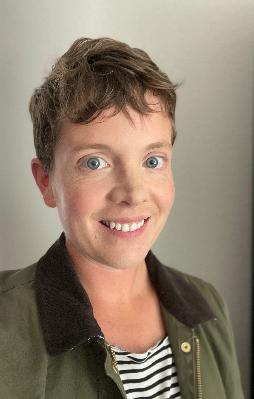
Today, my guest is Jessica Slice, a disabled mom and author of the brilliant new book, Unfit Parent: A Disabled Mother Challenges an Inaccessible World.
Jessica is also the co-author of Dateable: Swiping Right, Hooking Up, and Settling Down While Chronically Ill and Disabled, and This Is How We Play: A Celebration of Disability and Adaptation, as well as the forthcoming This Is How We Talk and We Belong. She has been published in The New York Times, The Washington Post, Alice Wong’s bestselling Disability Visibility and more.
As Jessica puts it, she originally wrote this book for disabled parents because their stories are not told or centered. But Jessica soon realized she was writing a book for all parents, because becoming a parent is its own kind of experience with disability.
There are so many important intersections between disability, justice and fat liberation. One that I think about a lot is how both groups come up against the question: Don’t we owe it to our kids to be healthy? Jessica’s perspective on these issues is expansive, inclusive and enlightening. I know you will get so much out of this conversation and from reading unfit parent.
You can take 10 percent off Unfit Parent, or any book we talk about on the podcast, if you order it from the Burnt Toast Bookshop, along with a copy of Fat Talk! (This also applies if you’ve previously bought Fat Talk from them. Just use the code FATTALK at checkout.)
PS. If you enjoy today’s conversation, please tap the heart on this post — likes are one of the biggest drivers of traffic from Substack’s Notes, so that’s a super easy, free way to support the show!
Follow Jessica: Jessicaslice.com. I’m on Instagram @JessicaSlice, I have a Substack where I send monthly notes about Disabled Parenting, and then usually try to get people to read whatever poem I’m fixated on that month.
Episode 190 Transcript
Jessica
I am an author and a mom, and Unfit Parent, which is the book we’re here to talk about, is my third book. But it’s really the book that has my whole heart. And it talks about disabled parenting, which is the thing I care very much about.
Virginia
I tore through this book. My copy is dog-eared every three pages, I think. It’s such a rich book. There’s so much in here. There’s so much for parents of all abilities—it just resonates in so many ways.
Let’s start by having you talk a little bit about how you define disability. You have a very expansive definition, and I think more listeners may identify with it than they even realize.
Jessica
So I have really thought a lot about the best definition for disability. And ultimately, I think everyone is better off if we don’t commit to a super firm delineation between disabled and not disabled. Because I think that delineation like ends up othering disabled people and further perpetuating stigma. And then I also think it puts a really inappropriate amount of pressure on non-disabled people that they should be sort of limitless and all powerful and show no weakness and hyper independent.
My definition is, if you benefit from the disability rights or the disability justice movement, then you are disabled.
It’s pretty easy to take that and say, “Well, everyone does.” Because anyone who pushes a stroller benefits from a curb cut or ramps, and additional time on testing is used for a lot of kids. So if you expand it too much, then everyone’s included. But I think that’s kind of fine! Having gone from someone who was not disabled to pretty disabled, I don’t feel threatened by having an inclusive and broad definition.
Virginia
More people in the club would not be a bad thing. It would actually make it easier to advocate for the changes we need.
Jessica
Exactly, exactly.
Virginia
That’s super helpful, and I just want to encourage listeners who are new to conversations about disability rights to keep that broad framing in mind as we go, because so often, we do really silo off into “able-bodied” vs “disabled.” So I appreciate you grounding us there.
Jessica
Especially for parents! When there’s this assumption that they’re not disabled and then therefore parenting shouldn’t be hard, or you shouldn’t be exhausted, or you shouldn’t need help, or you should be able to find the strength within yourself and the willpower to do all you need to do. I think that really particularly hurts parents.
Virginia
I underlined this part of the book, where you wrote about your own journey towards claiming “disabled” as an identity:
When my body shifted at 28 from one that could run work long hours and travel internationally to one that must mostly rest, I believed that I would go back to my old life once I solved the puzzle of my body. Until the hike in Greece during which I became disabled, I had the false belief that the life I wanted was a matter of sufficient effort and prudent decision making.
I read that and thought, well, this is also really describing diet culture. Because an experience a lot of us have had around gaining weight is that if we just work hard enough and have healthy habits and make the right choices, we’ll lose it. We’ll get back to that level of thin privilege we once enjoyed.
I’m just curious if that parallel resonates with you? Maybe it doesn’t at all! But wondering if you see this kind of diet culture driven mindset, does that show up elsewhere in our cultural attitudes around disability?
Jessica
Yes, I very much relate to that. And have been following your work and Aubrey Gordon’s work for a while and other anti-diet activists.
I think so much of the conversation overlaps. It’s a myth that there’s an ideal body, and pursuing this ideal body ends up hurting especially fat people and especially disabled people, but it hurts everyone to have this one type of body that we’re all trying to get, whether that’s based on size or ability.
Virginia
It just seems like it’s a mindset we apply to so many aspects of our life, too. We think, “Well, if I just do everything right, then I’m going to have this outcome and I’m going to achieve this goal or this ideal.” And so much of life is learning how often that’s just not the case.
Jessica
So I became disabled, as you know, very suddenly in one day. But it was the onset of a genetic condition. In the years prior to being disabled, I exercised every day, or five to seven days a week. I was always trying to optimize my eating. I was like, “Oh, okay, I’ll have oatmeal, but then I also need to add chia seeds and then walnuts, and then blueberries, and then almond butter. Like, how can this be the very best bowl of oatmeal? And then should I add protein powder, too?” And then lunch, it was like, “Okay, well, definitely fish. Like, I need omega three, and then fruit and vegetables, and then some complex carbs.” I was just considering every meal I ate. And then I became disabled—so obviously, eating and exercising that way didn’t insulate me from that, right?
Virginia
Yeah, so fascinating. Because people think they’re making their bodies bulletproof.
Jessica
Exactly that. Someone who ate like that should have been able to do anything.
So after I became disabled it took a while to get a diagnosis. And then it took me years to accept that I was disabled and that I would always be sick. And during that time, I tried any sort of therapeutic diet that was recommended to me, like cutting out gluten and then dairy, or much more protein, or no sugar, or suddenly nightshades were the enemy, and all these iterations.
As a hyper-achiever, I fully committed to each of these things. And then nothing helped. I mean, it’s not going to fix the makeup of my body to do those things. And I’ve now accepted the way my body is.
But it’s funny now that I have a real acceptance of my body and a much more distant relationship with the food I eat, I would say I eat probably below average. I have a bowl of fiber cereal in the morning, and then I need a lot of food each day. My second breakfast is usually a bagel with butter, cream cheese, bacon on it. I also add cucumber as a nod to health.
Virginia
A little cooling crunch. I get it.
Jessica
And


![[PREVIEW] The Year in Butters: 2025](https://s3.castbox.fm/97/0e/ee/44e1a0b26f934e73cb55f46ed899d75a91_scaled_v1_400.jpg "[PREVIEW] The Year in Butters: 2025")
![[PREVIEW] Hot People Problems](https://s3.castbox.fm/10/0c/c3/2c4186bb3ffaa958c5a4ee4d3888ceb6df_scaled_v1_400.jpg "[PREVIEW] Hot People Problems")
![[PREVIEW] Are Standing Pants Different from Sitting Pants?](https://s3.castbox.fm/be/2c/0c/f737b964d5f27610acbbd373a16c29a78e_scaled_v1_400.jpg "[PREVIEW] Are Standing Pants Different from Sitting Pants?")
![[PREVIEW] How Much Did You Pay Your Pumpkin Stylist?](https://s3.castbox.fm/fe/3d/c0/dd8784a5450c5e085b6336501f2ac0f261_scaled_v1_400.jpg "[PREVIEW] How Much Did You Pay Your Pumpkin Stylist?")

![[PREVIEW] Can A Body Acceptance Advocate Work for Weight Watchers?](https://s3.castbox.fm/ce/6e/f2/62fdccc162b0b6bc777b5875f2c6d64cfa_scaled_v1_400.jpg "[PREVIEW] Can A Body Acceptance Advocate Work for Weight Watchers?")

![[PREVIEW] Not Trying to Be Hot 25-Year-Olds](https://s3.castbox.fm/1c/8e/70/adb41c046a3fe07dc045af139e24fdcf89_scaled_v1_400.jpg "[PREVIEW] Not Trying to Be Hot 25-Year-Olds")


![[PREVIEW] Is Back To School A Diet?](https://s3.castbox.fm/29/4e/50/fbf3f4de138a90fdd48db11f2d64935074_scaled_v1_400.jpg "[PREVIEW] Is Back To School A Diet?")

![[PREVIEW] The Mel Robbins Cult of High Fives](https://c10.patreonusercontent.com/4/patreon-media/p/post/140044903/63d8db77f7bf4ae6adc056b196ba3c37/eyJkIjo3MiwiaCI6MzAwMCwic3RyaXBfYWxwaGEiOjEsInciOjMwMDAsIndlYnAiOjB9/1.jpg?token-hash=_lgawLhrnuO4p0kAmMk8Wmg8kk1uHDzmHglZCAmOM1I%3D "[PREVIEW] The Mel Robbins Cult of High Fives")
![[PREVIEW] When Parenting Influencers Slide to the Right](https://s3.castbox.fm/1a/37/0c/e4a5f3b307c64e00ce970d9cb6eb9d171d_scaled_v1_400.jpg "[PREVIEW] When Parenting Influencers Slide to the Right")


 United States
