


CBS EYE ON THE WORLD WITH JOHN BATCHELOR THE SHOW BEGINS IN THE DOUBTS ABOUT THE TRUMP ADMINISTRATION GAZA PLAN.. 10-6-25 FIRST HOUR 9-915 The Trump Peace Plan and the Problematic Role of the Palestinian Authority Guest: Peter Berkowitz Peter Berko
Update: 2025-10-07
Description
CBS EYE ON THE WORLD WITH JOHN BATCHELOR
THE SHOW BEGINS IN THE DOUBTS ABOUT THE TRUMP ADMINISTRATION GAZA PLAN..
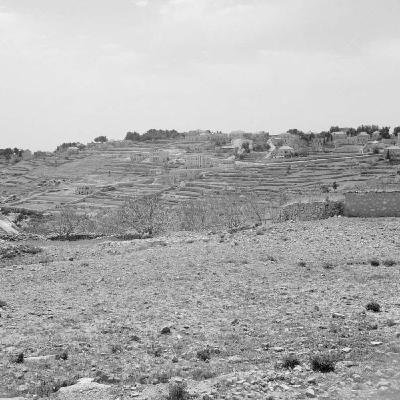
1950 RAMALLAH
10-6-25
FIRST HOUR
9-915
The Trump Peace Plan and the Problematic Role of the Palestinian Authority Guest: Peter Berkowitz
Peter Berkowitz examines the Trump peace plan, which calls for an immediate ceasefire, the release of 50 remaining hostages (living and dead) within 72 hours, and the disarming of Hamas. Hamas disarmament is a crucial Israeli war aim. The central challenge is the future role of the Palestinian Authority (PA), which Berkowitz argues is corrupt, incompetent, weak, and lacks democratic legitimacy, having not held elections since 2005. International recognition of a Palestinian state is viewed as counterproductive, as it rewards proponents of armed struggle. The plan anticipates a pathway toward a Palestinian state only after substantial and comprehensive PA reform, including ceasing terror incitement and abandoning the goal of Israel's destruction. Given the security challenges and the history of Palestinian rejection of a state coexisting with Israel, the realistic possibility of a two-state solution is seen as many years in the future.
915-930
The Trump Peace Plan and the Problematic Role of the Palestinian Authority Guest: Peter Berkowitz
Peter Berkowitz examines the Trump peace plan, which calls for an immediate ceasefire, the release of 50 remaining hostages (living and dead) within 72 hours, and the disarming of Hamas. Hamas disarmament is a crucial Israeli war aim. The central challenge is the future role of the Palestinian Authority (PA), which Berkowitz argues is corrupt, incompetent, weak, and lacks democratic legitimacy, having not held elections since 2005. International recognition of a Palestinian state is viewed as counterproductive, as it rewards proponents of armed struggle. The plan anticipates a pathway toward a Palestinian state only after substantial and comprehensive PA reform, including ceasing terror incitement and abandoning the goal of Israel's destruction. Given the security challenges and the history of Palestinian rejection of a state coexisting with Israel, the realistic possibility of a two-state solution is seen as many years in the future.
930-945
Houthi Attacks, Sanctions, and the Implications of a Gaza Ceasefire Guest: Bridget Toumey
Bridget Toumey reports that the Houthis, who are well-organized and disciplined, attacked a Dutch ship in the Gulf of Aden and continued launching at least one missile and one drone at Israel, a slower pace than the nearly daily attacks seen in September. The Houthis also sanctioned 13 US oil and energy companies and their CEOs, citing the war in Gaza and US support for Israel. This announcement mirrored US sanctions and may be a precursor to resuming attacks against US-connected vessels. Israel's counter-Houthi air strikes have hit targets but have failed to deter the group, which also exploits connections with other terrorist organizations like al-Qaeda in the Arabian Peninsula (AQAP). If the Gaza conflict ends, the Houthis might need a new casus belli to justify attacks, but they are willing to invent excuses if Iran wishes to continue stirring chaos.
945-1000
Life, Economy, and Chinese Threat Perception in Taipei, Taiwan Guest: Anne Stevenson-Yang
Anne Stevenson-Yang reports from Taipei, Taiwan, a vibrant economy and republic vital to the global economy due to TSMC, the microchip maker. Taiwan is characterized by a wonderful public culture where honesty and personal safety are prevalent. Despite its high-tech focus, the economy suffers from problems common elsewhere, including increasing income inequality, unaffordability, high housing prices, and stagnant wages. Regarding geopolitical tensions, the average Taiwanese person is largely immune to the constant threat from China, having heard talk of belligerence for the last 30 years. However, there is apprehension related to China's grim economic winter and growing concern that the US protective umbrella may be receding, leading to more interest in investing in Taiwan's own defense.
SECOND HOUR
10-1015
Iran's Strategy, Setbacks for Hezbollah, and the Chinese Economic Lifeline Guest: Jonathan Sayah
Jonathan Sayah discusses US efforts to bolster the Lebanese Armed Forces (LAF) with $230 million, intending to empower the national identity over sectarian militias like Hezbollah. Iran consistently seeks to arm its proxies, but Hezbollah is currently on its back foot, having lost leadership, money, and the Syria corridor due to Israeli attacks and the new regime in Syria. A peace deal in Gaza would significantly weaken Iran, as stability does not favor the Islamic Republic, which thrives by exploiting regional instability. The morale of the Islamic Republic has crumbled due to external defeats and internal incompetence (failing infrastructure, high inflation). Furthermore, Iran relies heavily on China to purchase oil, utilizing a money-laundering network to evade US sanctions, securing an economic lifeline for the regime in return for natural resources and infrastructure projects.
1015-1030
Iran's Strategy, Setbacks for Hezbollah, and the Chinese Economic Lifeline Guest: Jonathan Sayah
Jonathan Sayah discusses US efforts to bolster the Lebanese Armed Forces (LAF) with $230 million, intending to empower the national identity over sectarian militias like Hezbollah. Iran consistently seeks to arm its proxies, but Hezbollah is currently on its back foot, having lost leadership, money, and the Syria corridor due to Israeli attacks and the new regime in Syria. A peace deal in Gaza would significantly weaken Iran, as stability does not favor the Islamic Republic, which thrives by exploiting regional instability. The morale of the Islamic Republic has crumbled due to external defeats and internal incompetence (failing infrastructure, high inflation). Furthermore, Iran relies heavily on China to purchase oil, utilizing a money-laundering network to evade US sanctions, securing an economic lifeline for the regime in return for natural resources and infrastructure projects.
1030-1045
Taiwanese Resilience and Japan's New Conservative Leader Guest: Scott Harold
Scott Harold discusses Taiwan's resilience, rooted in its democratic rule of law and high societal trust, which China attempts to undermine. Taiwanese self-identity is deepening, particularly among younger generations. However, concerns exist in Taipei that the US administration's "Fortress America" focus is inducing doubt about Washington's commitment to Taiwan's defense, a doubt China exploits. Harold also covers the historic rise of Takaichi Sanae as the LDP head in Japan, positioning her to become the first female Prime Minister. Takaichi is a conservative acolyte of former Prime Minister Abe Shinzo who emphasized increased defense spending to enhance the US-Japan alliance. Her selection was seen as an effort to bring conservative votes back to the LDP, responding to growing political frustration and capitalizing on sentiment against an influx of foreigners.
1045-1100
Taiwanese Resilience and Japan's New Conservative Leader Guest: Scott Harold
Scott Harold discusses Taiwan's resilience, rooted in its democratic rule of law and high societal trust, which China attempts to undermine. Taiwanese self-identity is deepening, particularly among younger generations. However, concerns exist in Taipei that the US administration's "Fortress America" focus is inducing doubt about Washington's commitment to Taiwan's defense, a doubt China exploits. Harold also covers the historic rise of Takaichi Sanae as the LDP head in Japan, positioning her to become the first female Prime Minister. Takaichi is a conservative acolyte of former Prime Minister Abe Shinzo who emphasized increased defense spending to enhance the US-Japan alliance. Her selection was seen as an effort to bring conservative votes back to the LDP, responding to growing political frustration and capitalizing on sentiment against an influx of foreigners.
THIRD HOUR
1100-1115
Europe Responds to Russian Harassment Without US Lead Guest: Mary Kissel
Mary Kissel analyzes the European emergency summit in Copenhagen, convened due to alarming mysterious drone activity over European airports, likely instigated by Russia. This harassment, which includes potential risks like hitting a passenger jet, aims to create confusion and test the resolve of the continent. The outcome, focusing on a "drone wall," suggests that the EU is starting to take more responsibility for its own defense, a long-term goal of US presidents. Kissel notes that the US absence from the prominent conversation does not signal the end of NATO. She also highlights that politicians like Starmer and Meloni are moving toward stronger defense measures, realizing that their voting bases are unhappy with current economic and security outcomes
1115-1130
Syria's Search for Stability: Security Deals, the Golan Heights, and the Gaza Impact Guests: Ahmad Sharawi, Bill Roggio
Ahmad Sharawi and Bill Roggio discuss Syrian President al-Sharaa's focus on stability and his pursuit of a security agreement with Israel. Negotiating away the Gola

Comments

In Channel











Download from Google Play

Download from App Store
 United States
00:00
00:00
1.0x

