


Episode 203: Acetaminophen Toxicity
 1
1Description
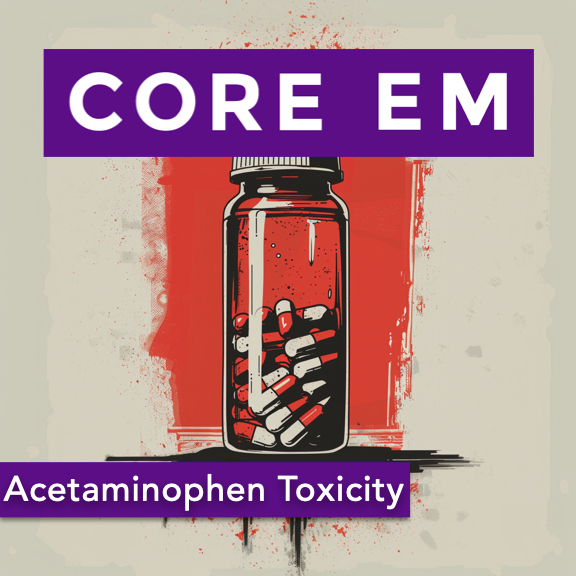
We sit down with one of our toxicologists to discuss acetaminophen toxicity.
Hosts:
Marlis Gnirke, MD
Brian Gilberti, MD
Download
One Comment
Tags: Toxicology
Show Notes
Table of Contents
0:35 – Hidden acetaminophen toxicity in OTC products
3:24 – Pharmacokinetics and toxicokinetics
6:06 – Clinical Course
9:22 – The antidote – NAC
11:02 – The Rumack-Matthew Nomogram
17:36 – Treatment protocols
22:34 – Monitoring and Lab Work
23:23 – Considerations when treating pediatric patients
23:57 – IV APAP overdose, fomepizole
25:42 – Take Home Points
Acetaminophen vs. Tylenol:
- The importance of recognizing that acetaminophen is found in many products beyond Tylenol.
- Common medications containing acetaminophen, such as Excedrin, Fioricet, Percocet, Dayquil/Nyquil, and others.
- The risk of unintentional overdose due to combination products.
Prevalence of Acetaminophen Toxicity:
- Widespread availability and under-recognition contribute to its prevalence.
- The potential for unintentional overdose when taking multiple medications containing acetaminophen.
Pharmacokinetics and Metabolism:
- Normal metabolism pathways of acetaminophen and the role of glutathione.
- Formation of the toxic metabolite NAPQI during overdose situations.
- Saturation of safe metabolic pathways leading to hepatotoxicity.
Pathophysiology of Liver Injury:
- How excessive NAPQI leads to hepatocyte death, especially in zone III of the liver.
- The difference between therapeutic dosing and overdose metabolism.
Clinical Stages of Acetaminophen Toxicity:
- Stage 1: Asymptomatic or nonspecific symptoms (first 24 hours).
- Stage 2: Onset of hepatic injury (24-72 hours), elevated AST/ALT.
- Stage 3: Maximum hepatotoxicity (72-96 hours), signs of liver failure.
- Stage 4: Recovery phase, complete hepatic regeneration if survived.
Antidote – N-Acetylcysteine (NAC):
- Mechanisms of NAC in replenishing glutathione and detoxifying NAPQI.
- The importance of early administration, ideally within 8 hours post-ingestion.
- NAC’s role even in late presenters and in fulminant hepatic failure.
The Rumack-Matthew Nomogram:
- How to use the nomogram for acute overdoses to determine the need for NAC.
- Limitations in chronic overdoses and late presentations.
- Emphasis on obtaining accurate time of ingestion and acetaminophen levels.
Treatment Protocols:
- Standard 21-hour IV NAC protocol and dosing specifics.
- Managing anaphylactoid reactions associated with IV NAC.
- Criteria for extending NAC therapy beyond 21 hours.
Monitoring and Laboratory Work:
- Importance of trending AST/ALT, INR, creatinine, lactate, and phosphate.
- Use of the King’s College Criteria for potential liver transplant evaluation.
Special Considerations:
- Adjustments in pediatric patients regarding NAC dosing volumes.
- Awareness of IV acetaminophen overdoses and their management.
- Emerging discussions on the use of fomepizole in massive overdoses.
Take-Home Points:
- Comprehensive Medication History: Always inquire about all medications taken to assess for potential acetaminophen exposure.
- Early Recognition and Treatment: Due to often silent initial stages, maintain a high index of suspicion and measure acetaminophen levels promptly.
- Understanding Metabolism and Toxicity: Recognize how overdose alters metabolism, leading to toxic NAPQI accumulation.
- N-Acetylcysteine Efficacy: NAC is most effective when administered early but remains beneficial even in advanced stages.
- Proper Use of the Nomogram: Utilize the Rumack-Matthew Nomogram appropriately for acute ingestions and consult toxicology when in doubt.
- Monitoring and Continuing Care: Be vigilant in monitoring laboratory values and prepared to extend NAC therapy as needed.
- Consultation and Resources: Engage with poison control centers and utilize available resources for complex cases.
Resources Mentioned
Rumack-Matthew Nomogram

Rumack-Matthew Nomogram, credit: MDCalc
King’s College Criteria
- King’s College Criteria for Acetaminophen Toxicity
- Use this tool to assess the need for liver transplant evaluation in c














 United States
