


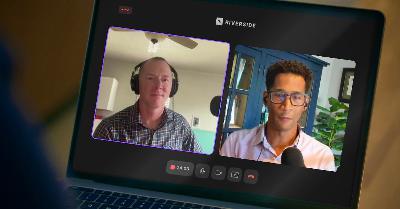
Should We Fund Education At All? With Shaka Mitchell
Description
Joel Douglas (00:03 ) My guest today is Shaka Mitchell, a senior fellow for the American Federation for Children, a Nashville-based attorney, a Belmont adjunct teaching constitutional law, and a leader dedicated to transforming education for underserved families. He’s a featured guest on TEDx Nashville and podcasts like The Learning Curve and Charterfolk. The charter schools Shaka has worked with drive real growth for Nashville’s underserved kids, often doubling district test scores in math and reading. While high-poverty public schools rank in Tennessee’s bottom 30%, Shaka’s schools rank in the top 20% to 25% serving the same communities. Shaka, thanks for being here. Your work with high-performing charters raises big questions about how we fund and deliver education. So, I feel like we have to ask a basic question to get started.
Shaka Mitchell (00:49 ) Hey, thanks for having me.
Joel Douglas (01:02 ) Should we fund education at all?
Shaka Mitchell (01:05 ) Yeah, good question. Well, thanks for having me, Joel, and you’re starting out with a big swing right out of the gate. Should we fund education? I would say yes. I would say yes.
And I want to also give the early disclaimer that I am not a big-government guy. I tend to be pretty skeptical of government. I used to work at one point at a constitutional law firm that came from a libertarian perspective. I really believe in individual liberty, individual rights, and also just an individual’s work ethic. So I am not a big-government guy. That being said, when we’re talking about education, it’s something that I think has a community impact. It’s also something that, from a rule of law perspective, is provided for by every state constitution in the country.
Right? So all 50 states have a constitution that says something about education—that education is valued, that it is highly prized, and that the state is going to do something to fund some system of education for the public. Now, whether or not the government has to provide the actual services, I think we can differ about. That’s where I would say no. But in terms of funding, I would say yes because, listen, if we don’t do it, you can’t just fund your own children. I don’t believe that. I think that looking out for one another’s kids in that regard is a societal benefit.
Joel Douglas (02:47 ) And really, that’s why I feel like we have to answer this question first. It’s what you just alluded to: you have to fund your kids and everybody else’s kids. If you look at it from a constitutional perspective, I would think about it as, well, we have six national goals, and if one of those is justice, one is liberty, and one is defense, then education fits into a lot of those buckets.
If you think about it from a justice perspective, it kind of gets to an individual—like we need to fund education to help individuals who grew up in a less prosperous or less advantaged background succeed. If you think about it from a defense standpoint, you might think, like the school lunch program was started from a defense requirement standpoint. So if we think about education from a defense standpoint, then that’s kind of a collective; we need to have an infrastructure of training-ready Americans who can go and join the military and serve in defense industries to protect the people of the United States.
But it’s both, right? You can’t just do it from a justice standpoint—that’s not the only reason you do it—but you also don’t only do it for the collective benefit. It goes back to exactly what you said about how we have to pay for each other’s kids, too, because some of them might join the military and also because constitutionally, we have a commitment to the justice of those kids that grow up in a less prosperous environment.
Shaka Mitchell (04:25 ) Yeah, I think that’s right. And, you know, education is one of these things that, as opposed to, maybe other, say, commodities—things that we buy from the store. The education that I get for myself, yes, it’s important to me personally and individually, but if I’m better educated, that’s going to benefit the community that I’m a part of. It’s going to benefit the private company that I might work for or the nonprofit. It’s gonna benefit the military if I’m a part of the service, right? It’s gonna benefit my neighbors.
So education is not one of these things that’s like going to the grocery store and you buy the kind of breakfast cereal that only you like. You’re the only one in your house that likes it and you say, “Forget about everybody else, I’m eating whatever, Fruity Pebbles. I don’t care if nobody else likes it.” No, education is not that kind of good. It’s the sort of thing that actually has so much benefit.
And I mean, you highlight something really important, too, that I took a look at a little bit this summer and might just write about later. And that is that the armed forces right now are going through the lowest recruitment cycle in history, right? Our military is having such a hard time finding academically and physically ready young men and women, and that becomes a defense problem. So that speaks a little bit to this “education as a national defense” and national security issue as well. There’s a lot of overlap there.
Joel Douglas (06:06 ) Absolutely, and I don’t want to take too much time on it, but just from a physical education standpoint, PE. When I was a kid, and I grew up in a small town in northern Missouri, the high school football coach was the PE teacher. He used it as the football training program so that we essentially had an extra hour to do stuff. So, Monday, Wednesday, Friday, we'd lift weights. Tuesday, Thursday, we played some sort of sport, so we were running, chasing each other, doing field hockey, or whatever that was.
But my kids today, because I have two teenagers, they don’t do the same kind of stuff in PE. For half of the year, they sit in a health class. And rather than go run for 45 minutes and then have 45 minutes of health class—I don’t want to digress too much—but if they ran for an hour every day, would the military benefit from them being more fit and having a higher pool of candidates who could join after they graduate? Absolutely.
Shaka Mitchell (07:14 ) Yeah. I’m a big believer in physical education and just the benefits of physical activity in general. I really think that it’s something that, frankly, kind of links together with education in this sort of virtuous cycle. Right? I mean, I think for a lot of kids, and even personally, when I feel better physically because I’ve exercised, I think I’m more mentally sharp and focused and ready for the workday. And I think that’s the same for elementary, middle, and high school kids, too.
Joel Douglas (07:52 ) Yeah, that’s right. But I’ll get back on track. You said something about how the government doesn’t necessarily outline how to achieve education. So it says what to do. Well, it doesn’t even say that. It says the goals are justice, liberty, defense, and the other three. So you alluded to there being different ways to achieve those. And I know you work with a lot of those, and that’s the work that you do. So, can you talk about that?
Shaka Mitchell (08:24 ) Yeah, so, you know, a lot of state constitutions—most state constitutions—are really broad, even vague, when they talk about education. They’ll say something like, "The state of [fill in the blank] will provide for an equitable education system." You go, okay, what does that mean exactly? Right? Does that mean we're talking about dollars? Equitable that way? Are we talking about kids who are gonna exit the system with the exact same amount of coursework? It’s so vague nobody really knows. It’s just kind of one of these adjectives that they threw in there, and it sounded good. And then you fast forward just a few years, and you don’t really know what it means.
So one of the problems, of course, in any state is that on the one hand, it’s really efficient, or it seems like it’s going to be efficient, to have one system that you have in place for all the kids to participate in. That seems like it would work on paper; it seems efficient. But then what happens is, as soon as you meet more than one child, you realize that they are different, and you realize that the same system isn’t likely to work for a whole range of students. And that’s within one school, let alone a whole district, state, or country, right?
I live in Nashville, Tennessee, and we’ve got about a hundred thousand school-aged kids. There’s no way one system with one school board of nine people is going to be able to figure out a system that works for every single child because they have different interests. Even in my own house—and I bet this is the same for you and your kids—same parents, but my kids are interested in different things. One is better at math. One is much more interested in the arts. One is much more interested in reading, nose in a book, right? They’re just interested in different things. They’re going to learn in different ways. And that’s in one family. You multiply that out across the whole city, and you've got to do something different. And so that’s really, I think, why I believe so much in school choice.
The idea is that, yes, we’re going to fund education from a central pot. Because again, let’s collect the money that way, easy peasy. But let’s not assume that those nine people on the school board can come up with one system that works for everybody. Let’s let different models work. So if it’s a charter school that’s got a focus on science, technology, engineering, and math (STEM), cool. Do that. In my city, there’s another charter school that’s really focused on

















 United States
