


The Packs Don’t Get Lighter
Description
A successful elk season has come and gone. Elk season isn’t just about the harvest, or packing heavy loads out of the mountains, though those activities are often involved.
Elk season is communion. With the mountain, and with each other. It’s a time of remembrance. Checking on kids and wives. Eating and drinking together. You might hunt with someone you see often, or someone you haven’t seen in ten years.
Nearly every hunter in the camps I frequent is a veteran. We tell old war stories, curse aging, lament losses. We help each other hunt. We carry heavy loads on our backs for each other. We share food, water, motivation.
This year, like most years, military service comes up. Every member is proud to have served. Proud of the combat capability we generated for America.
But we also talk about what’s changing. Fewer kids can pass a military physical. Fewer towns send their sons and daughters to serve. The gap between those who defend America and those who benefit from it keeps widening.
So this week we’re sharing three stories we talked about in camp this year. Stories about opportunity, about standards, about the investment required to maintain both.
No old personal war stories though. To hear those, you have to come to camp.
The Story of Audie Murphy
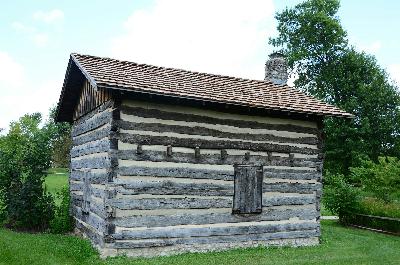
June 1925. Hunt County, Texas. Audie Leon Murphy is born in a sharecropper’s shack outside Kingston. And when I say shack, I mean it had a dirt floor. No electricity. No running water. His father, Pat Murphy, was a sharecropper who worked other men’s land for a cut of the cotton crop. His mother, Josie, bore twelve children. Nine survived infancy.
The Depression hits Texas like a hammer. Pat Murphy starts disappearing, for days at first, then weeks. He’s drinking, chasing work that doesn’t exist, abandoning his family in slow motion. Audie is the sixth child, small for his age, but he becomes the provider. At age twelve, he’s dropping out of school to pick cotton. A dollar a day if he’s fast. He hunts rabbits and squirrels with a borrowed rifle to keep his siblings fed. He becomes an excellent shot because he has to be. Every missed shot is a missed meal.
Audie is sixteen. His mother dies of complications from malnutrition, exhaustion, and poverty. The family disintegrates. The younger children are farmed out to relatives and an orphanage. Audie and his older brother pick cotton and sleep in barns to survive. Pat Murphy is long gone, fully vanished now. Audie weighs maybe 110 pounds. He looks barely fourteen.
December 7, 1941.
Audie Murphy decides to enlist. He’s seventeen, has a fifth-grade education, and weighs 112 pounds soaking wet. He tries the Marines first. The recruiter takes one look at this skinny kid with hollow cheeks and laughs him out of the office. “Come back when you’ve grown some, son.”
He tries the paratroopers. Rejected. Too small.
He tries the Navy. Rejected.
His sister helps him falsify his birth certificate to prove he’s eighteen. He tries the Army. June 1942. The recruiter is skeptical, but the Army needs bodies. They take him. Private Audie Murphy. 112 pounds. Five-foot-five. Baby-faced. Assigned to the 15th Infantry Regiment, 3rd Infantry Division.
They ship him to North Africa in 1943. Then Sicily. Then Italy. The kid can shoot! Everyone notices immediately. He’s calm under fire in a way that unnerves the older soldiers. No hesitation. At Anzio, he kills two Italian officers attempting to escape, drops them both at distance with a carbine. His platoon sergeant gets wounded. Murphy takes over, leads the men through German positions, takes prisoners. He’s nineteen years old.
Southern France, 1944.
The 3rd Division lands at Saint-Tropez, pushes north. Murphy’s collecting medals now. Bronze Star, then another. Silver Star. His superiors keep promoting him. Corporal. Sergeant. Staff Sergeant. He’s still barely old enough to vote. His friends keep dying. He keeps replacing them, learning their names, watching them die, replacing them again.
One night in the Vosges Mountains, Murphy’s best friend, a man named Lattie Tipton, gets killed by German machine gun fire, cut nearly in half. The Germans had been waving a phony white flag of surrender. His death hardens Murphy.
By late 1944, Murphy has a Distinguished Service Cross and battlefield commission to Second Lieutenant. The sharecropper’s son from the dirt-floor shack is now an officer. He’s twenty years old and has personally killed approximately 240 enemy soldiers, though he doesn’t brag about it, doesn’t talk about it much at all.
January 26, 1945. The Colmar Pocket, Alsace, France. Temperature near zero. Murphy’s company of 128 men gets orders to hold a position near the town of Holtzwihr against a German counterattack. Six Panzer tanks. Over 250 infantry. Murphy has about 40 effective soldiers left; the rest are wounded or dead.
The Germans attack. Murphy orders his men to fall back to the woods. He stays forward with his artillery observer to direct fire. A German tank shell hits an American M10 tank destroyer near Murphy’s position. It catches fire, ammunition cooking off. The artillery observer is wounded and runs. Murphy is alone.
He climbs onto the burning M10.
Understand that the tank destroyer is on fire. Fuel tanks could explode any second. The Germans can see him, one man, silhouetted against burning metal. He grabs the M2 Browning .50 caliber machine gun mounted on the turret. It’s loaded.
For the next hour, Audie Murphy stands on a burning tank destroyer and kills Germans.
He’s wounded in the leg but ignores it. The radio headset lets him call fire missions to his artillery battery while he’s shooting. German infantry gets within ten yards. He kills them. The Panzers fire at him and miss. He swivels the .50 cal, rakes their supporting infantry, calls in artillery to adjust fire onto the tanks. Rounds are snapping past his head. The tank destroyer is still burning under his feet.
Finally, his ammunition gone, Germans retreating, Murphy climbs down. He walks back to his men. Refuses medical attention until he’s reorganized the defensive line. The citation for his Medal of Honor says he killed or wounded approximately 50 German soldiers during that hour. Some historians think it was more.
The war ends three months later.
Audie Murphy, now Lieutenant Murphy, became the most decorated combat soldier of World War II. Twenty years old, three Purple Hearts, and the Medal of Honor.
The Army sends him on a publicity tour. Life Magazine does a spread. In Hollywood, he meets James Cagney, who suggests Murphy try acting. He’s got the face for it, still baby-faced, unthreatening. Universal Pictures offers a contract.
Murphy uses his GI Bill benefits to take acting lessons. He’s awkward at first, uncomfortable with the attention. But he works. Makes his first film in 1948. Over the next two decades, he appears in forty-four films, mostly westerns. In 1955, he plays himself in “To Hell and Back,” adapted from his memoir. It becomes Universal’s highest-grossing film until “Jaws” twenty years later.
The military gave Audie Murphy what poverty never could. Training, discipline, purpose, opportunity. He buys a house in California. Invests in oil wells and breeding horses. Brings his siblings out of Texas, sets them up, breaks the generational cycle. The sharecropper’s children become middle-class Americans.
But Murphy never pretends military service is easy or cost-free.
He has nightmares. Sleeps with a loaded pistol under his pillow. His first marriage collapses; his wife says he wakes up screaming and unreachable. He struggles with what we now call PTSD, what they called “battle fatigue” or “shell shock” then. The VA doesn’t know how to treat it. Most veterans don’t talk about it.
Murphy talks about it.
He testifies before Congress. Uses his celebrity to advocate for veterans with psychological wounds. Pushes for better VA funding, better mental health care, better recognition that war doesn’t end when the shooting stops. He’s open about his own struggles in ways that are radical for the 1950s and ‘60s. A Medal of Honor recipient admitting he’s damaged, that he needs help.
May 28, 1971. Murphy is flying from Atlanta to Virginia in a private plane. Bad weather. The plane crashes into Brush Mountain near Roanoke, Virginia. Audie Murphy dies on impact. He’s forty-six years old.
They bury him at Arlington National Cemetery with full military honors. His grave: Section 46, Grave 366-11, becomes the second most-visited site at Arlington after President John F.
















 United States
